How Long Does the Effect of a Brownie Last?
Learn how long the effects of a cannabis brownie last, what factors influence the duration, and how to avoid overdoing it. From onset time to lingering effects, get the real facts.
Read More
When you bite into a piece of dark chocolate or a rich brownie, your body doesn’t react instantly. The edible onset time, the period between consuming food and feeling its physical or emotional effects varies widely—sometimes 20 minutes, sometimes over two hours. It’s not just about sugar rush. It’s about how your body breaks down fats, sugars, and compounds like theobromine in chocolate, and how your stomach and liver process them. This delay isn’t a glitch—it’s biology.
What affects this timing? Your metabolism, whether you ate on an empty stomach, and what else is in the treat. A chocolate bar with nuts and butterfat slows digestion, pushing onset time longer. A gummy candy with simple sugars? It hits faster. Even something as simple as drinking water after eating can change how quickly your body absorbs those flavors and compounds. And if you’re eating something with caffeine or theobromine—like dark chocolate—your brain might not feel the lift until 30 to 45 minutes later, even if your taste buds are already happy.
Related to this are the chocolate effects, the physical and mood-related responses triggered by cocoa compounds after ingestion, which aren’t always immediate. Some people feel calm. Others get a slight buzz. That’s because theobromine and phenylethylamine interact with neurotransmitters slowly. Then there’s dessert absorption, how your body digests and pulls nutrients from sweet treats, which depends on fat content, fiber, and even how the dessert was baked. A dense fudge absorbs slower than a light sponge cake. And if you’ve ever eaten fudge that didn’t set right—like in those rescue recipes—you’ve seen how texture changes how your body handles it.
People often assume sugar = instant energy. But real food science shows it’s more complex. That’s why some desserts leave you sluggish, others energized, and some just… quiet. The food metabolism, the process of breaking down and converting food into usable energy behind each bite determines how you feel an hour later—not just right after.
You’ll find posts here that dig into exactly these moments: why fudge takes longer to settle in your system than a cookie, how macarons behave differently than brownies, and why a slice of cheesecake might make you feel different than a scoop of ice cream. We’ll show you what happens inside your body after you eat, what delays or speeds up the process, and how to predict how a treat will affect you—not just taste.
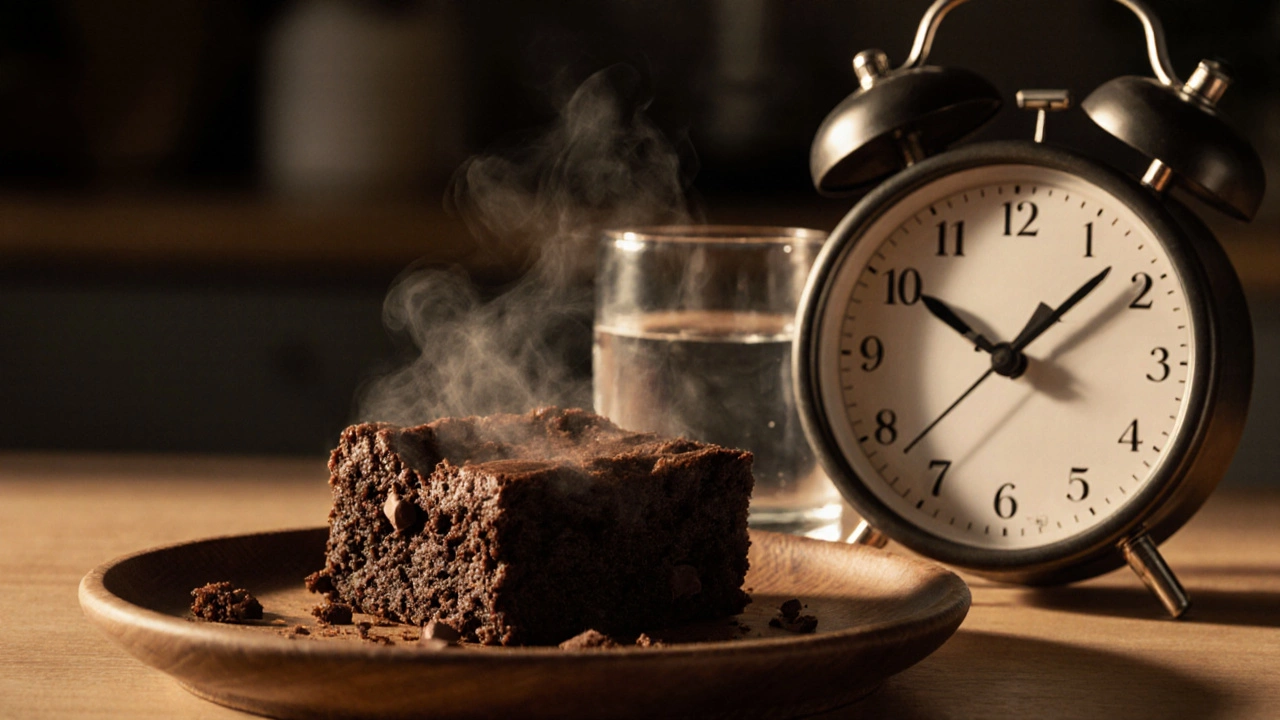
Learn how long the effects of a cannabis brownie last, what factors influence the duration, and how to avoid overdoing it. From onset time to lingering effects, get the real facts.
Read More