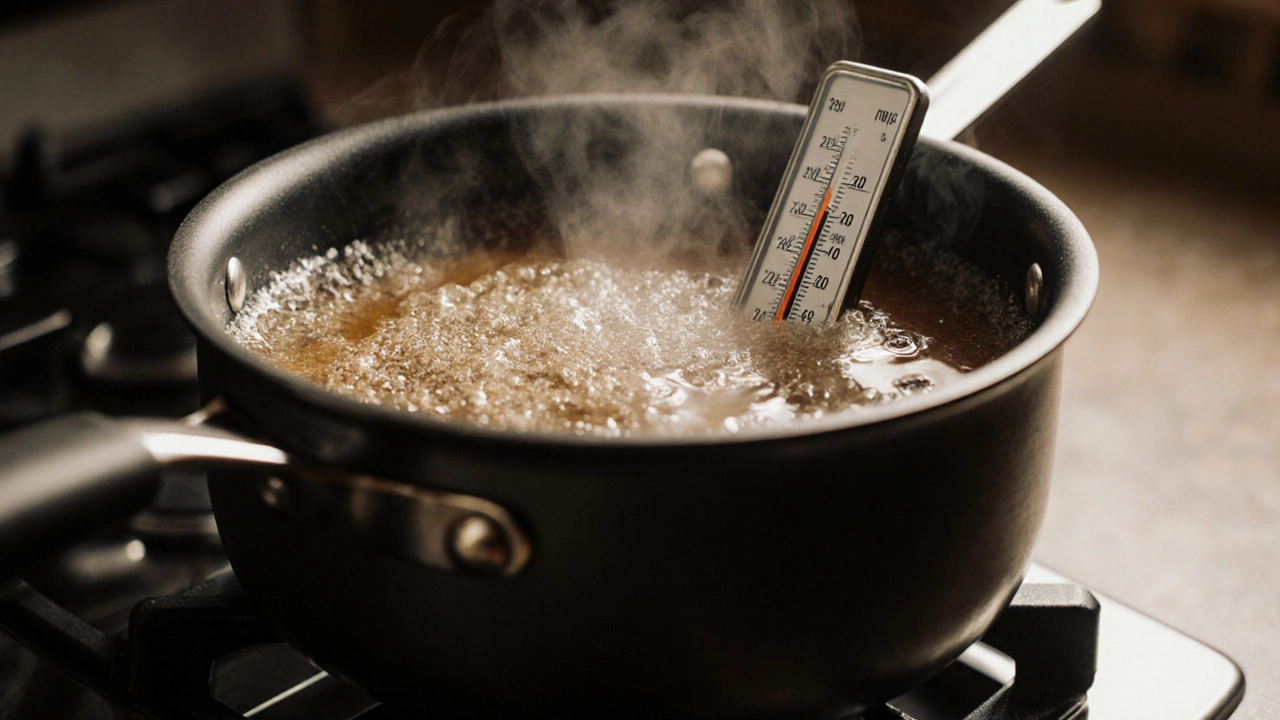
Fudge Stirring Tips: How to Get Perfect Texture Every Time
When you’re making fudge, a dense, creamy confection made from sugar, butter, and chocolate that relies on precise temperature control and stirring technique, stirring isn’t just a step—it’s the difference between smooth, melt-in-your-mouth goodness and a crumbly, grainy mess. Skipping or rushing this part is the #1 reason homemade fudge fails. The science is simple: sugar crystals form during cooling, and how you stir determines whether they stay tiny and smooth or grow big and gritty.
Most people think fudge just needs to be boiled and poured. But the real magic happens after you take it off the heat. You have to wait for it to cool just right—usually to around 110°F—before you start stirring. Stir too early, and you’ll trigger premature crystallization. Stir too late, and the crystals will already have grown too big to fix. fudge crystallization, the process where sugar molecules clump together into visible grains is what turns your fudge into sand. The key is patience and consistency: use a wooden spoon, stir slowly but steadily in one direction, and don’t stop until it thickens and loses its shine. This isn’t about speed—it’s about control.
fudge texture, the smooth, dense, slightly chewy quality that makes fudge feel luxurious depends entirely on how you manage those sugar crystals. You can’t fix fudge after it’s set if you stirred wrong, but you can rescue it. Many of the posts below show how to turn failed fudge into chocolate sauce, truffles, or brownies. But why risk it? Mastering the how to stir fudge, the specific timing, tool, and motion required to control sugar crystallization means you’ll never waste ingredients again. It’s not complicated. It’s just not obvious. And once you get it, you’ll wonder why you ever struggled.
You’ll find real fixes here—not theory. People who made fudge that didn’t set, got it too hard, or turned grainy. They tried everything. These posts share what actually worked: how long to wait before stirring, what spoon to use, whether to scrape the sides, and even how humidity affects the outcome. You’ll learn why some recipes say "don’t stir" but others say "stir like your life depends on it." It’s all about the phase of cooling. This isn’t magic. It’s physics. And now you know how to use it.