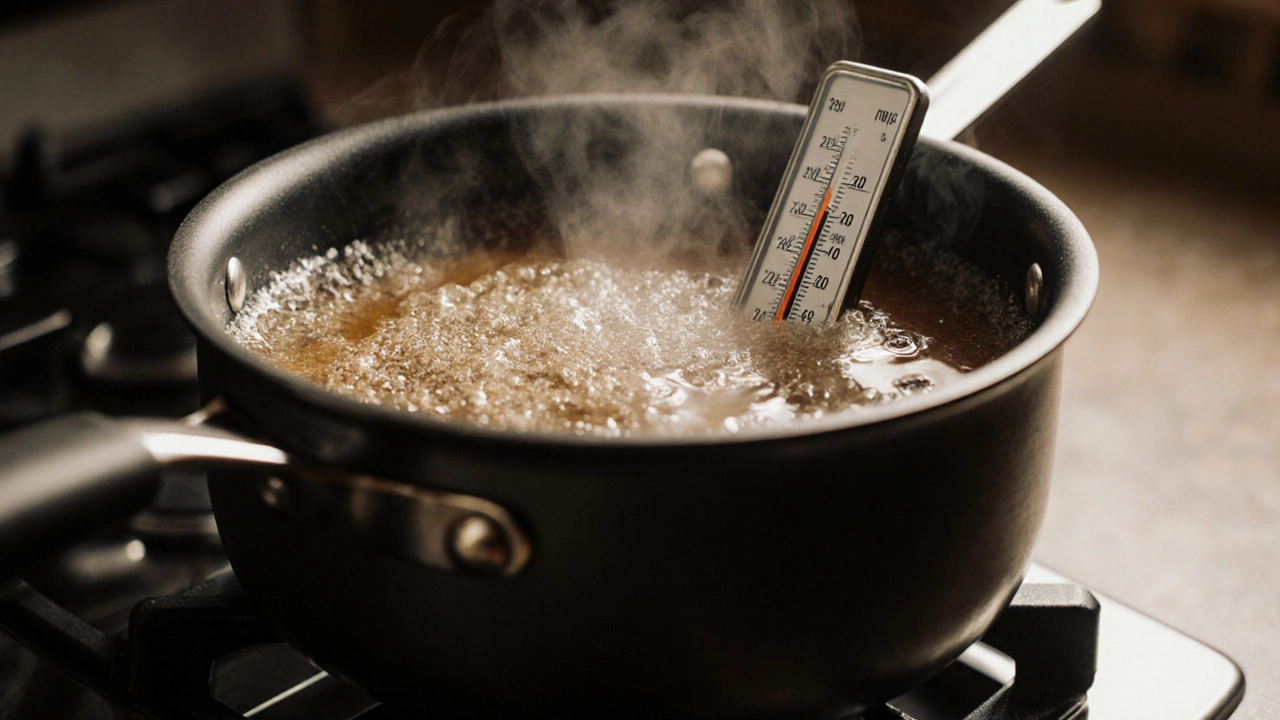
Stir Fudge While Boiling: Why Timing and Technique Matter
When you’re making fudge, a dense, creamy confection made from sugar, butter, and chocolate that requires precise heat control and agitation. Also known as soft candy, it’s not just about melting ingredients—you’re managing a delicate chemical reaction that determines whether your fudge turns out silky or crumbly. Skipping the stir while the mixture boils is the #1 reason fudge fails. It’s not about stirring for fun—it’s about controlling crystal growth. Sugar molecules want to form big, rough crystals if left alone. Stirring too early or too late messes with that process. But stir at the right moment—after cooling slightly—and you guide those molecules into tiny, smooth clusters that give fudge its signature melt-in-your-mouth feel.
The science is simple: fudge crystallization, the process where sugar molecules organize into structures that define texture happens in two phases. First, heat dissolves the sugar completely. Then, as it cools, you need to trigger controlled crystallization. Stirring too soon introduces seed crystals too early, leading to graininess. Stir too late, and the sugar cools too fast, turning into a hard, brittle mass. The sweet spot? Wait until the mixture hits the soft-ball stage (234–240°F), then remove it from heat and let it cool to about 110°F before stirring. That’s when you start stirring—slowly, steadily, and without stopping—until it thickens and loses its shine. This isn’t guesswork. It’s physics. And it’s why so many fudge recipes say, "Don’t stir until it cools."
fudge texture, the result of sugar crystal size, fat distribution, and cooling rate is what separates good fudge from great fudge. Even small delays in stirring can mean the difference between a bar you’d serve at a party and one you toss into the trash. You’ll find posts here that explain how to rescue failed fudge, why stirring affects shelf life, and how humidity can wreck your batch even if you followed every step. This isn’t just about recipes—it’s about understanding the why behind the how. Whether you’re a first-timer or someone who’s made fudge five times and still gets grainy results, the fixes are in the details. Below, you’ll find real solutions from people who’ve been there: how to fix soft fudge, how to avoid over-stirring, and what happens if you don’t stir at all. No fluff. Just what works.