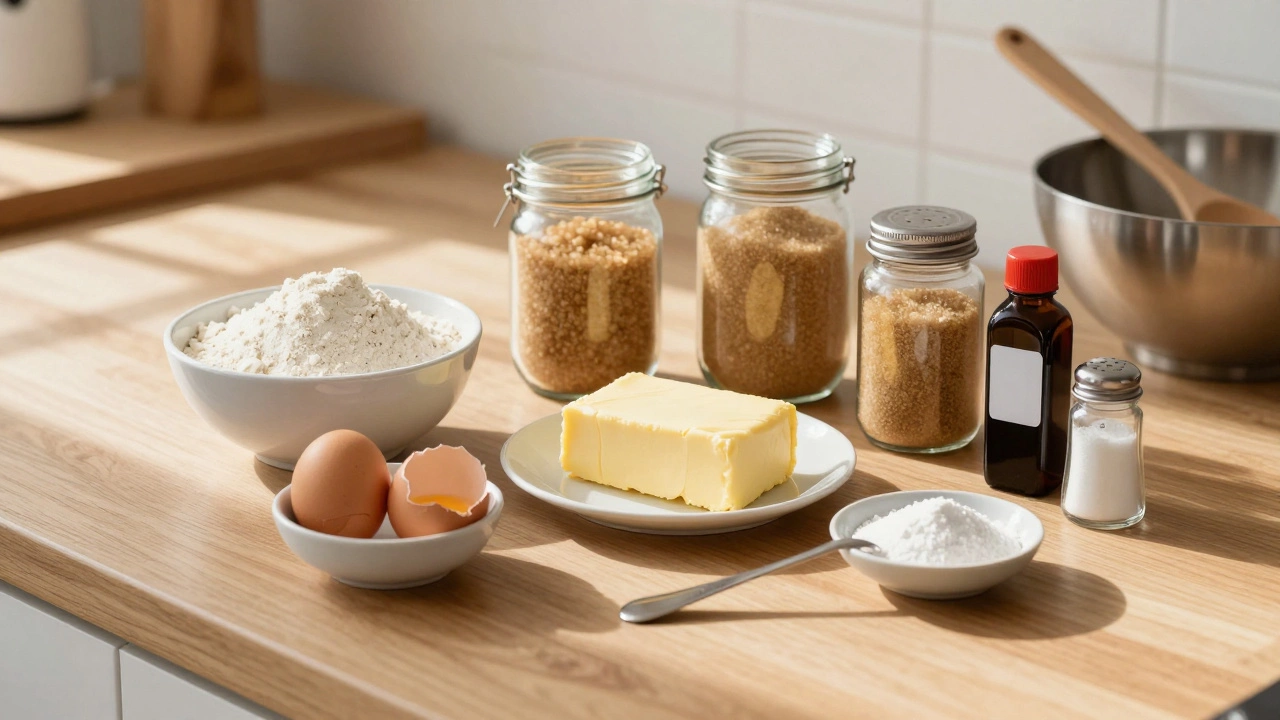
Cookie Ingredients: What You Really Need to Bake Perfect Cookies
When you think of cookie ingredients, the basic components that define how a cookie tastes, holds shape, and melts on your tongue. Also known as baking fundamentals, these are the non-negotiables that turn flour and sugar into something you can’t stop eating. It’s not just about following a recipe—it’s about understanding what each ingredient actually does. Skip the guesswork. You don’t need fancy tools or obscure spices. Just the right mix of sugar, butter, flour, and a pinch of science.
Sugar, the ingredient that controls spread, crispness, and browning. Also known as sweetener in baking, it’s not just for taste—it pulls moisture, helps cookies spread, and gives them that golden edge. Granulated sugar makes them crisp. Brown sugar adds chew and deep flavor. And if you use too much, your cookies turn into flat, greasy discs. Too little? They’re dry and cakey. It’s a tight balance. Then there’s butter, the fat that gives cookies their richness and melt-in-your-mouth texture. Also known as dairy fat in baking, it’s not interchangeable with margarine or oil. Cold butter holds its shape longer in the oven, giving you thicker cookies. Melted butter? That’s for chewy, almost brownie-like results. And room temperature butter? That’s the sweet spot for classic, evenly spread cookies. Don’t forget flour, the structure builder. Also known as baking flour types, not all flour is the same. All-purpose works fine for most recipes, but if you want a tender crumb, try cake flour. Too much flour, and your cookies turn into hockey pucks. Too little, and they spread into puddles.
What else shows up in cookie dough—and why it matters
Eggs bind, vanilla enhances, salt balances. Baking soda and baking powder? They’re the lift team. But here’s the thing: many people treat these like afterthoughts. They’re not. Salt makes sugar taste sweeter. Vanilla doesn’t just add flavor—it makes the whole cookie feel more complete. And baking soda? If you use too much, your cookies taste soapy. Too little, and they’re flat and dense. It’s not magic. It’s chemistry.
These aren’t just ingredients you throw in a bowl. They’re the reason some cookies stay soft for days, while others turn crunchy by lunchtime. They’re why your neighbor’s cookies taste better than yours—even if you followed the same recipe. The difference isn’t skill. It’s understanding. You don’t need to be a pastry chef. You just need to know what each piece does.
Below, you’ll find real answers from real bakers—how to fix grainy fudge that accidentally got mixed into cookie dough, why some people swear by sea salt flakes, and how to tell if your butter is really at the right temperature. No fluff. No theory. Just what works when you’re standing at the counter, flour on your shirt, wondering why your cookies didn’t turn out.