Cookie Ingredient Checker
Check Your Cookie Ingredients
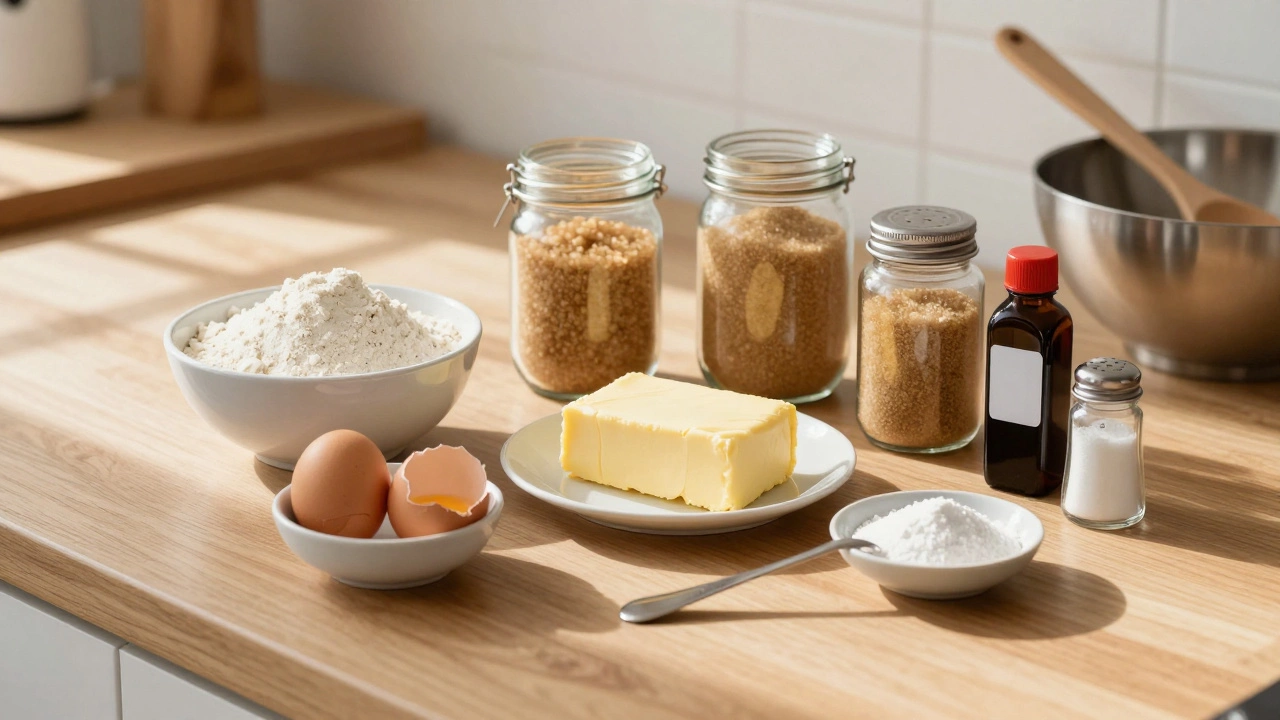
All cookies need these 7 non-negotiable ingredients. Missing any one will change the fundamental nature of your cookies.
Result
Ever opened your pantry to bake cookies and realized you’re missing something-again? You’ve got chocolate chips, vanilla, maybe even sprinkles, but the cookies turn out flat, greasy, or too crumbly. The problem isn’t your oven. It’s not your recipe. It’s that you skipped one of the seven non-negotiable ingredients that make every cookie a cookie. No exceptions. Not even for gluten-free, vegan, or keto versions. These seven things are the foundation. Skip one, and you’re not baking cookies-you’re baking something else.
Flour: The Structure Builder
Flour isn’t just filler. It’s the skeleton. Without it, your cookies collapse like a house without walls. All-purpose flour is the standard for most home bakers because it has just the right amount of protein-around 10-12%-to give cookies structure without making them tough. Bread flour? Too chewy. Cake flour? Too delicate. You’ll get a cookie that falls apart or spreads too much.
Even in gluten-free cookies, flour is still there-it’s just swapped out. Almond flour, oat flour, rice flour-they all do the same job: absorb moisture and hold the shape. The amount changes, but the role doesn’t. One cup of all-purpose flour in a standard cookie recipe isn’t arbitrary. It’s the minimum needed to bind the wet ingredients and create that perfect crisp edge with a soft center.
Sugar: The Sweetener and Texture Trickster
Sugar does more than make cookies sweet. It affects spread, browning, and texture. White granulated sugar makes cookies crisp and light. Brown sugar adds moisture and chewiness because of its molasses content. Most recipes use a mix of both. But even if you use only one type, you still need sugar. It pulls in water, slows gluten formation, and caramelizes in the oven, giving cookies that golden color and rich flavor.
Try making cookies without sugar. You’ll get something flat, pale, and bland. Even sugar-free cookies use sugar alcohols or stevia blends that mimic sugar’s physical behavior-binding, browning, and spreading. Sugar isn’t optional. It’s the chemical engine behind how cookies behave in the oven.
Butter: The Flavor and Fat Foundation
Butter is what makes cookies taste like cookies. Not margarine. Not oil. Real, salted or unsalted, cold butter that’s creamed with sugar. Butter has water, fat, and milk solids-all three matter. The water turns to steam in the oven, helping cookies puff up. The fat coats flour proteins, preventing too much gluten development, which keeps cookies tender. The milk solids caramelize and add depth.
Oil-based cookies exist, like some vegan or nut-based versions, but they’re exceptions that prove the rule. They spread more, lack that flaky texture, and taste flat in comparison. Butter gives cookies their signature richness. Even in recipes that call for melted butter, it’s still butter. No other fat delivers the same flavor profile or mouthfeel.
Eggs: The Binder and Moisture Balancer
Eggs glue everything together. The yolks add fat and emulsifiers that help blend butter and sugar smoothly. The whites provide structure and a little lift. Without eggs, your dough stays crumbly and won’t hold its shape. You can replace eggs with flaxseed meal or applesauce in vegan recipes, but those substitutes still perform the same job: binding, moistening, and adding protein.
One egg per batch of cookies isn’t just tradition. It’s science. Too many eggs, and the cookies turn cakey. Too few, and they crumble. Even in eggless cookies, you’re using something that replaces the egg’s function. The ingredient changes. The role doesn’t.

Baking Soda or Baking Powder: The Leavening Agents
These aren’t just optional add-ins. They’re what make cookies rise. Baking soda reacts with acidic ingredients (like brown sugar, honey, or yogurt) to create carbon dioxide bubbles. Baking powder has its own acid built in, so it works even in neutral recipes. Either way, you need one.
Without them, your cookies spread flat like pancakes. They’ll be dense, heavy, and lack that airy chew. Some people think they can skip leavening for chewier cookies, but that’s a myth. Chewy cookies still puff slightly in the oven-they just don’t rise as much. The difference between a thick, soft cookie and a flat, hard one often comes down to whether you used a quarter teaspoon of baking soda.
Salt: The Flavor Enhancer
Salt doesn’t make cookies salty. It makes them taste like cookies. A pinch of salt balances the sweetness, deepens the buttery flavor, and stops the sugar from tasting one-dimensional. Without salt, cookies taste flat and artificial-even if they’re loaded with chocolate or nuts.
Sea salt, kosher salt, table salt-doesn’t matter. The amount is small, usually 1/4 to 1/2 teaspoon per batch. But it’s always there. Even in sweet dessert cookies from Europe or Asia, salt is used. It’s not a seasoning. It’s a necessary ingredient. Skip it, and you’ll notice the difference immediately. Your cookies will taste like they’re missing something-but you won’t know what until you add it back.
Vanilla Extract: The Flavor Completer
Vanilla isn’t just for flavor. It’s the finishing touch that ties everything together. It enhances sweetness, rounds out the buttery notes, and adds complexity without being obvious. Pure vanilla extract-made from real beans-is the gold standard. Imitation vanilla? It works in a pinch, but it tastes chemical and one-note.
Some recipes skip vanilla and use other extracts-almond, maple, or even citrus zest. But even then, they’re replacing vanilla’s role: adding depth and dimension. A cookie without any flavor enhancer beyond sugar and butter tastes like cardboard. Vanilla isn’t decorative. It’s essential. Even in chocolate chip cookies, where the chocolate dominates, vanilla makes the chocolate taste richer.
What Happens When You Skip One?
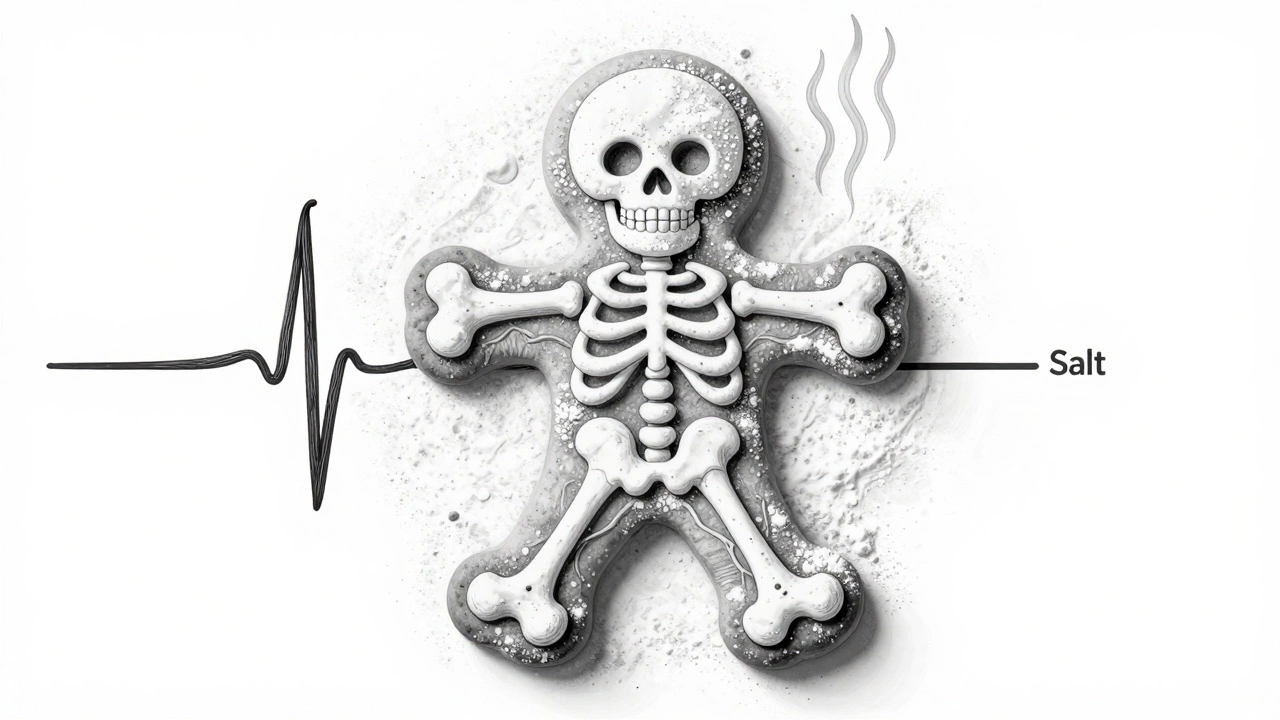
Try baking cookies without flour? You get a greasy, sticky mess that won’t hold together. No sugar? They’re bland and don’t brown. No butter? They’re dry and lack richness. No eggs? Crumbly and flat. No leavening? Dense and hard. No salt? Boring. No vanilla? Lifeless.
Every single one of these seven ingredients plays a role that can’t be fully replaced without changing the fundamental nature of the cookie. Even substitutions still serve the same function. That’s why every cookie recipe-whether it’s a classic chocolate chip, a chewy oatmeal raisin, or a delicate shortbread-includes these seven. Not six. Not five. Seven.
Real-World Example: Why Your Cookies Failed
Last week, a friend brought me cookies she baked from a new recipe she found online. They were too hard, didn’t spread, and tasted flat. I checked the ingredients. She’d used coconut oil instead of butter, skipped the salt, and used maple syrup instead of sugar. She thought she was making a "healthier" version. But she’d replaced three of the seven core ingredients with things that don’t behave the same way.
Coconut oil melts at a lower temperature than butter, so the cookies spread too much and lost structure. No salt meant no flavor balance. Maple syrup added water and didn’t caramelize like sugar, so they didn’t brown properly. The result? Not a better cookie. Just a different, less satisfying thing.
Final Rule: Stick to the Seven
You don’t need fancy ingredients. You don’t need expensive chocolate or imported vanilla. You don’t even need a stand mixer. You just need these seven things: flour, sugar, butter, eggs, baking soda or powder, salt, and vanilla extract. Master these, and you can bake any cookie. Adjust ratios, add mix-ins, tweak bake times-but never skip the foundation.
That’s why the best cookies aren’t made by people who follow the trendiest recipes. They’re made by people who understand the basics. Once you know what each ingredient does, you can fix your own mistakes. You can experiment with confidence. You won’t need to ask, "Why didn’t my cookies turn out?" anymore.
Because now you know. The seven ingredients aren’t just a list. They’re the rules of the game. And once you learn them, you’ll never bake a bad cookie again.
Can I make cookies without eggs?
Yes, but you need a substitute that performs the same job: binding and adding moisture. Flaxseed meal mixed with water, applesauce, or commercial egg replacers work. But even then, you’re still replacing eggs with something that acts like them. The cookie will still have structure and texture because the function is preserved, not eliminated.
Can I use oil instead of butter?
You can, but the cookie will be different. Oil doesn’t contain water or milk solids like butter does, so cookies made with oil spread more, bake flatter, and lack the rich, buttery flavor. They also won’t have the same crisp edge or tender crumb. It’s not wrong-it’s just not a traditional cookie.
Do I need both baking soda and baking powder?
Not always. Most recipes use one or the other. Baking soda needs an acid (like brown sugar or yogurt) to activate. Baking powder has its own acid built in. Some recipes use both to get more lift and better browning, but you don’t need both to make a good cookie. Just use one.
Why do my cookies spread too much?
Too much sugar or butter, or not enough flour, will cause spreading. Also, if your butter is too soft or melted before mixing, the cookies will spread thin. Chill your dough before baking, and measure your flour correctly-spoon and level, don’t scoop. That’s often the fix.
Can I skip vanilla extract?
Technically, yes. But your cookies will taste flat and one-dimensional. Vanilla enhances sweetness and rounds out other flavors. If you skip it, consider adding a pinch of cinnamon, a splash of almond extract, or even a bit of sea salt on top after baking to add depth. But don’t expect the same richness.
Next Steps: Test the Seven
Grab your pantry. List out what you have. Now cross off anything that’s not one of the seven. If you’re missing even one, you’re not ready to bake cookies. Don’t guess. Don’t substitute blindly. Get the real thing. Flour, sugar, butter, eggs, baking soda or powder, salt, vanilla. That’s it. Everything else-chocolate chips, nuts, oats, sprinkles-is just decoration.
Once you’ve got the seven, bake a batch. Taste it. Then bake another with a tweak-more brown sugar, less butter, no vanilla. Compare. You’ll start to see why each one matters. That’s how you become a cookie expert-not by following recipes, but by understanding what makes them work.