What Is the Key to Good Fudge? Simple Secrets for Perfect Texture Every Time
The key to good fudge isn't chocolate-it's controlling sugar crystals. Learn the exact temperature, timing, and stirring rules that make fudge smooth, not grainy.
Read More
When you fudge, a dense, smooth chocolate confection made from sugar, butter, and milk or cream. Also known as chocolate fudge, it’s one of those treats that seems simple but gets tricky fast. You mix the ingredients, heat them up, and stir—so why does it sometimes turn out grainy, hard, or too soft? The answer isn’t in the recipe. It’s in the timing, the temperature, and what you do after you take it off the stove.
Fudge texture, the smooth, melt-in-your-mouth quality that defines good fudge doesn’t happen by accident. It’s controlled by sugar crystallization. If you stir too early, you trigger tiny crystals to form all over the mixture. That’s what makes it gritty. If you don’t stir enough after cooling, the sugar settles unevenly and the fudge crumbles. And if you don’t hit the right temperature—usually around 234°F (112°C), the soft-ball stage—you’re not giving the sugar enough time to form the right structure. This isn’t magic. It’s chemistry. And it’s why even experienced bakers mess up fudge.
People think fudge is all about chocolate quality, but it’s really about patience. You need to let the mixture cool to 110°F before you start stirring. That’s the secret most blogs skip. If you jump in too soon, you’re basically forcing crystals to grow. And if your fudge doesn’t set? Don’t toss it. You can turn soft fudge into chocolate sauce, brownie batter, or truffles. Grainy fudge? Melt it down, add a splash of cream, and try again. Failed fudge isn’t waste—it’s a learning step.
Some think you need fancy tools, but all you really need is a heavy-bottomed pot, a candy thermometer, and a quiet kitchen. No distractions. No tasting before it’s ready. No stirring while it’s boiling. That’s it. The best fudge isn’t made by experts—it’s made by people who waited long enough.
Below, you’ll find real fixes for every kind of fudge fail. From soft batches that won’t hold shape, to crumbly ones that crumble at the first bite, we’ve got the solutions that actually work. No fluff. No guesswork. Just what happens when you follow the science—and when you don’t.
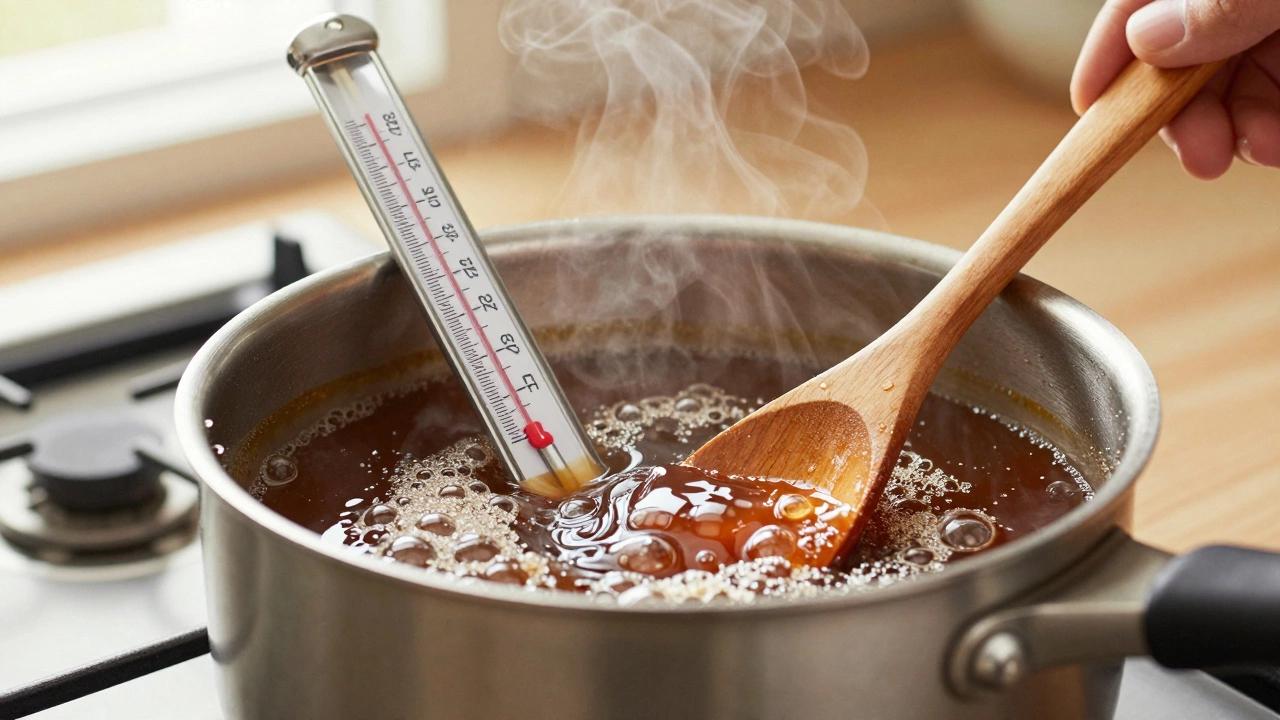
The key to good fudge isn't chocolate-it's controlling sugar crystals. Learn the exact temperature, timing, and stirring rules that make fudge smooth, not grainy.
Read More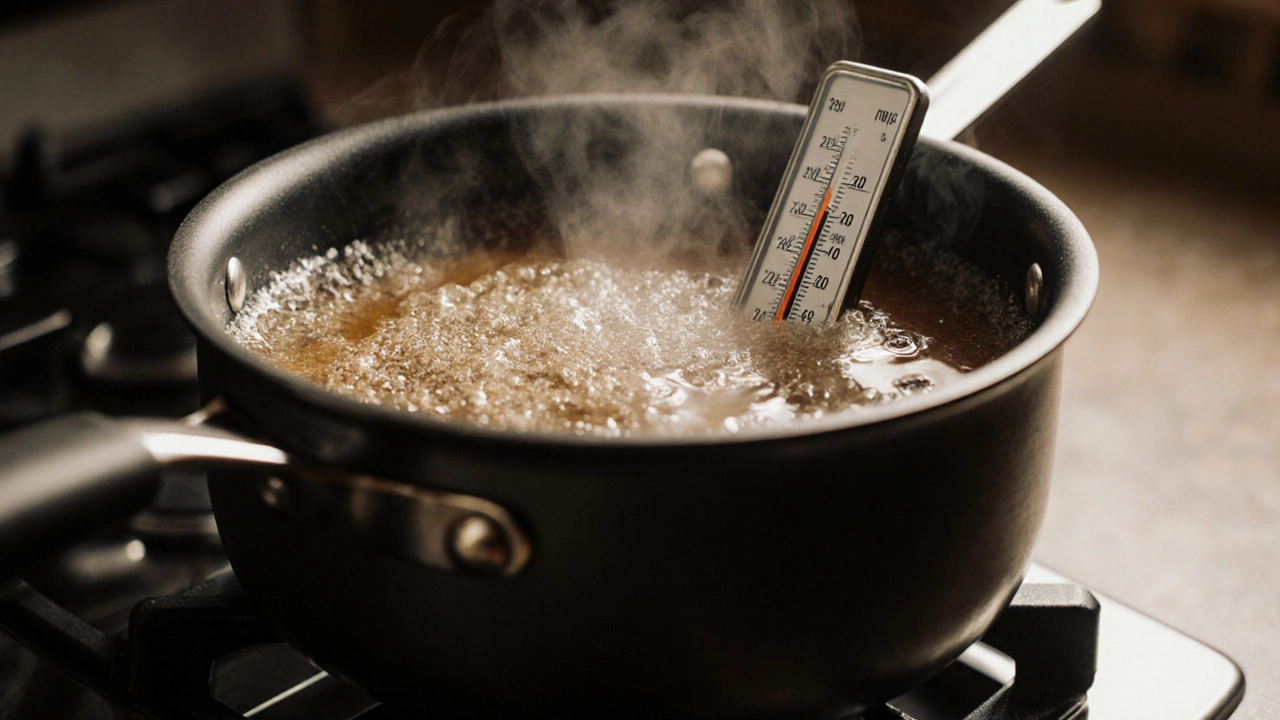
Stirring fudge while boiling causes grainy texture. Learn when to stir, when to stop, and how to fix common fudge mistakes with science-backed tips for perfect results every time.
Read More