Baking Paper vs. Foil for Pavlova: The Ultimate Guide
Struggling with stuck pavlovas? Discover why baking paper beats foil for meringues. Learn expert tips for perfect release, avoiding weeping, and achieving a crisp shell.
Read More
If you’ve ever wanted that crunchy‑top, soft‑inside texture on a pie or a sweet base for a pavlova, meringue is the answer. It’s just egg whites, sugar, and a pinch of acid, but the magic happens in the mixing bowl. Follow these steps and you’ll get a glossy, stable foam that holds its shape for baking or decorating.
French meringue is the classic “egg white and sugar” method. You beat egg whites to soft peaks, then gradually add sugar while continuing to beat. It’s perfect for toppings that need a quick bake, like lemon meringue pies or baked Alaska.
Swiss meringue starts with egg whites and sugar gently heated over a bain‑marie until the sugar dissolves. Then you whisk until glossy. Because the sugar is already melted, the foam is very stable. Use Swiss meringue for buttercream‑style frosting or for piping shapes that must stay firm.
Italian meringue involves a hot sugar syrup poured into beating egg whites. This creates the strongest foam, great for mousse, buttercream, or any dessert that sits at room temperature for hours. It also adds a subtle caramel note.
Even a tiny mistake can ruin a batch. Here are the most common culprits and quick fixes:
Once you’ve got a stable meringue, you can shape it right away or bake it on a low temperature (about 90‑120°C) for an hour until dry.
Storing meringue is simple: keep it in an airtight container at room temperature for up to two days. If you need it later, you can freeze it for a month and let it thaw on the counter before using.
Now that you know the basics, experiment with flavorings. A dash of vanilla, a spoonful of cocoa powder, or a splash of orange zest can turn a plain meringue into a signature element of your dessert.
Whether you’re topping a pie, building a pavlova, or adding a light crunch to a chocolate tart, the right meringue technique makes all the difference. Grab a whisk, follow the steps, and enjoy the sweet, airy results.
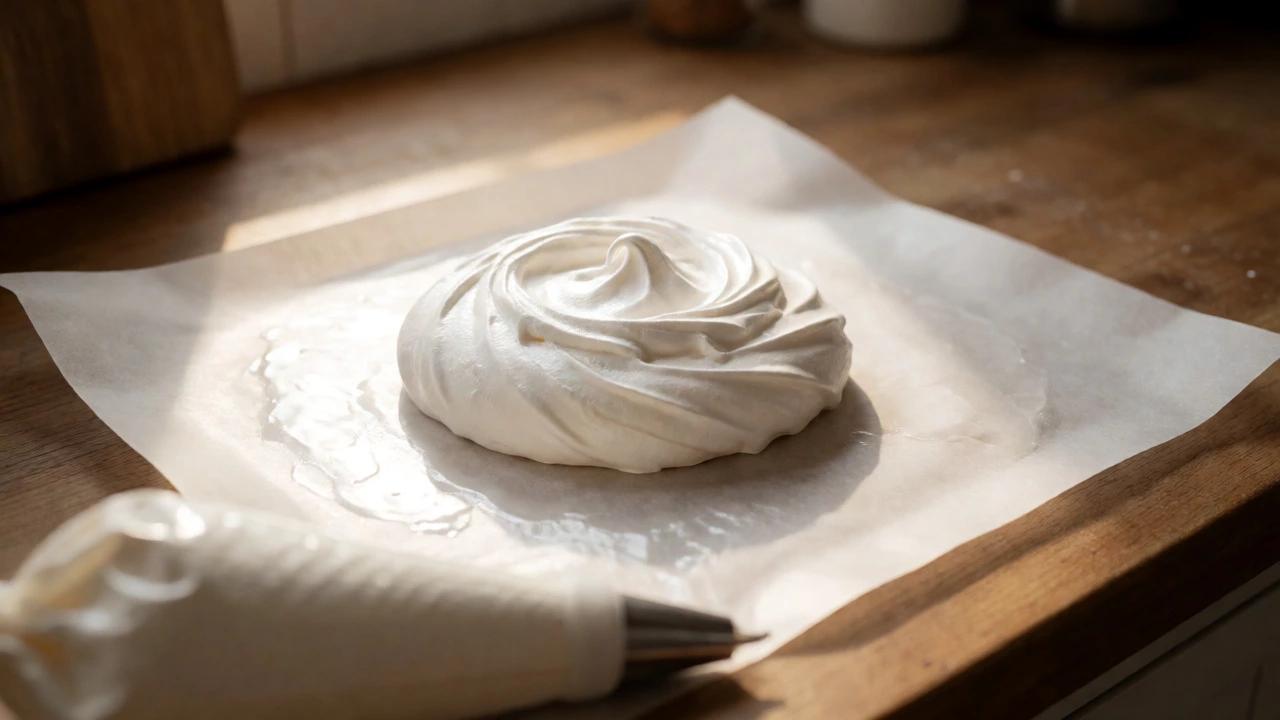
Struggling with stuck pavlovas? Discover why baking paper beats foil for meringues. Learn expert tips for perfect release, avoiding weeping, and achieving a crisp shell.
Read More
Ever mixed up meringue and pavlova? This article breaks down exactly how they're different, from ingredients to textures. You'll find clear tips for making each one work in your kitchen, so you never end up with a soggy pavlova or a chewy meringue. We'll also sneak in some helpful facts to keep your baking on track. Get ready for the inside scoop, straight from the whisk to your dessert plate.
Read More
Ever found yourself out of white wine vinegar when making pavlova? Lemon juice might just be your hero. This article explores using lemon juice as a substitute in meringue, weighing its pros and cons. Can the zesty kick of lemon juice work wonders in your recipe? We will look into the science and technique behind this substitute.
Read More