Macaron Freezing Calculator
Your Macaron Details
Results & Recommendations
Enter your macaron details above to see optimal storage times and thawing instructions.
Macarons are delicate, colorful, and full of flavor-but they don’t last long. If you’ve ever made a batch and ended up with too many, or bought a box and realized you couldn’t finish them before they went stale, you’ve probably wondered: can you freeze macarons?
The short answer? Yes. But not all macarons freeze the same way. How you freeze them, how long they last, and how you thaw them makes all the difference between a perfect bite and a soggy mess.
Why Freezing Macarons Works (When Done Right)
Macarons are made of almond flour, egg whites, and sugar-ingredients that handle freezing surprisingly well. The shell is crisp, the filling is usually buttercream, ganache, or jam-all of which freeze without breaking down. The real issue isn’t whether they can be frozen, but whether they’ll still taste good after thawing.
Many professional bakers freeze macarons as part of their process. In fact, some say macarons taste even better after being frozen and thawed. Why? The moisture from the filling slowly seeps into the shell, softening it just enough to create the perfect chewy-crisp texture. It’s like letting a sandwich sit overnight, but for cookies.
How to Freeze Macarons: Step by Step
Freezing macarons isn’t complicated, but skipping steps will ruin them. Here’s how to do it right:
- Let them mature first. After filling your macarons, let them sit in the fridge for at least 24 hours. This lets the flavors blend and the shells absorb moisture from the filling. Freezing them before they mature means they’ll stay dry and crunchy instead of becoming tender.
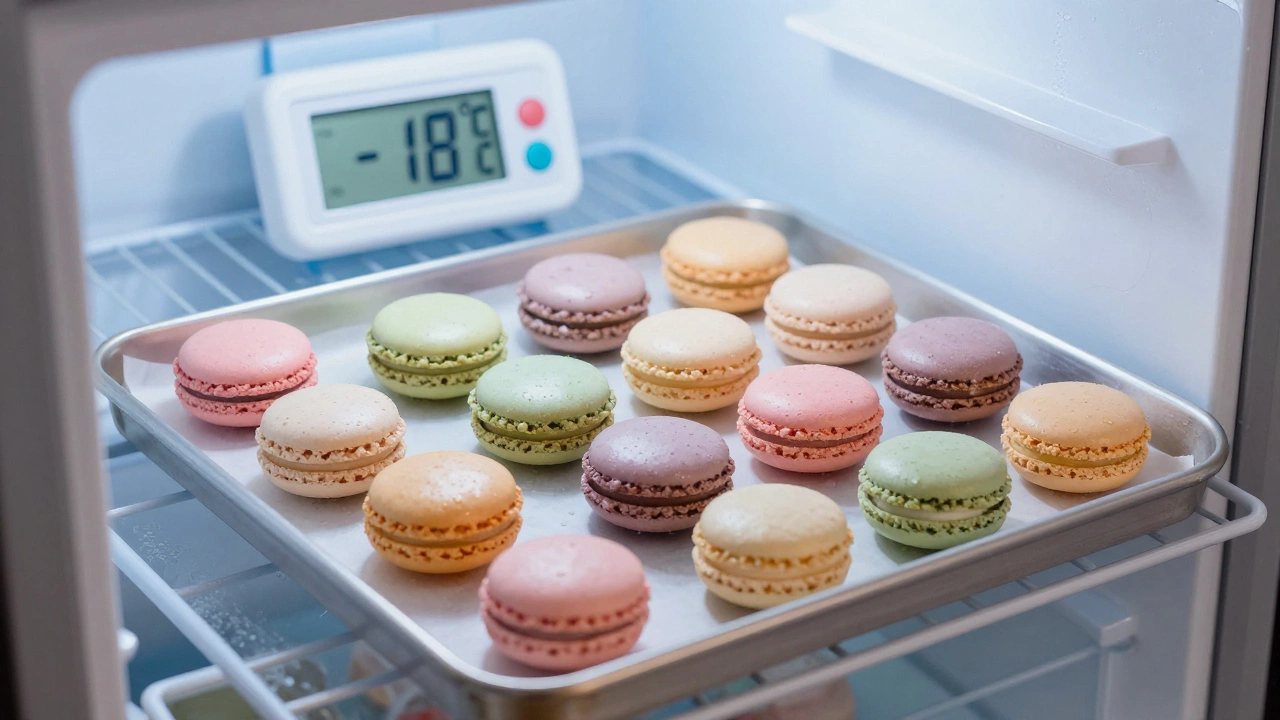
- Place them in a single layer. Arrange unfrosted or filled macarons on a baking sheet lined with parchment paper. Don’t let them touch. If they’re too close, they’ll stick together when frozen.
- Flash-freeze them. Put the tray in the freezer for 2-3 hours. This step locks in their shape and prevents clumping.
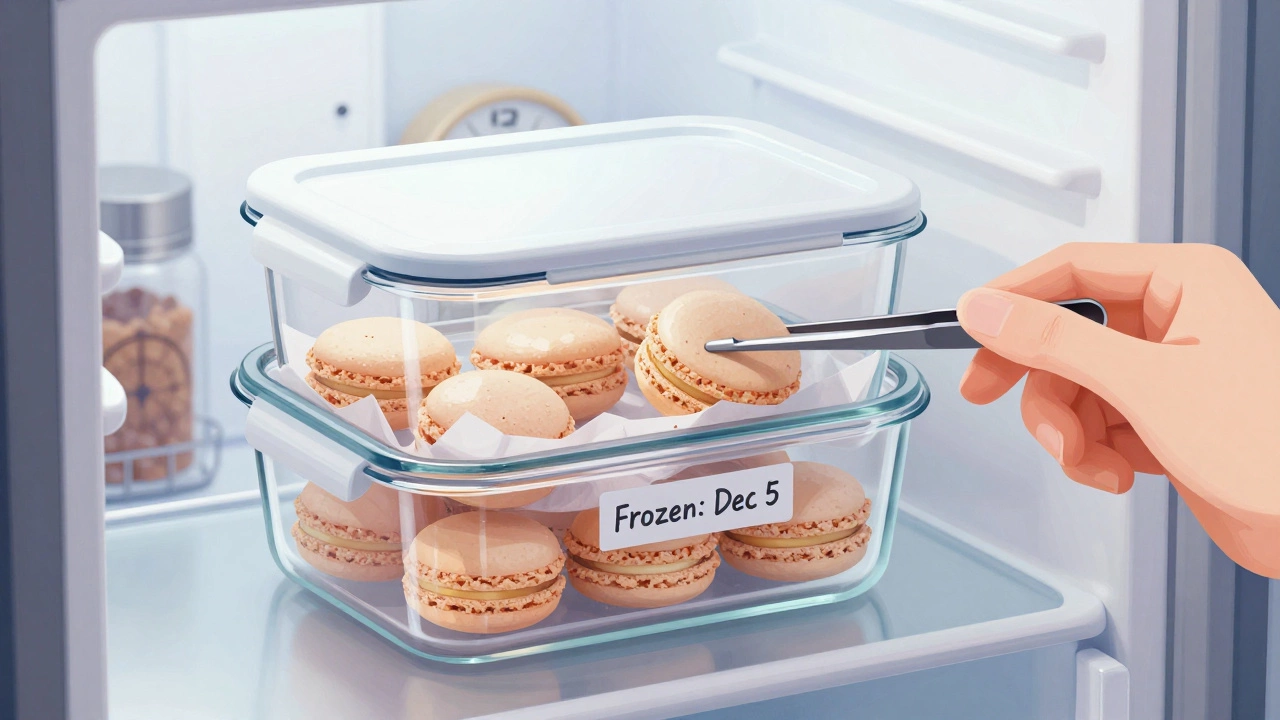
- Transfer to an airtight container. Once frozen, move the macarons into a container with a tight-fitting lid. Use parchment paper between layers if stacking. Avoid plastic bags-they let in air and can cause freezer burn.
- Label and date. Write the date on the container. Macarons stay best for up to 3 months, but after that, flavor starts to fade.
What Happens If You Freeze Them Wrong?
People often freeze macarons right after baking-no filling, no resting. That’s a mistake. Without time to mature, the shells stay too dry. When thawed, they’re crunchy on the outside but hollow inside, with no soft center.
Another common error? Wrapping them in foil or plastic wrap alone. These don’t block air well. After a few weeks, the macarons develop ice crystals. The filling separates, the shells get leathery, and the flavor turns flat.
And never freeze macarons with fresh fruit fillings-strawberry, raspberry, mango. These turn watery and mushy when thawed. Stick to buttercream, chocolate ganache, or curd fillings. They hold up.
How Long Do Frozen Macarons Last?
Properly stored macarons last:
- Up to 3 months in the freezer-ideal for flavor and texture
- Up to 2 weeks in the fridge (if not freezing)
- Only 1-2 days at room temperature
After 3 months, they’re still safe to eat, but the almond flavor fades. The shells lose their crispness, and the filling becomes less vibrant. If you’re planning ahead for a party or holiday, freezing them 2-3 weeks in advance is perfect.
How to Thaw Frozen Macarons
Thawing is just as important as freezing. Don’t just pull them out and eat them cold. Here’s what works:
- Take them out of the freezer and leave the container sealed. Don’t open it yet.
- Let them sit in the fridge for 8-12 hours. Slow thawing keeps condensation from forming on the shells. If you open the container too early, moisture from the air will make them soggy.
- Remove them from the fridge 30 minutes before serving. Let them come to room temperature. This brings back the texture and flavor. Cold macarons taste dull. Room temperature ones are rich, creamy, and fragrant.
Never microwave them. The filling will melt unevenly, and the shells will turn rubbery. Heat them gently, if at all.
Can You Freeze Macaron Shells Without Filling?
Yes. Some bakers prefer to freeze just the shells and fill them later. This works if you’re making different flavors for different people. Just follow the same flash-freeze method. Store them in an airtight container with parchment between layers.
When you’re ready to use them, thaw them in the fridge overnight. Then fill and let them mature for 24 hours before serving. This gives you the same tender result as freezing filled macarons.
What About Macarons with Cream Cheese or Whipped Cream?
These are trickier. Cream cheese filling freezes okay, but it can get grainy. Whipped cream? Not recommended. It breaks down and turns watery. If you must use them, freeze for no longer than 2 weeks and expect some texture changes.
For best results, stick to stable fillings: ganache, buttercream, or jam. They’re forgiving. Cream-based fillings are not.
Real-Life Tip: Freezing for Events
I’ve made macarons for weddings, holiday parties, and baby showers in Halifax, where winter lasts half the year. The trick? Freeze them 3 weeks ahead. Thaw them slowly in the fridge. Serve them at room temperature. People always ask how they’re so fresh.
One client even told me her guests thought she ordered them from Paris. She didn’t. She froze them in her kitchen.
Common Myths About Freezing Macarons
- Myth: Freezing kills the flavor. Truth: It enhances it by letting the filling soften the shell.
- Myth: You can’t freeze them after they’ve been in the fridge. Truth: As long as they’re still fresh, freezing them is fine.
- Myth: Macarons get soggy in the freezer. Truth: Only if you skip the airtight container or thaw them too fast.
Quick Storage Checklist
- ✅ Mature filled macarons for 24 hours in the fridge first
- ✅ Flash-freeze on a tray before storing
- ✅ Use airtight containers-not plastic wrap or bags
- ✅ Label with the date
- ✅ Thaw in the fridge overnight, then bring to room temperature
- ❌ Never microwave or thaw at room temperature
- ❌ Avoid fresh fruit fillings if freezing long-term
Can you freeze macarons with fruit filling?
It’s not recommended. Fruit fillings like strawberry, raspberry, or mango release water when frozen and thawed, turning the macaron soggy and mushy. Stick to ganache, buttercream, or jam for best results. If you must use fruit, freeze for no more than 2 weeks and expect some texture changes.
How long can you keep macarons in the freezer?
Properly stored macarons last up to 3 months in the freezer. After that, the almond flavor fades, and the shells lose their crispness. They’re still safe to eat beyond 3 months, but the quality drops noticeably. For the best taste, aim to eat them within 6-8 weeks.
Should you thaw macarons at room temperature?
No. Thawing them at room temperature causes condensation to form on the shells, making them soggy. Always thaw them in the fridge while still sealed in their container. Once they’re cold, let them sit out for 30 minutes before serving to bring out their full flavor.
Can you refreeze macarons after thawing?
It’s not a good idea. Once thawed, the texture changes, and refreezing makes them more prone to sogginess and flavor loss. If you have leftovers after thawing, eat them within 2 days. Don’t freeze them again.
Do frozen macarons taste as good as fresh ones?
Many people say frozen and thawed macarons taste even better. The slow thawing lets the filling soften the shell naturally, creating the perfect chewy-crisp texture. The flavor also deepens as the ingredients meld. Just make sure you follow the right steps-freezing and thawing matter more than you think.