Macaron Freshness Calculator
Calculate Your Macaron Freshness
Enter your storage conditions to get personalized freshness estimates and best practices.
Your Macaron Freshness Results
Macarons look delicate, taste heavenly, and vanish fast-if you’re lucky. But if you’ve ever bought a box only to find them stale by day two, you’re not alone. The real question isn’t just how long do macarons last, but how to make them stay perfect as long as possible. The answer isn’t simple. It depends on the filling, the humidity, the storage method, and even the day you baked them.
How long do macarons last at room temperature?
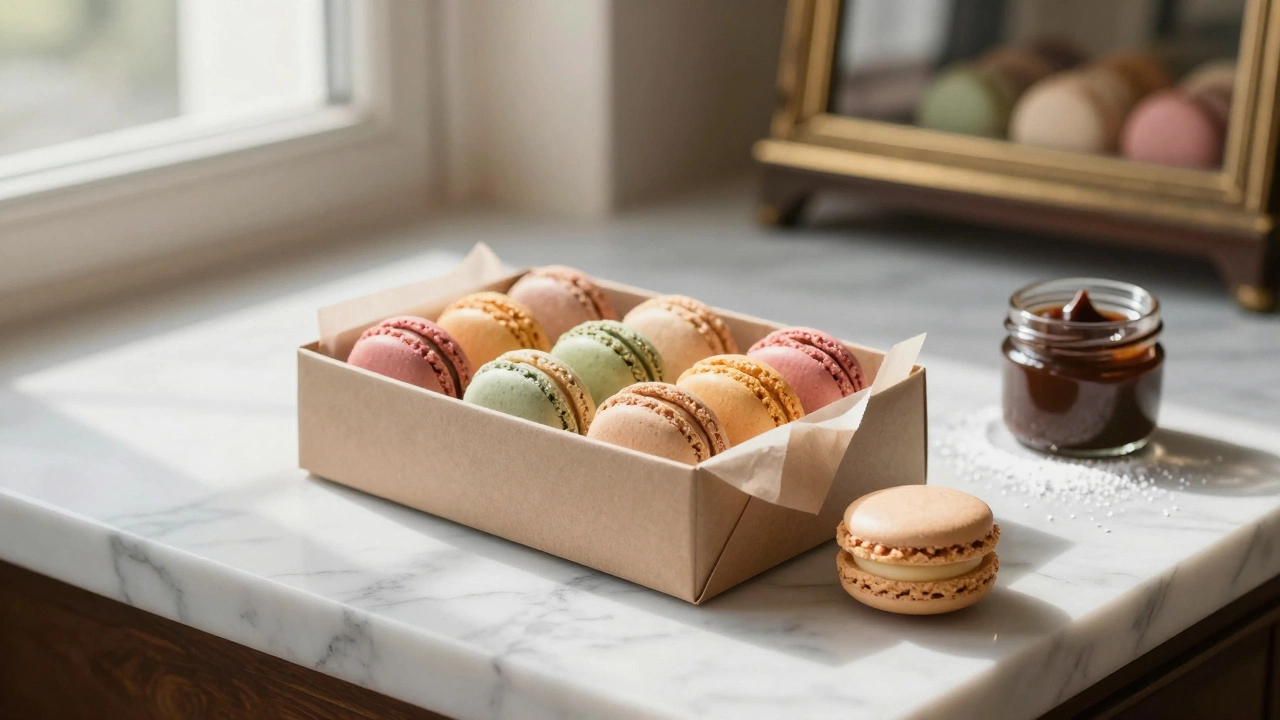
Macarons kept at room temperature last about 24 to 48 hours. After that, the shells start to lose their crisp outer layer and turn chewy or soggy. If you live in a dry climate, you might get away with two full days. But in humid places like Halifax, where the air sticks to everything, they start to soften by day one. The filling is the real culprit here. Buttercream, ganache, or fruit curd can break down faster than the shell, especially if it’s dairy-based or contains fresh fruit.
Never leave macarons in direct sunlight or near a heat source. Even a windowsill can turn a perfect macaron into a sticky mess by afternoon. Keep them in a cool, dark spot-like a pantry or cupboard-away from the fridge’s cold draft. And never stack them. The weight crushes the shells and smears the filling.
How long do macarons last in the fridge?
Refrigerating macarons extends their life to 5 to 7 days. This is the most common method for home bakers and small bakeries. But refrigeration isn’t magic. It slows down spoilage, but it doesn’t stop moisture transfer. The fridge is full of water vapor, and macaron shells are like sponges. They’ll absorb it, and that’s bad news for texture.
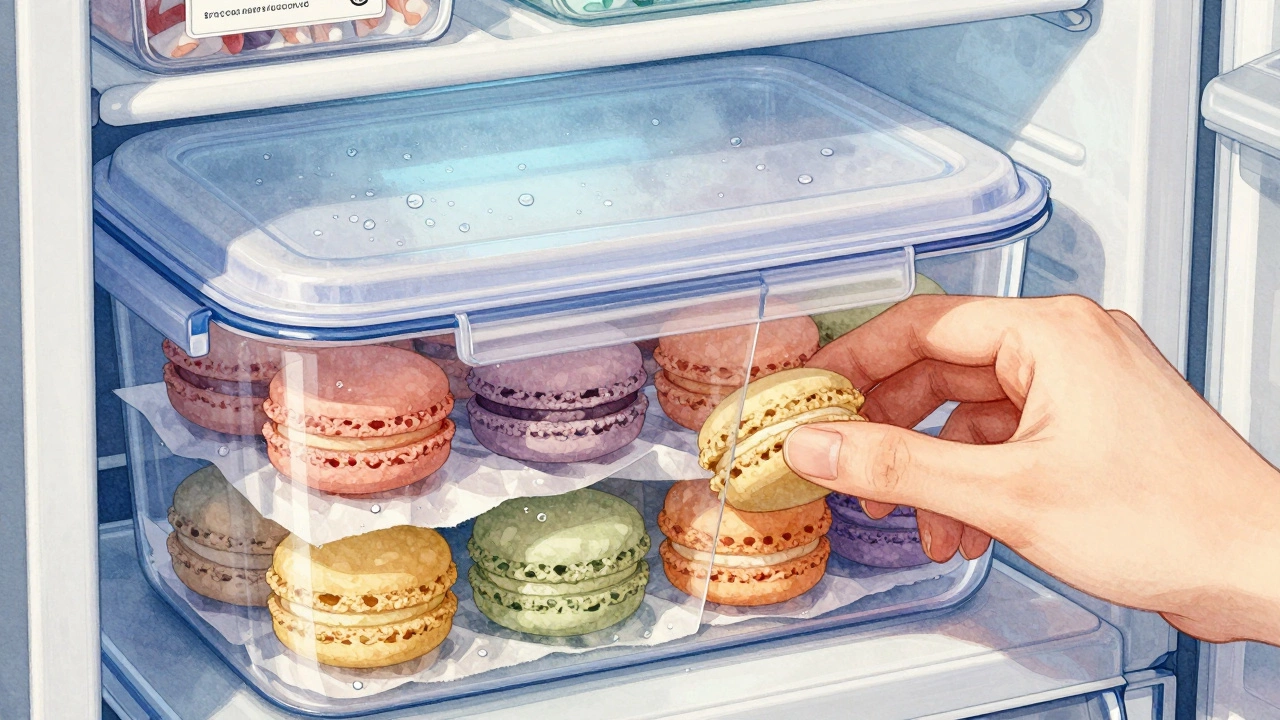
To store them properly in the fridge, use an airtight container. Line the bottom with parchment paper, place the macarons in a single layer, then cover them with another sheet of parchment before sealing. This prevents condensation from dripping onto them and keeps them from sticking together. If you’re storing different flavors, separate them with cardboard dividers-flavors can bleed into each other over time, especially citrus or mint fillings.
Let them sit at room temperature for 20 to 30 minutes before eating. Cold macarons taste flat. The filling loses its richness, and the shell loses its snap. Warming them slightly brings back the texture and flavor.
Can you freeze macarons?
Yes, and it’s the best way to keep them fresh for weeks. Frozen macarons last 2 to 3 months without losing quality. Freezing stops moisture migration, halts bacterial growth, and locks in flavor. Many professional bakers freeze their macarons right after filling them, then thaw them in batches as needed.
Here’s how to do it right:
- Let freshly filled macarons rest at room temperature for 24 hours. This lets the shells and filling meld together.
- Place them in a single layer on a baking sheet and freeze uncovered for 2 hours. This prevents them from sticking together when packed.
- Transfer them to an airtight container, separating layers with parchment paper.
- Label the container with the date and flavor.
When you’re ready to eat them, move the container from the freezer to the fridge. Let them thaw slowly overnight. Then, let them sit at room temperature for 20 minutes before serving. Don’t thaw them on the counter-condensation will ruin the texture.
What makes macarons go bad faster?
Not all macarons are created equal. The filling is the biggest factor in shelf life:
- Buttercream fillings last the longest-up to a week in the fridge. They’re stable and low in moisture.
- Ganache (chocolate or white chocolate) holds up well too. It’s dense and doesn’t weep easily.
- Fruit curds or jams are risky. They’re acidic and wet. They can make the shells soggy in under 48 hours, even in the fridge.
- Cream cheese or whipped cream fillings spoil fastest. These should be eaten within 2 days, max.
- Alcohol-based fillings (like liqueur-infused ganache) actually last longer because alcohol acts as a preservative.
Also, avoid macarons with fresh herbs, edible flowers, or sprinkles that aren’t sugar-based. These add moisture or degrade quickly. Stick to dry toppings like powdered sugar or cocoa dusting.
How to tell if macarons have gone bad
Macarons don’t always mold right away. Sometimes they just… change. Here’s what to look for:
- Texture: If the shells are rock-hard or mushy instead of crisp-chewy, they’re past their prime.
- Smell: A sour, yeasty, or alcoholic odor means the filling has fermented or spoiled.
- Appearance: Dark spots, fuzz, or visible mold (especially around the filling edge) = throw them out.
- Taste: If it tastes off-bitter, sour, or just flat-don’t risk it.
Don’t rely on expiration dates on store-bought boxes. Those are often guesses. Trust your senses instead.
Why do macarons need to rest before eating?
Resting isn’t optional-it’s essential. After filling, macarons need 24 hours in the fridge to mature. This process, called “ripening,” lets the moisture from the filling slowly transfer into the shell. The result? A perfect balance: crisp outside, soft inside, flavors blended together.
Skipping this step means biting into a dry shell with a wet filling. It’s not a macaron-it’s a texture disaster. Even if you plan to eat them the same day, let them sit for at least 6 hours. Overnight is best.
Can you revive stale macarons?
Yes, but only if they’re not spoiled. If they’ve gone soft from humidity, here’s how to fix them:
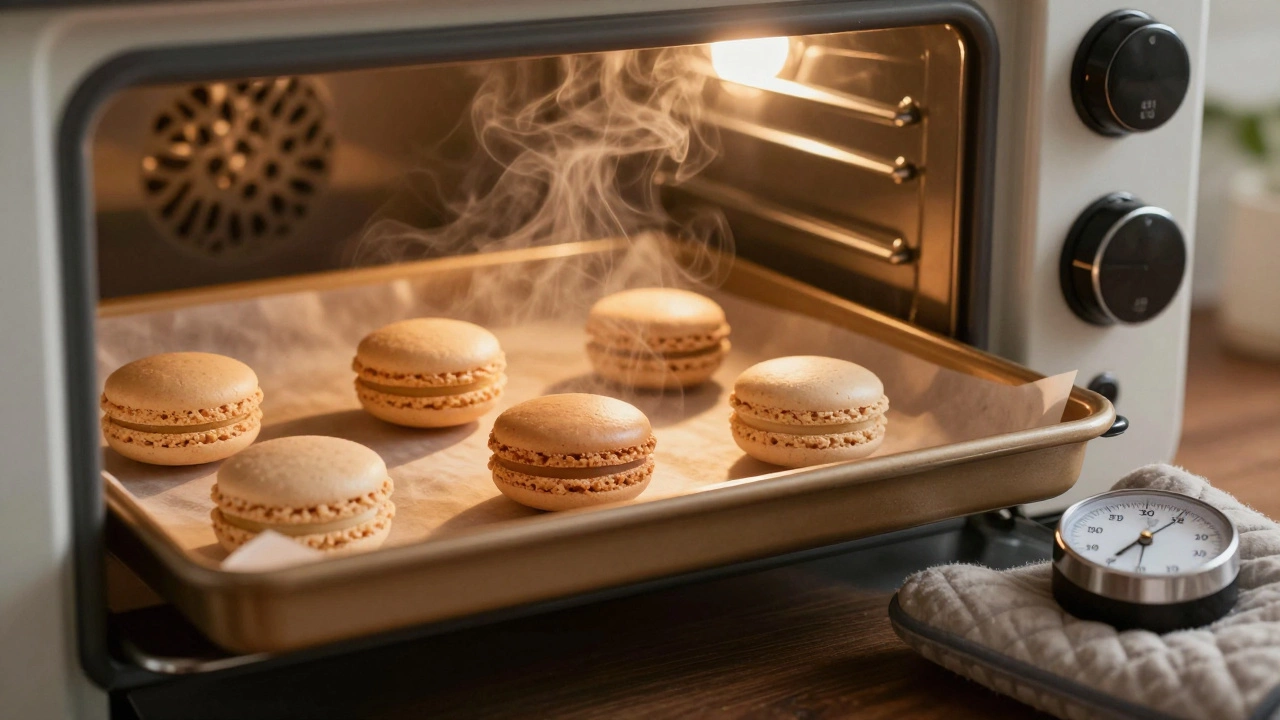
- Preheat your oven to 300°F (150°C).
- Place the macarons on a baking sheet lined with parchment.
- Bake for 4 to 5 minutes, then turn off the oven and leave them inside for another 5 minutes.
- Let them cool completely before eating.
This gently dries out the shells without melting the filling. It won’t bring back the original crispness, but it’ll make them edible again. Don’t try this with cream-based fillings-they’ll break down.
What about store-bought macarons?
Store-bought macarons are usually baked days before they hit the shelf. They’re often frozen, then thawed for display. Check the packaging for a “best by” date. Even if it says “fresh,” they’re rarely baked that day. If you buy them, refrigerate immediately and eat within 3 days. Don’t wait until the weekend to open the box.
Some brands sell them vacuum-sealed or with silica gel packs. That’s a good sign-it means they’ve thought about moisture control. But still, don’t leave them on the counter.
How long do macarons last after being filled?
Filled macarons last 24 to 48 hours at room temperature, 5 to 7 days in the fridge, and 2 to 3 months in the freezer. The filling type matters-buttercream lasts longer than fruit curd or cream cheese. Always let them rest in the fridge for 24 hours after filling for the best texture.
Can you leave macarons out overnight?
Yes, but only if your kitchen is cool and dry. In humid climates or during summer, leaving them out overnight will make them soggy. If you must leave them out, keep them in an airtight container away from direct light and heat sources.
Why do my macarons get sticky?
Macarons get sticky because they absorb moisture from the air. This happens faster in humid environments. If they’re not stored in an airtight container, the sugar in the shells pulls water from the air, turning the surface tacky. Refrigeration without proper sealing makes it worse.
Do macarons expire if unopened?
Unopened macarons don’t have a fixed expiration date-they degrade based on storage. If stored properly in the freezer, they can last 3 months. In the fridge, 7 days is the max. At room temperature, they’re best eaten within 2 days. Always check for texture and smell before eating.
Can you reheat macarons in the microwave?
No, microwaving ruins macarons. The filling melts unevenly, the shells turn rubbery, and the sugar can crystallize. If they’re cold, let them come to room temperature naturally. If they’re stale, use the oven method-never the microwave.
Final tip: Make less, eat sooner
The best way to guarantee perfect macarons? Bake smaller batches. They’re meant to be enjoyed fresh. If you’re baking for an event, make them two days ahead, freeze them, then thaw the day before. That way, you get the best texture and flavor without the stress. Macarons aren’t meant to sit around-they’re meant to be shared, tasted, and remembered.