Macaron Nutrition & Weight Calculator
Estimate the nutritional impact of your macaron consumption. Adjust for size, filling density, and quantity to get precise data.
Configure Your Macaron
Select options and click calculate to see results.
Note: A standard daily intake of added sugars is ~25-50g. This snack represents --% of that limit.
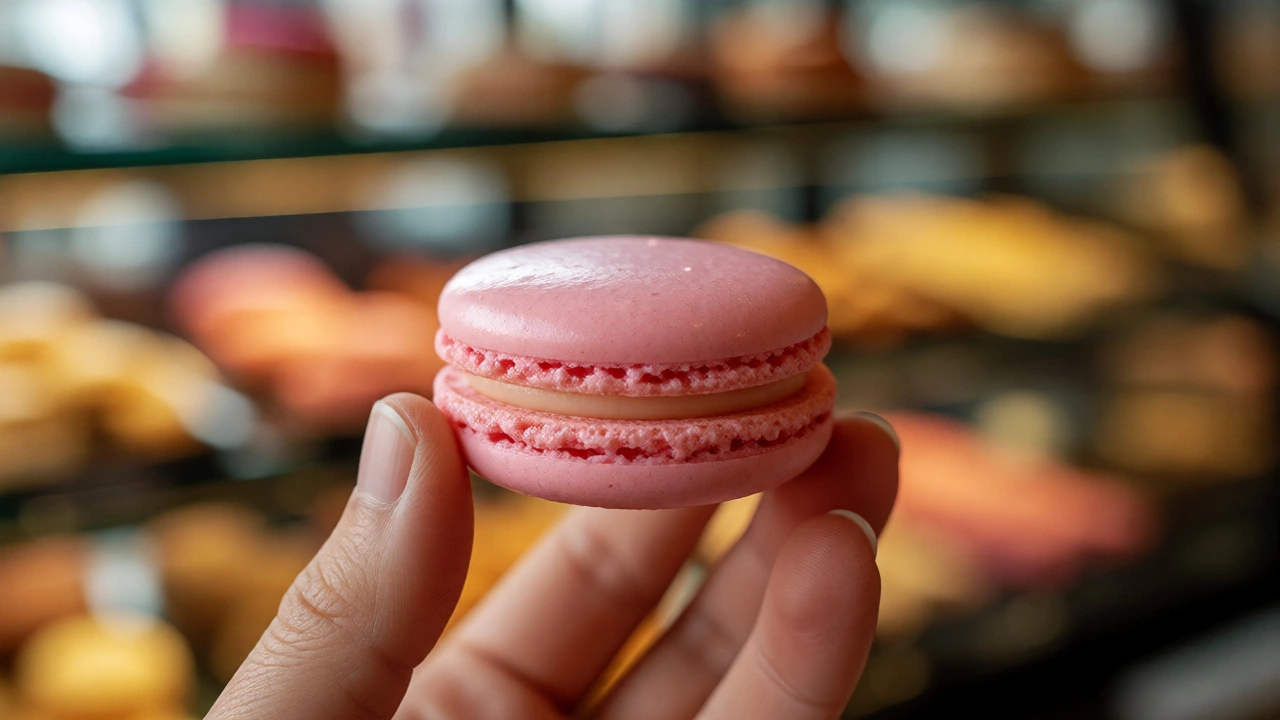
You’re standing in front of the bakery display case, eyeing that pastel pink shell with the perfect feet and smooth dome. You want to know exactly what you’re putting into your body before you take that first bite. Or maybe you’re a home baker trying to scale a recipe, and you need precise numbers because baking is chemistry, not just cooking.
The short answer? A standard French macaron weighs between 10 and 20 grams. But here’s the thing: "standard" is a loose term in the pastry world. If you buy one from a high-end patisserie in Paris, it might hit 18 grams. If you grab a mini version at a wedding, it could be as light as 5 grams. And if you’re making them at home, your piping bag skills determine whether you land on 12 or 16 grams per cookie.
Why Macaron Weight Matters More Than You Think
Weight isn’t just about counting calories, though that’s part of it. For bakers, weight consistency is the difference between a professional-looking batch and a lopsided disaster. If one macaron has 15 grams of filling and another has 25 grams, they won’t stack evenly in the box. Worse, they’ll mature differently. The heavier ones stay moist longer; the lighter ones dry out faster.
From a nutritional standpoint, knowing the exact gram count helps you track intake accurately. A single 15-gram macaron packs roughly 60 calories. That sounds small until you realize how easy it is to eat five of them while chatting with friends. Suddenly, you’ve consumed a full meal’s worth of sugar without noticing.
Breaking Down the Anatomy of a Macaron
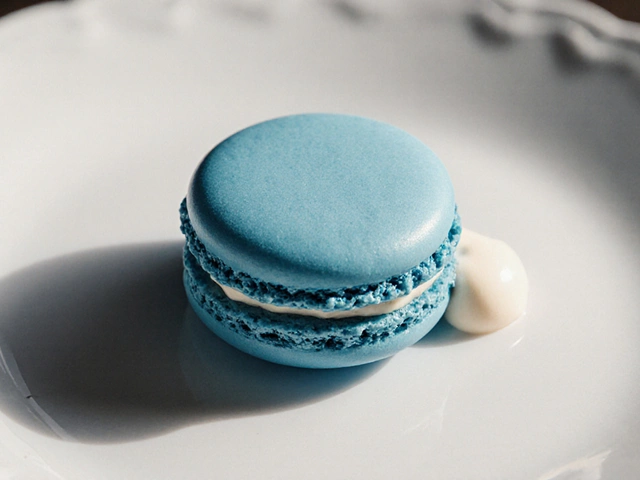
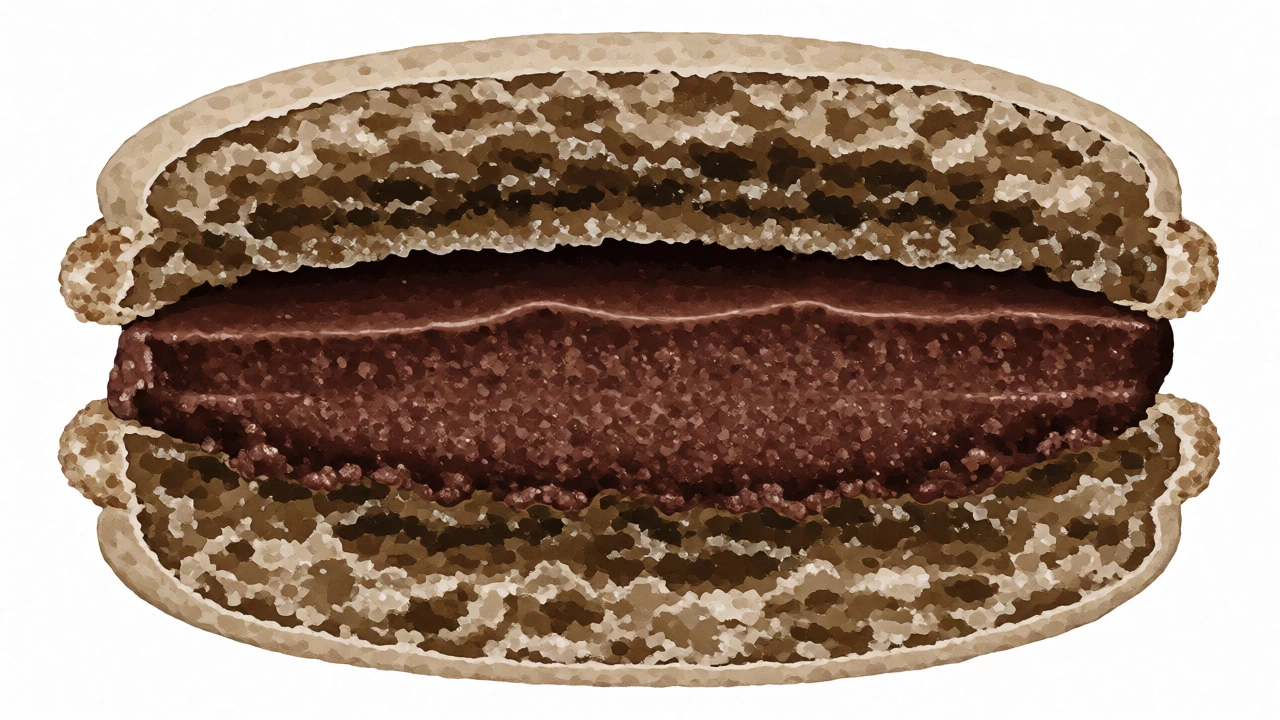
To understand the weight, you have to look at the components. A macaron isn’t one solid piece; it’s a sandwich. Let’s dissect the three main parts using the Entity-Attribute-Value model so you can see where the mass comes from.
| Component | Typical Weight (grams) | Primary Ingredient Source | Caloric Density |
|---|---|---|---|
| Almond Shell | 4-6 g (each) | Almond flour, egg whites, sugar | High (fat + sugar) |
| Ganache/Filling | 5-7 g | Chocolate, cream, butter, fruit puree | Very High (fat dominant) |
| Total Unit | 13-20 g | Combined structure | ~400 kcal/100g |
Notice how the filling often outweighs the shells combined? This is counterintuitive for many people who think the cookie part is the bulk of the treat. In reality, the ganache or buttercream does the heavy lifting, literally and calorically.
Size Variations: From Minis to Jumbos
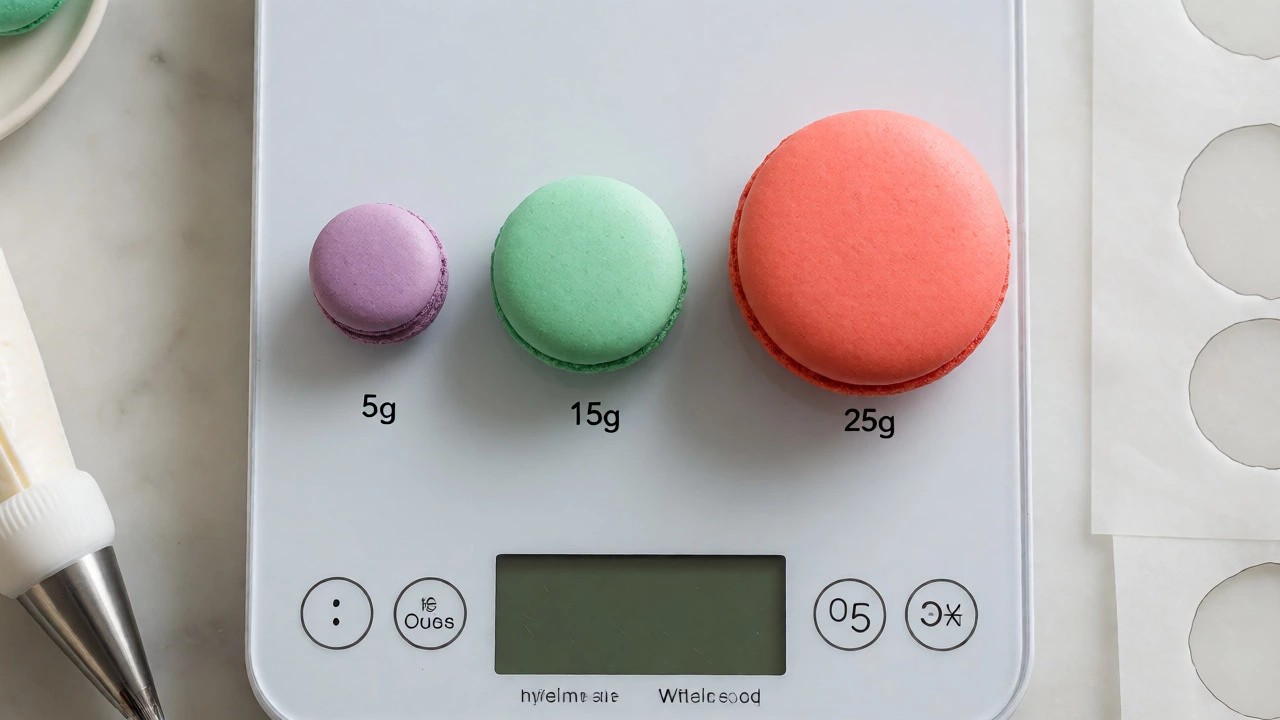
Not all macarons are created equal. The industry recognizes several size categories, each with its own weight profile. If you’re planning an event menu, mixing sizes creates visual interest but complicates portion control.
- Mini Macarons: These are popular for catering and weddings. They typically weigh 5 to 8 grams. Because they have a higher surface-area-to-volume ratio, they tend to crisp up faster than their larger counterparts.
- Standard Macarons: The classic size found in most boutiques. Weighing 10 to 15 grams, these offer the best balance of shell crunch and creamy filling. This is the benchmark used for most nutritional labels.
- Jumbo Macarons: Often seen in novelty shops or specific regional styles (like some American interpretations). These can weigh 20 to 30 grams or more. They require adjusted baking times because the center needs to cook through without burning the exterior.
If you’re buying by weight at a market, remember that packaging adds mass too. A decorative ribbon or a plastic clamshell can add 2-5 grams to the total package weight, which might throw off your mental math if you’re tracking strict dietary limits.
Nutritional Reality Check: Calories Per Gram
Let’s talk numbers. Since macarons are dense with sugar and fat, their caloric density is high. On average, a French macaron contains approximately 400 calories per 100 grams.
Here’s how that translates to real-world snacking:
- A 10-gram mini: ~40 calories
- A 15-gram standard: ~60 calories
- A 25-gram jumbo: ~100 calories
Compare this to other desserts. A chocolate chip cookie might weigh 30 grams and contain 150 calories (500 kcal/100g). So, gram-for-gram, macarons are actually slightly less calorie-dense than cookies, primarily because almond flour has different metabolic properties than wheat flour and butter. However, because they are small, people underestimate how many they are eating. Five minis (50g) equals 200 calories-equivalent to a large apple and a slice of cheese.
Baking Precision: How to Control Your Weight
If you’re making macarons at home, consistency is king. You don’t want one cookie weighing 12 grams and its neighbor weighing 18 grams. Here’s how to keep your batches uniform.
Use a Scale for Piping
Most home bakers pipe freehand. It’s artistic, but it’s imprecise. To get consistent weights, place your baking sheet on a digital kitchen scale and tare it to zero. Pipe one shell until the scale reads your target weight (e.g., 3 grams per half-shell). Mark the spot on your parchment paper template. Now you have a visual guide that matches your desired mass.
Filling Distribution
When assembling, use a piping tip of the same diameter as your shell piping tip. Squeeze a consistent amount of ganache onto the flat side of one shell. Practice makes perfect here. If you find your finished macarons vary wildly in weight, check your filling volume first. Too much filling causes the shells to spread during maturation, changing both weight distribution and texture.
Common Misconceptions About Macaron Weight
There’s a persistent myth that macarons are "light" foods. Yes, they are airy inside, but that airiness is deceptive. The structural integrity relies on meringue (egg whites and sugar), which is dense once baked and cooled. Don’t let the delicate appearance fool you into thinking they are low-calorie snacks.
Another misconception involves the "hollow" factor. Sometimes, macarons collapse slightly after baking, creating a hollow interior. Does this reduce weight? Technically, yes, by a fraction of a gram due to lost moisture or structural collapse, but nutritionally, it’s negligible. The ingredients didn’t vanish; the structure just changed. Always weigh based on the final product, not the batter.
Buying vs. Making: Which Gives Better Value?
When you buy pre-made macarons, you’re paying for labor and precision. A bakery ensures every unit hits within a 1-gram tolerance. When you make them yourself, you save money but risk inconsistency. If you’re calculating costs for a party, assume a 15% variance in homemade batches. Buy extra supplies to account for failed batches or uneven sizing.
For dieters, store-bought macarons offer transparency. Most reputable brands list the weight per piece on the label. Homemade versions require you to do the math. Keep a food journal if you’re serious about tracking. Weigh one random sample from your batch, then multiply by the number you plan to eat.
Practical Tips for Portion Control
If you love macarons but watch your waistline, here are three strategies to manage intake based on weight:
- The Plate Method: Never eat directly from the box. Place two standard macarons (approx. 30g total) on a small plate. Eat slowly. The visual cue of the empty plate signals completion better than staring at a half-empty box.
- Pair with Protein: Eat your macaron alongside a source of protein, like Greek yogurt or a handful of almonds. This slows down sugar absorption and increases satiety, preventing the "just one more" spiral.
- Choose Fillings Wisely: Fruit curd fillings often weigh slightly less than chocolate ganache because they have higher water content. If you’re strictly counting grams, opt for fruit flavors-they deliver similar satisfaction with marginally less fat mass per unit.
Is a macaron gluten-free?
Yes, traditional French macarons are naturally gluten-free because they use almond flour instead of wheat flour. However, always check for cross-contamination in commercial bakeries if you have celiac disease.
Do mini macarons have fewer calories?
Yes, proportionally. A mini macaron (5-8g) has roughly one-third to one-half the calories of a standard macaron (15g). However, because they are smaller, people often eat more of them, negating the calorie savings.
Why are my homemade macarons heavier than store-bought ones?
Homemade macarons often have thicker shells or more generous filling portions. Professional bakers use automated piping machines that dispense exact volumes. Hand-piping tends to result in slightly larger, heavier units unless you practice strict measurement techniques.
Does the filling type change the weight significantly?
Slightly. Buttercream and ganache are denser than fruit jams or curds. A ganache-filled macaron might weigh 1-2 grams more than a jam-filled one of the same shell size due to the higher fat and lower water content.
How many macarons should I serve per person?
For standard events, plan for 2-3 macarons per guest. If serving only macarons as dessert, aim for 3-4. If offering a variety of desserts, 1-2 suffices. Adjust based on whether you are serving minis or standards.