
Vegan Dessert Nutrient Calculator
This tool calculates potential nutrient gaps in your diet based on vegan dessert consumption. Answer these questions to get personalized insights.
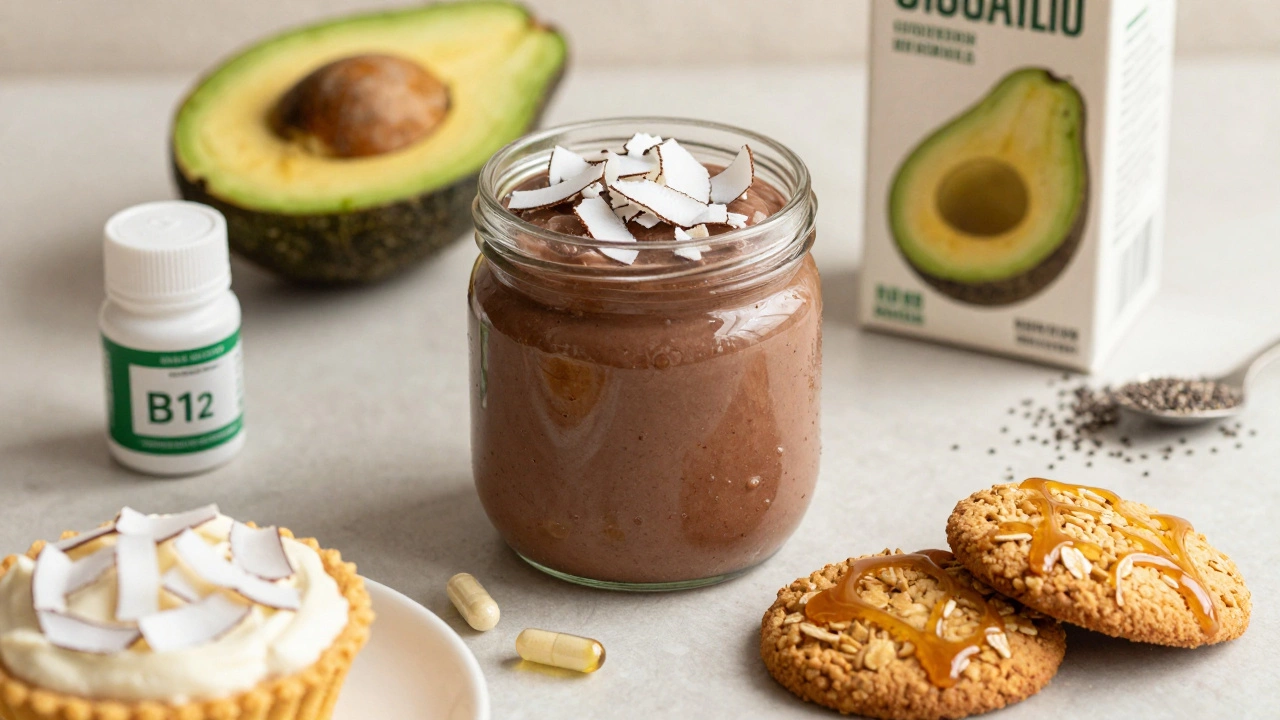
If you’re eating vegan desserts regularly, you’re probably enjoying plant-based treats like chocolate avocado mousse, coconut cream pies, or oatmeal cookies sweetened with maple syrup. But here’s the question no one asks out loud: are you missing something vital-not just in your desserts, but in your whole diet?
Vegan desserts aren’t just sugar and flour. They’re often made with almond milk, flaxseed, coconut oil, and dates. Sounds healthy, right? But here’s the catch: just because a dessert is vegan doesn’t mean it’s nutritionally complete. Many people assume going vegan automatically means they’re getting all the nutrients they need. That’s not true. And when you’re eating mostly sweet treats, the risk of missing key nutrients goes up.
What’s Missing in a Vegan Dessert Diet?
Let’s cut through the noise. You don’t need to overhaul your whole life. But if you’re eating vegan desserts daily-especially store-bought ones-you’re likely falling short in a few areas. Here’s what most people miss:
- Vitamin B12: This is non-negotiable. Your body can’t make it. No plant food naturally contains active B12. Even if you eat tons of fortified nutritional yeast or plant milks, you still need a supplement. A 2023 study in the Journal of Nutrition found that 43% of vegans who didn’t take B12 supplements had levels below the healthy threshold. Low B12 causes fatigue, brain fog, and nerve damage over time.
- Iron: You get plenty of iron from lentils and spinach, but plant-based iron (non-heme) is harder for your body to absorb. Pairing iron-rich foods with vitamin C (like orange slices with your oatmeal cookies) helps. But if you’re only eating desserts, you’re missing the iron-rich meals that make absorption possible.
- Calcium: Many vegan desserts use almond milk. But not all almond milk is fortified. Check the label. If it doesn’t say “fortified with calcium,” you’re getting maybe 10% of your daily needs per cup. Dairy-free doesn’t mean calcium-rich. You need at least 1,000 mg a day. That’s like 3 cups of fortified soy milk-or a daily supplement.
- Omega-3s: Flaxseed and chia seeds in your vegan brownies give you ALA, a weak form of omega-3. Your body converts less than 10% of ALA into the active forms (EPA and DHA) your brain and heart need. Most vegans are deficient. Algae-based supplements are the only reliable vegan source.
- Protein: A single slice of vegan cake has maybe 2 grams of protein. A decent meal should have 15-20. If your day is mostly desserts and snacks, you’re not getting enough. Low protein leads to muscle loss, slow recovery, and constant hunger-even if you’re full.
Why Vegan Desserts Don’t Fix This
Here’s the problem with vegan desserts: they’re designed for taste, not balance. A vegan chocolate chip cookie might have 18 grams of sugar and 1 gram of protein. That’s not a snack. That’s a sugar spike with zero nutritional return.
Compare that to a simple meal: a bowl of lentils with broccoli and tahini. You get iron, calcium, protein, and fiber. No added sugar. No refined flour. Just real food. But that’s not Instagram-worthy. So people skip it.
When your diet is built around desserts, you’re trading long-term health for short-term pleasure. And it’s not about willpower. It’s about structure. If you don’t plan meals around nutrient-dense foods, your body will pay the price-even if you’re eating ‘clean’ vegan treats.
What Should You Actually Be Eating?
You don’t have to stop eating vegan desserts. But you need to anchor your day with foods that actually nourish you.
Start here:
- Fortified plant milks: Choose soy or pea milk with at least 300 mg of calcium and 2.4 mcg of B12 per cup. Drink one daily.
- Legumes daily: Lentils, chickpeas, black beans. Even half a cup gives you 9 grams of protein and 3.5 mg of iron.
- Leafy greens: Kale, bok choy, collards. These have absorbable calcium-unlike almond milk unless fortified.
- Seeds: Hemp, chia, flax. Sprinkle them on desserts or salads. They add omega-3s and protein.
- Algae oil supplement: 250-500 mg of DHA/EPA daily. No fish. No guesswork.
- B12 supplement: 25-100 mcg daily. Or 1,000 mcg twice a week. Simple. Cheap. Lifesaving.
These aren’t optional. They’re baseline. If you’re eating vegan desserts regularly, you need these more than you need another recipe.
Can You Get These from Desserts Alone?
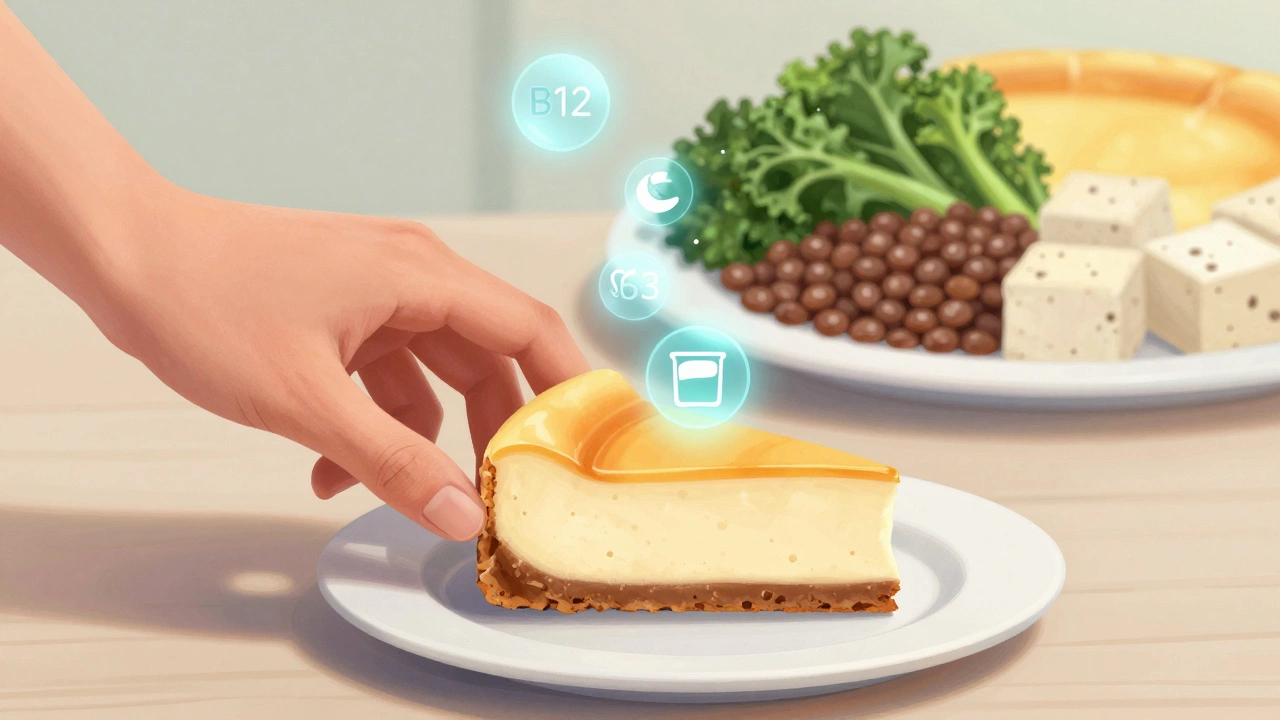
Let’s be real. You can’t. A slice of vegan cheesecake made with cashews and coconut cream might have 5 grams of fat and 20 grams of sugar. It has zero B12, zero DHA, and maybe 1 gram of protein. Even if it’s made with fortified tofu, you’d need to eat three slices just to get one day’s worth of B12-and you’d overdose on sugar and calories.
Fortified desserts exist. But they’re rare. And even if they do have added nutrients, they’re still low in protein and high in refined carbs. Your body doesn’t thrive on sugar, even if it’s vegan sugar.
The truth? You need whole foods as your foundation. Desserts are a bonus-not a replacement.
What Happens If You Ignore This?
Most people feel fine at first. That’s the problem. Nutrient deficiencies don’t show up overnight. They creep in over months.
Low B12? You’ll blame stress for your fatigue. Iron deficiency? You think you’re just ‘not sleeping well.’ Calcium loss? You assume your bones are fine because you’re young.
By the time symptoms become obvious, damage can be done. Nerve issues from B12 deficiency can be irreversible. Bone density loss from low calcium takes years to reverse. And you won’t know until it’s too late.
There’s no magic test. No quick fix. Just consistency. Eat real food. Take supplements. Track your intake for 30 days. Then check in with your doctor. A simple blood test can show if you’re deficient.
Simple Daily Routine for Vegan Dessert Lovers
You don’t need to be perfect. But you do need a system.
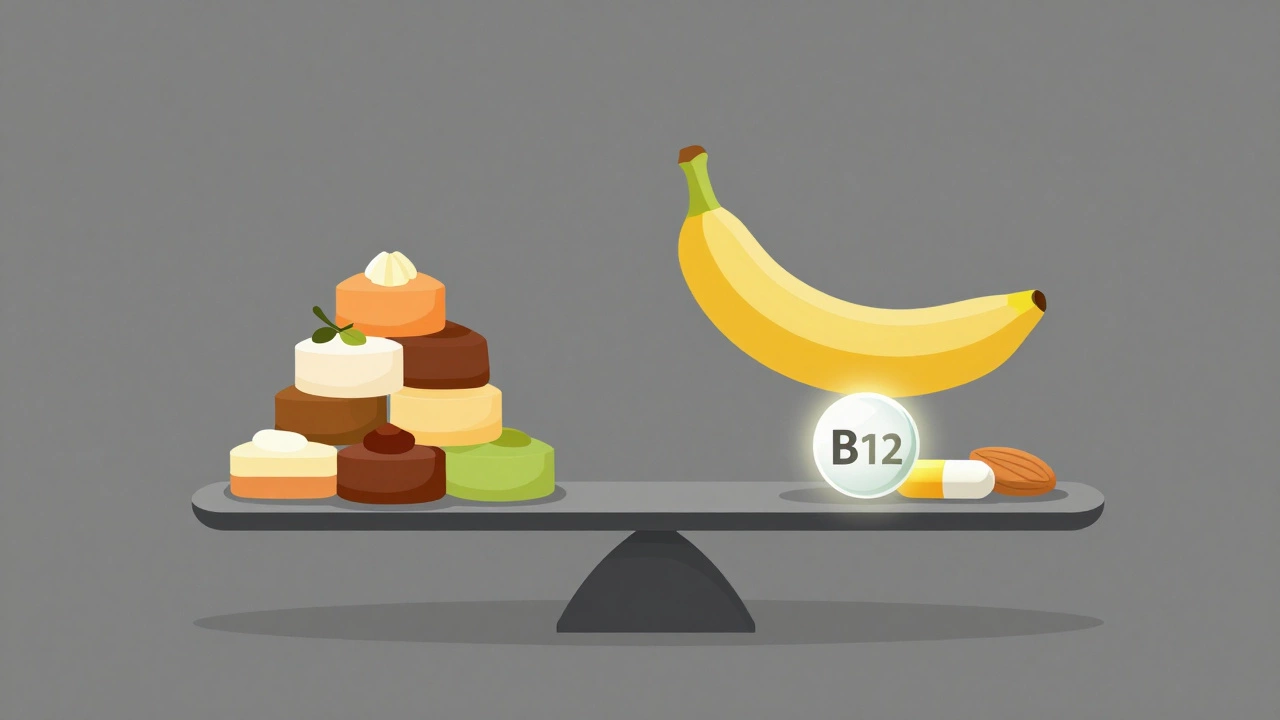
- Morning: Fortified soy milk with oatmeal and chia seeds. Add a sliced banana for vitamin C to boost iron absorption.
- Lunch: Lentil soup with kale and pumpkin seeds. Add lemon juice for extra vitamin C.
- Afternoon snack: A handful of almonds and an orange.
- Dinner: Tofu stir-fry with broccoli and brown rice.
- Dessert: Your favorite vegan brownie. Enjoy it. But don’t let it replace dinner.
- Before bed: Take your B12 and algae oil supplement.
That’s it. No complicated diet. No expensive supplements. Just five simple habits.
Final Thought: Vegan Desserts Are Fine. Just Don’t Let Them Define You.
You love vegan desserts. That’s great. They’re delicious, creative, and kind to animals. But your health isn’t a dessert. It’s a foundation. And foundations need more than sugar.
Stop thinking of vegan eating as ‘avoiding animal products.’ Start thinking of it as ‘building a nutrient-rich life.’ Desserts are the cherry on top. Not the whole cake.
Do I really need supplements if I eat vegan desserts every day?
Yes. Vegan desserts don’t contain B12, DHA/EPA, or enough bioavailable iron and calcium. Even if your dessert uses fortified ingredients, you’d need to eat unrealistic amounts to meet daily needs. Supplements aren’t optional-they’re essential for long-term health.
Can I get enough protein from vegan desserts?
No. Most vegan desserts have less than 3 grams of protein per serving. Adults need 46-56 grams daily. You can’t meet that with desserts alone. You need legumes, tofu, tempeh, or seitan as your main protein sources.
Is almond milk enough for calcium?
Only if it’s fortified. Unfortified almond milk has about 15 mg of calcium per cup. You need 1,000 mg daily. Fortified versions have 300 mg per cup, so you’d need over three cups just to hit your target. Better yet: eat calcium-rich greens like kale or bok choy daily.
Why is B12 so important for vegans?
B12 is critical for nerve function, red blood cell production, and brain health. Your body can’t make it, and no plant food contains active B12. Deficiency can cause irreversible nerve damage, memory loss, and anemia. Everyone on a vegan diet needs a daily or weekly B12 supplement.
Should I get my blood tested if I eat mostly vegan desserts?
Yes. A simple blood test for B12, ferritin (iron stores), and omega-3 levels can tell you if you’re at risk. Most doctors don’t automatically test vegans-but you can request it. It’s quick, affordable, and far better than guessing.