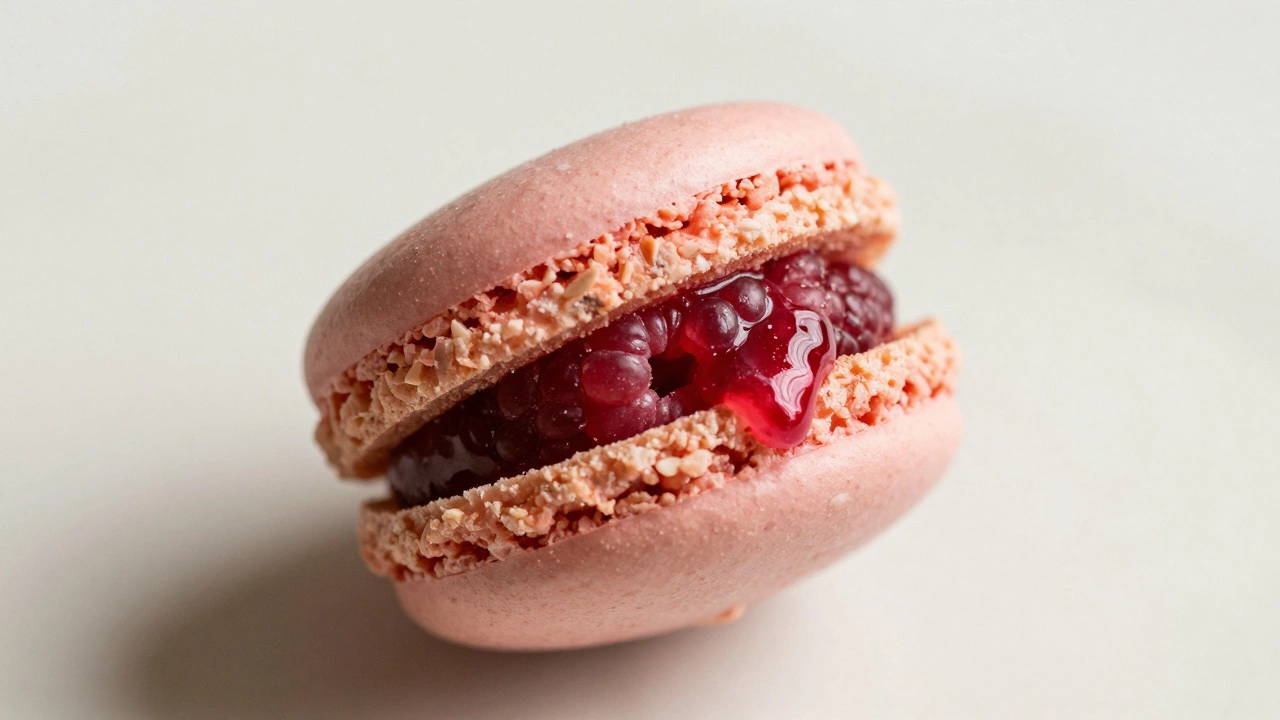
When you bite into a macaron, it doesn’t taste like anything you’ve had before. Not like a cookie. Not like a candy. Not like a cake. It’s something quieter, more delicate - a whisper of sweetness with layers that unfold slowly. The shell is crisp at first touch, then gives way to a soft, chewy center. Inside, the filling oozes just enough to remind you it’s not just decoration - it’s the heart of the whole thing.
The Shell: Crisp, Light, and Slightly Sweet
The outer shell of a macaron is made from almond flour, powdered sugar, and egg whites. That’s it. No butter. No flour. No baking soda. That simplicity is what makes the flavor so pure. When baked right, the shell has a faint nuttiness from the almonds, not overpowering, just there - like toasted hazelnuts in the background. The sugar is sweet, but not cloying. It’s balanced by the slight bitterness of the almond, which keeps it from tasting artificial.
Some people expect a sugary crunch, but a good macaron shell doesn’t shatter. It cracks gently, then melts into the filling. If it’s too hard, it’s overbaked. If it’s too soft, it’s underbaked. The texture is the first clue to quality.
The Filling: Where the Real Flavor Lives
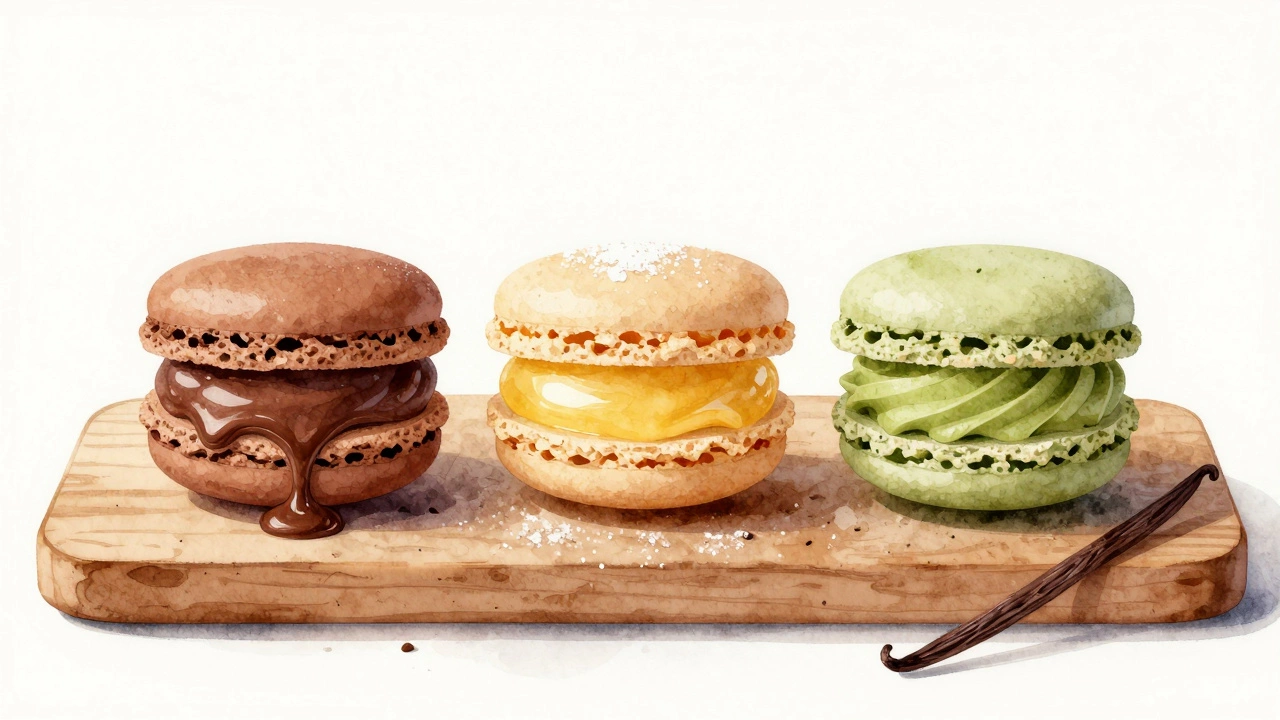
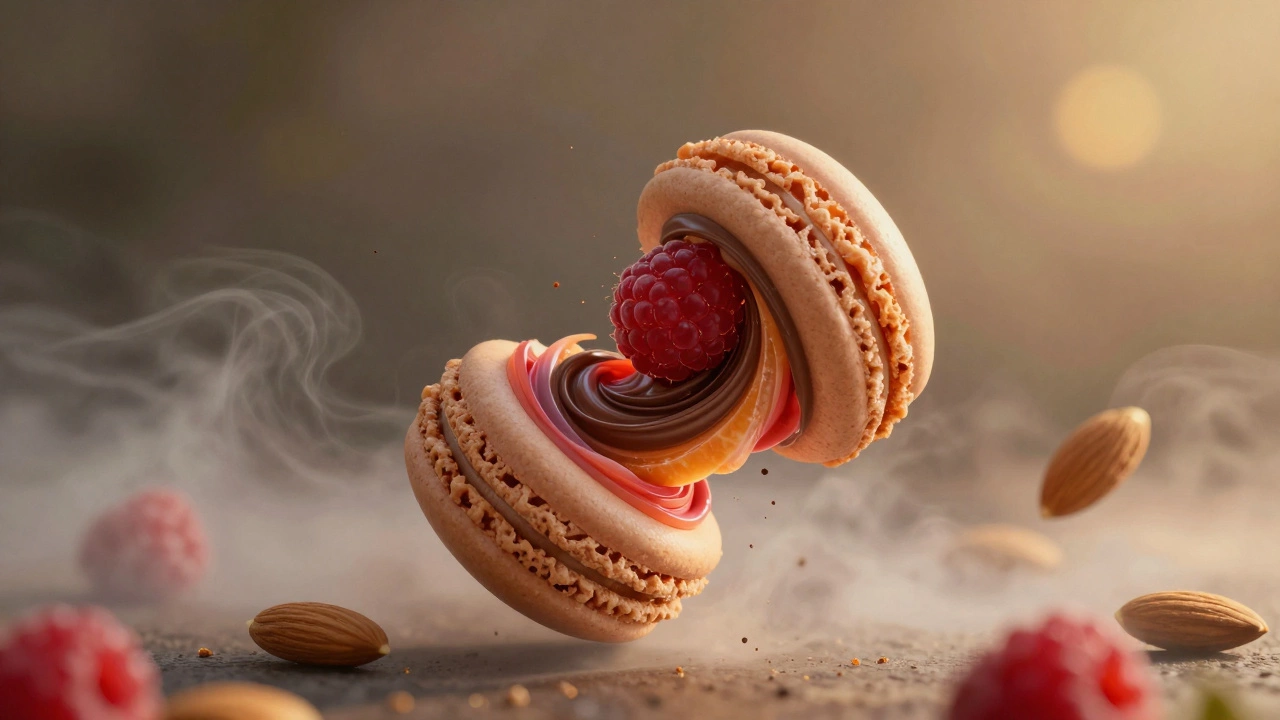
The shell is just the wrapper. The filling is where the personality shows up. Buttercream, ganache, jam, curd - each changes the entire experience. A classic raspberry buttercream filling tastes bright and tart, cutting through the sweetness of the shell. Chocolate ganache is rich and deep, almost like eating a truffle. Lemon curd adds a citrus zing that wakes up your whole mouth.
Flavors like rose, lavender, or matcha aren’t just trendy - they’re intentional. Rose doesn’t taste like perfume. When done right, it’s floral but earthy, like walking through a garden at dawn. Matcha brings a grassy, slightly bitter note that balances the sugar beautifully. Salted caramel? That’s the magic trick: sweet, salty, creamy - all in one bite.
There’s no single flavor to a macaron. It’s a duo. The shell gives structure. The filling gives soul.
Texture: The Secret Weapon
Texture is what makes macarons unforgettable. You get three things in one bite: the crisp outer layer, the chewy middle, and the smooth, creamy filling. That contrast is intentional. A macaron that’s all crunch is dry. One that’s all soft is soggy. The perfect one has a slight give - like biting into a marshmallow that’s been lightly toasted.
The chew comes from the meringue base. It’s not gummy. It’s elastic, like a perfectly baked bagel. And the filling? It should slide, not slide out. Too runny and it leaks. Too stiff and it feels like buttercream from a tube. The best macarons hold their shape but melt on your tongue.
Why Macarons Taste Different from Other Cookies
Most cookies are about butter, sugar, and flour. Macarons skip all that. They’re built on almond flour and egg whites - no gluten, no dairy (unless the filling has it). That changes everything. The flavor is cleaner. Less heavy. More refined.
Think of it this way: a chocolate chip cookie tastes like comfort. A macaron tastes like precision. It’s not meant to fill you up. It’s meant to be savored. One bite, then pause. Let the flavors settle. That’s why people buy them by the dozen - not because they’re cheap, but because each one is a small moment of pleasure.
Real Flavor Examples You Can Try
Here’s what actual macarons taste like, based on common flavors you’ll find in Paris, Montreal, or even your local bakery:
- Raspberry: Tart, fruity, with a hint of earthiness from the almond shell. The filling is thick but not cloying.
- Chocolate: Deep, dark, and smooth. Not sweet like milk chocolate - more like a high-cocoa ganache with a whisper of salt.
- Vanilla: Simple, but not boring. Real vanilla bean specks give it depth. The shell carries a hint of vanilla too, not just the filling.
- Espresso: Not bitter. Not overpowering. Just enough coffee to wake you up, balanced with a creamy buttercream.
- Strawberry: Often the most disappointing if made with artificial flavor. But the real ones? Juicy, fresh, and slightly tangy - like biting into a ripe berry.
Some places make wild flavors - bacon, blue cheese, black sesame - and they work. Not because they’re weird, but because they respect balance. A salty bacon filling needs a sweet, nutty shell. A black sesame filling needs a light, almost neutral shell to let the nutty, toasty flavor shine.
What Makes a Macaron Taste Bad?
Bad macarons are easy to spot. If the shell tastes like cardboard, it’s old almond flour. If the filling tastes like sugar syrup, it’s store-bought and overprocessed. If the whole thing feels dry or crumbly, the egg whites weren’t whipped right.
And don’t be fooled by color. Pink doesn’t mean raspberry. Green doesn’t mean matcha. A macaron can look beautiful and taste like nothing. The real test is the bite. Does it make you pause? Do you notice the layers? Do you want another?
How to Taste a Macaron Like a Pro
Don’t rush. Here’s how to really taste one:
- Look at it. Is the shell smooth? Are the feet even? That tells you it was made with care.
- Smell it. Does it smell like almonds? Like fruit? Like chocolate? Or just sugar?
- Press it gently. It should give a little, then spring back.
- Bite slowly. Let the shell crack first. Notice the texture change.
- Let the filling mix with your saliva. That’s when the real flavor comes out.
Some people eat them cold. Others let them sit at room temperature for 30 minutes. That’s not just tradition - it’s science. Cold macarons mute the flavor. Room temperature lets the filling soften and release its aroma.
Why People Keep Coming Back
Macarons aren’t the cheapest dessert. They’re not the most filling. But they’re unforgettable. Because they don’t just satisfy hunger. They satisfy curiosity. They’re a puzzle of texture and flavor. Each bite reveals something new.
That’s why, even in a world of giant cupcakes and loaded donuts, macarons still hold their place. They’re not loud. They don’t shout. But when you taste one that’s done right, you understand why people wait in line for them.
Do macarons taste like almonds?
Yes, but subtly. The almond flour gives the shell a light, nutty background note - not strong like almond extract. It’s more like the scent of toasted almonds than the flavor of almond paste. If the almond taste is overpowering, the flour might be old or the recipe unbalanced.
Are macarons supposed to be sweet?
They’re sweet, but not overwhelmingly so. A well-made macaron balances sugar with other flavors - tart fruit, bitter chocolate, salty caramel, or earthy matcha. If it tastes like pure sugar, it’s likely made with cheap ingredients or too much filling. The shell should be lightly sweet, not a sugar bomb.
Why do macarons taste different from bakery to bakery?
Because every baker has their own recipe. The ratio of almond flour to sugar, how long the meringue is whipped, the type of filling, even the humidity in the kitchen - all change the outcome. Some use real fruit purees. Others use flavor extracts. Some bake longer for crunch. Others aim for softness. That’s why one bakery’s raspberry macaron might taste bright and fresh, while another’s tastes like candy.
Can macarons taste salty?
Yes, and that’s intentional. Salted caramel, sea salt chocolate, and even miso buttercream are popular for a reason. Salt doesn’t make them taste salty - it makes the sweetness pop. A pinch of flaky salt on top of a chocolate macaron enhances the flavor without making it taste like a pretzel.
Do macarons taste better cold or at room temperature?
Room temperature is best. Cold macarons mute the flavors and make the filling too firm. Letting them sit for 20-30 minutes before eating lets the filling soften, the aroma rise, and the texture become perfect. That’s why French patisseries always recommend taking them out of the fridge ahead of time.