Gluten Recovery Time Estimator
How much gluten did you consume?
There’s a lot of confusion around gluten and how your body handles it. If you’ve eaten something with gluten by accident-maybe a slice of bread, a hidden sauce, or even a shared toaster-you might feel bloated, tired, or downright miserable. And now you’re wondering: what foods flush out gluten? The truth is, nothing actively flushes gluten out of your system. But you can help your body recover faster by eating the right things.
Gluten doesn’t need flushing-it needs time
Gluten is a protein found in wheat, barley, and rye. When someone with celiac disease or non-celiac gluten sensitivity eats it, their immune system reacts. That reaction doesn’t vanish just because you drink more water or eat pineapple. Gluten isn’t a toxin you can sweat out or wash away like a chemical. It’s a protein that gets broken down slowly by your digestive enzymes, and the damage it causes takes time to heal.
Studies show that in people with celiac disease, the small intestine can take anywhere from 3 to 6 months to fully recover after gluten exposure-sometimes even longer. For those with gluten sensitivity, symptoms like brain fog or stomach pain usually fade within a few days, but the gut lining still needs rest. No food speeds up this process. But some foods support healing, reduce inflammation, and give your gut a better chance to bounce back.
What actually helps after gluten exposure?
You don’t need a magic detox smoothie. You need simple, gentle, nutrient-rich foods that let your digestive system recover. Here’s what works:
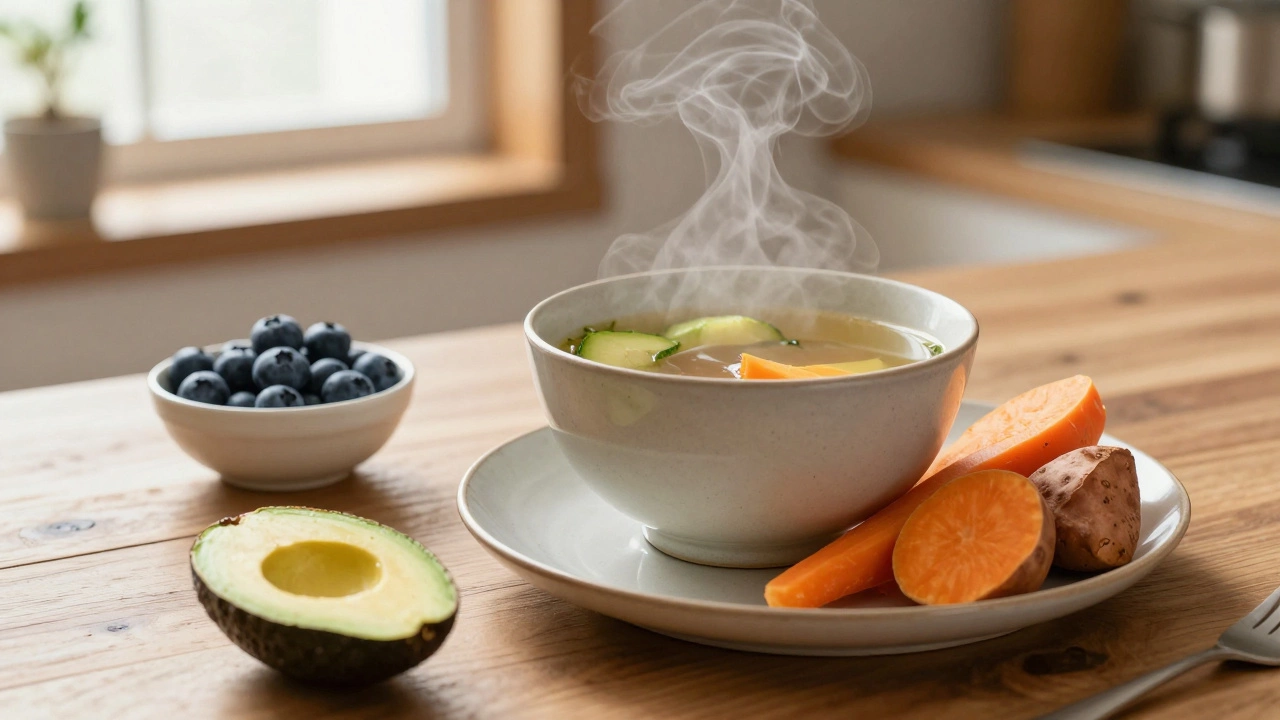
- Bone broth-packed with collagen and amino acids like glycine and glutamine, it helps repair the gut lining. Homemade broth simmered for 12+ hours is best. Store-bought versions often contain hidden gluten, so check labels carefully.
- Steamed vegetables-zucchini, carrots, spinach, and sweet potatoes are easy to digest and full of antioxidants that calm inflammation.
- Plain, cooked chicken or fish-lean proteins without sauces or breading give your body the building blocks to heal without adding stress.
- Avocados-healthy fats reduce inflammation and help absorb fat-soluble vitamins your gut may have struggled to absorb during the reaction.
- Low-FODMAP fruits-bananas, blueberries, and oranges are gentle on the gut and provide fiber and potassium, which can help balance fluids after diarrhea or vomiting.
- Gluten-free oats (certified)-if you tolerate them, these offer soluble fiber that supports healthy digestion. Always choose certified gluten-free-cross-contamination is common in regular oats.
These aren’t gluten-flushing superfoods. They’re healing foods. Think of them as comfort food for your gut.
What to avoid after gluten exposure
It’s tempting to reach for something sweet or spicy to distract from discomfort. But that’s the worst thing you can do. Here’s what to skip:
- Processed gluten-free snacks-many are loaded with sugar, gums, and additives that irritate the gut. Just because it’s labeled “gluten-free” doesn’t mean it’s gentle.
- Dairy-if your gut is inflamed, lactose intolerance can flare up temporarily. Skip cheese, milk, and ice cream for a few days.
- Caffeine and alcohol-both irritate the gut lining and can worsen dehydration and inflammation.
- High-fat fried foods-your digestive system is already working overtime. Don’t overload it.
- Artificial sweeteners-sorbitol, xylitol, and other sugar alcohols can cause bloating and diarrhea, especially when your gut is sensitive.
Stick to whole, unprocessed foods. The simpler, the better.
Hydration matters more than you think
When gluten triggers a reaction, your body often responds with diarrhea or vomiting. That means you’re losing fluids and electrolytes. Dehydration makes fatigue and headaches worse. Water alone isn’t enough.
Drink:
- Coconut water (unsweetened)-natural electrolytes without additives
- Herbal teas like ginger or chamomile-soothe nausea and calm the gut
- Broth (again)-it’s liquid nutrition
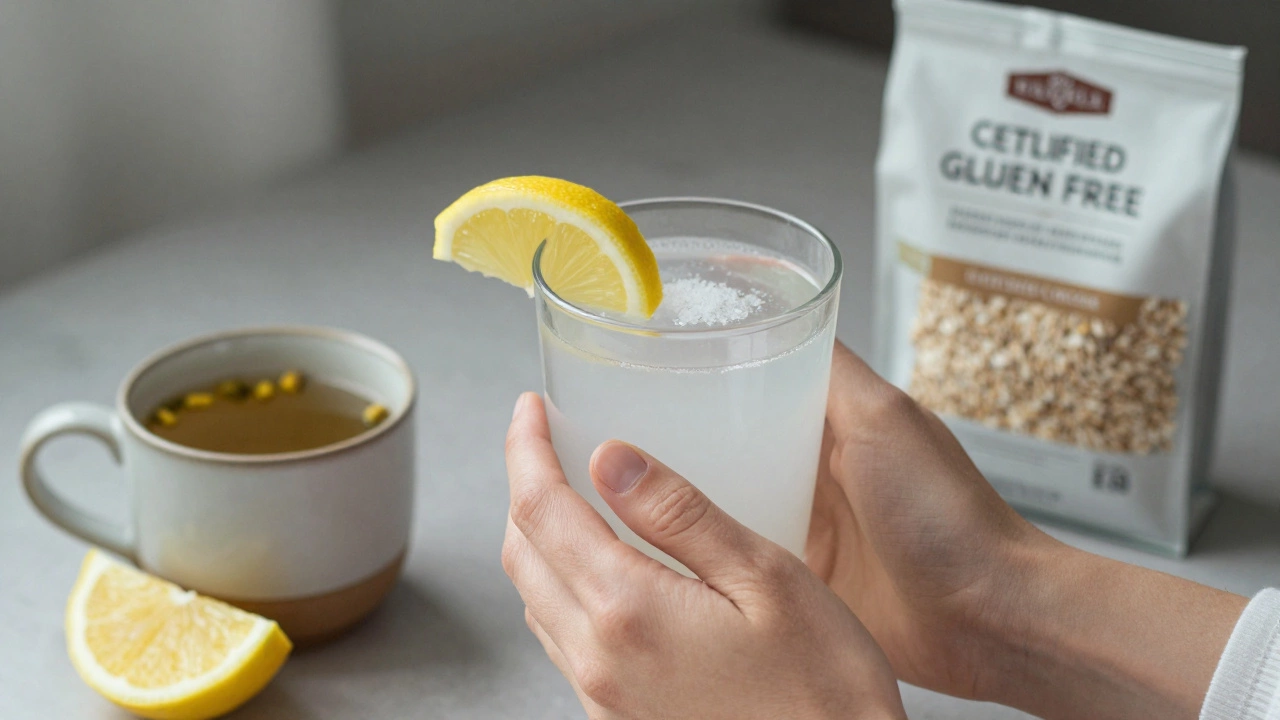
Avoid sugary sports drinks. They’re full of corn syrup and artificial flavors that do more harm than good. Plain water with a pinch of sea salt and a squeeze of lemon works just fine.
Probiotics and gut healing
Gluten exposure can throw off your gut microbiome. Adding good bacteria helps restore balance. Look for:
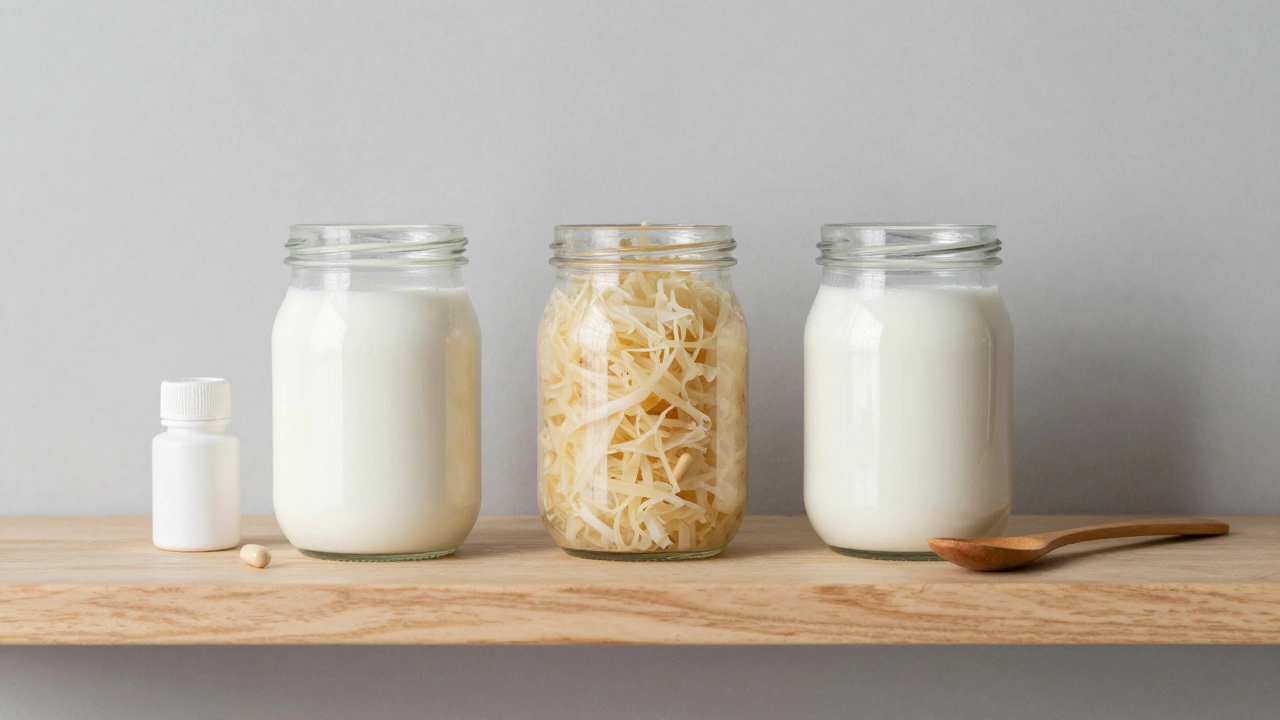
- Plain, unsweetened yogurt with live cultures (check for gluten-free certification)
- Kefir (dairy or coconut-based)
- fermented vegetables like sauerkraut or kimchi (make sure they’re made without wheat-based vinegar)
- High-quality probiotic supplements with strains like Lactobacillus rhamnosus GG or Bifidobacterium infantis
These don’t remove gluten. But they help your gut rebuild its defenses so future exposures are less damaging.
What about detox teas, supplements, or cleanses?
You’ll see ads for “gluten detox teas,” “intestinal cleansers,” or “gluten flush pills.” These are marketing tricks. There’s zero scientific evidence that any supplement can remove gluten from your system. The FDA doesn’t regulate most of these products, and many contain unlisted ingredients that could make your symptoms worse.
One study published in Journal of Clinical Gastroenterology in 2023 reviewed 17 commercial “gluten detox” products. None had proven efficacy. Three contained traces of gluten. One had a banned stimulant.
Save your money. Your body knows how to heal. You just need to give it the right conditions.
How long until you feel better?
It depends on your sensitivity and how much gluten you ate.
- Mild exposure (trace amounts)-symptoms may fade in 24-48 hours with rest and simple foods.
- Moderate exposure (a bite of bread, shared fryer)-3-5 days for symptoms to improve. Full gut recovery may take weeks.
- Large exposure (a whole pizza, hidden gluten in sauce)-symptoms can last a week or more. Healing may take a month or longer.
There’s no shortcut. But if you eat clean, stay hydrated, and rest, you’ll feel better faster than if you keep stressing your gut with processed foods or “detox” gimmicks.
Prevention is the real solution
Instead of wondering what flushes gluten out, focus on avoiding it in the first place. Here’s how:
- Always read labels-even on sauces, spices, and medications.
- Use separate toasters, cutting boards, and utensils for gluten-free foods.
- When dining out, ask if the kitchen uses dedicated fryers and prep areas.
- Choose whole foods over packaged ones. The fewer ingredients, the lower the risk.
- Keep a food journal. Note what you ate and how you felt. Patterns help you spot hidden sources.
Gluten-free baking doesn’t have to be complicated. Use almond flour, rice flour, or certified gluten-free oat flour. Make your own cakes and cookies. You’ll know exactly what’s in them-and you won’t have to wonder if something “flushed out” the gluten after the fact.
Final thought: Your gut is resilient
Accidents happen. One bite of a cookie with gluten doesn’t ruin your progress. It just means you need to be gentler with yourself for a few days. Don’t punish yourself. Don’t chase miracle foods. Just eat simply, drink water, rest, and let your body do what it’s designed to do: heal.
There’s no magic bullet. But with patience and good food, you’ll feel like yourself again.
Can drinking water flush out gluten?
No. Water helps with hydration and can ease symptoms like headaches or fatigue, but it doesn’t remove gluten from your system. Gluten is a protein, not a chemical that gets washed away. Your body breaks it down naturally over time.
Do probiotics remove gluten?
No. Probiotics don’t break down or eliminate gluten. But they can help restore balance in your gut microbiome after gluten causes inflammation. This supports healing and may reduce future sensitivity reactions.
Is there a gluten detox diet?
There’s no such thing as a gluten detox diet. The idea is marketed to sell products, not backed by science. The only effective approach is to stop eating gluten and eat whole, unprocessed foods that support gut healing.
How long does gluten stay in your system?
Gluten proteins are usually broken down and cleared from the digestive tract within 2-5 days. But the immune reaction and gut damage can last much longer-weeks or even months in people with celiac disease. The timeline depends on your sensitivity and how much you consumed.
Can gluten-free foods help you recover faster?
Yes-but not because they flush out gluten. Gluten-free whole foods like vegetables, lean proteins, and healthy fats reduce inflammation and give your gut the nutrients it needs to repair itself. Avoid processed gluten-free snacks-they’re often high in sugar and additives that irritate the gut further.