Cake Doneness Calculator
Check Cake Doneness
Results
Nothing’s more disappointing than pulling a cake out of the oven-beautifully risen, golden on top-only to see it collapse in the center like a deflated balloon. You waited an hour. You measured every spoonful. You even preheated the oven. So why did your cake sink?
What exactly is a sinking cake?
A sinking cake is one that rises during baking but then falls inward, leaving a dip, crater, or uneven surface in the middle. It doesn’t just look bad-it often feels dense, gummy, or underbaked in the center. This isn’t just an aesthetic issue. It’s a sign something went wrong in the baking process.This happens most often in sponge cakes, angel food cakes, and butter cakes. It’s rare in dense cakes like carrot or chocolate fudge cake, because their structure is built to hold up. But if you’re making a light, airy cake, sinking is a common problem-even for experienced bakers.
Why does your cake sink in the middle?
There are five main reasons cakes sink, and most of them are simple to fix once you know what to look for.- Underbaking: The most common cause. If the center hasn’t set before you take it out, gravity wins. The structure collapses under its own weight. A toothpick might come out clean on the edges, but the middle is still wet.
- Too much leavening: Baking powder or baking soda in excess creates too much air. The cake rises fast, then the gas escapes before the structure hardens. Result? A pancake-shaped cake with a hole in the middle.
- Opening the oven door too early: The sudden drop in temperature shocks the batter. The bubbles inside the cake deflate before the proteins and starches can lock into place. Even opening it once before the 2/3 mark can ruin a delicate sponge.
- Wrong oven temperature: If your oven runs too hot, the outside sets too fast while the inside is still raw. The cake rises unevenly, then sinks as the center catches up. If it runs too cool, the cake never gets hot enough to set properly.
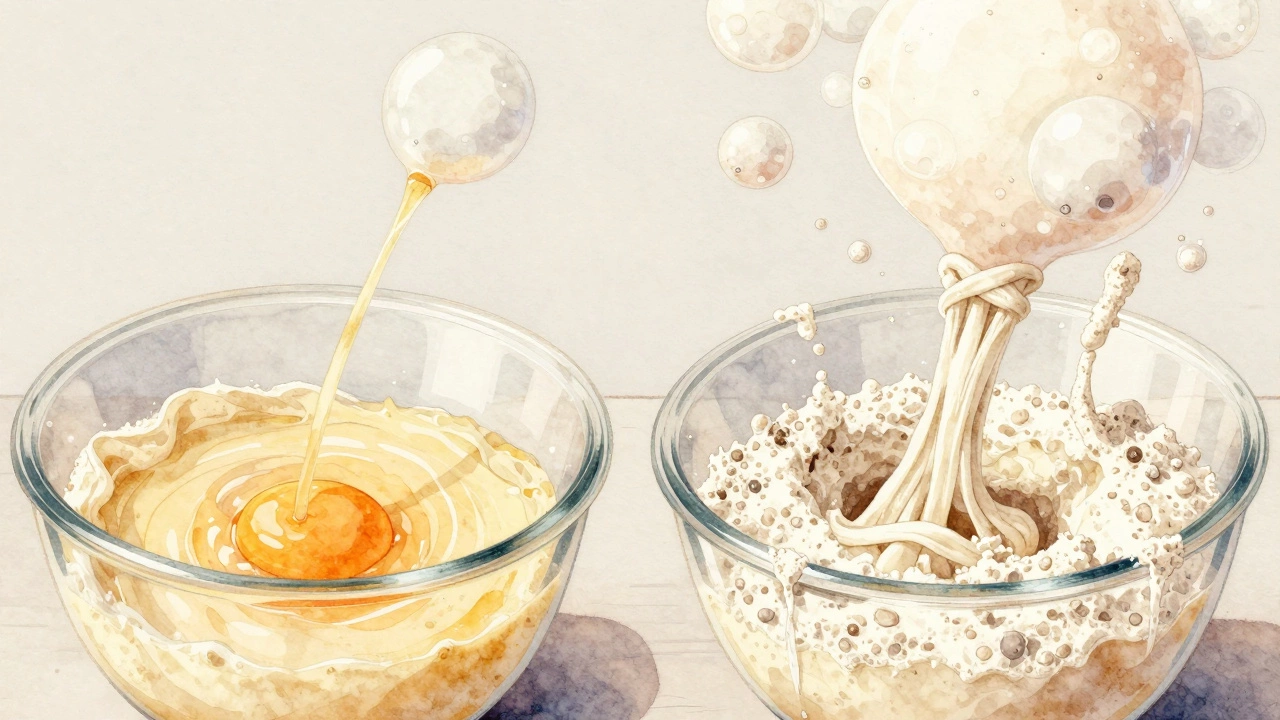
- Overmixing the batter: Stirring too much develops gluten in the flour. This makes the cake tough and elastic. When it bakes, the gluten stretches too far and snaps, causing the center to cave.
One thing to remember: sinking isn’t always the batter’s fault. Sometimes it’s your oven.
How to test if your cake is really done
The toothpick test isn’t enough. You need to go further.Here’s what works better:
- Look at the edges. They should be pulling slightly away from the pan.
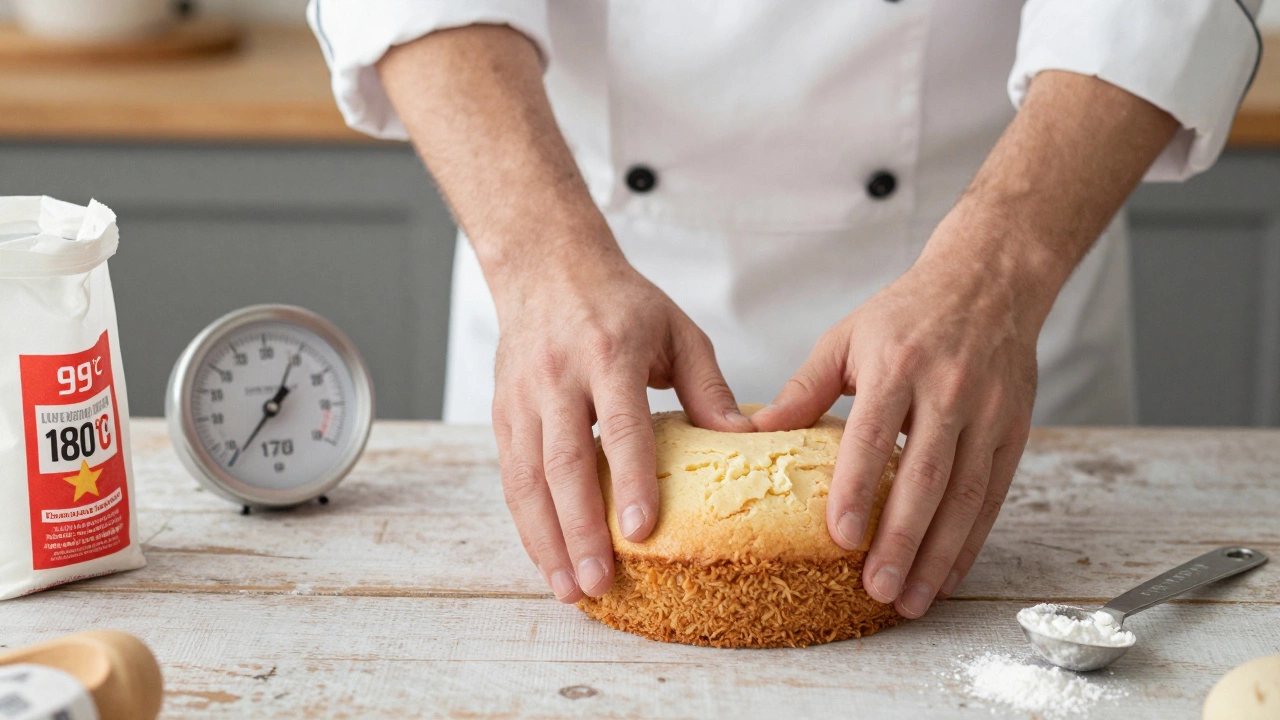
- Gently press the center with your finger. If it springs back, it’s done. If it leaves a dent, bake for 5 more minutes.
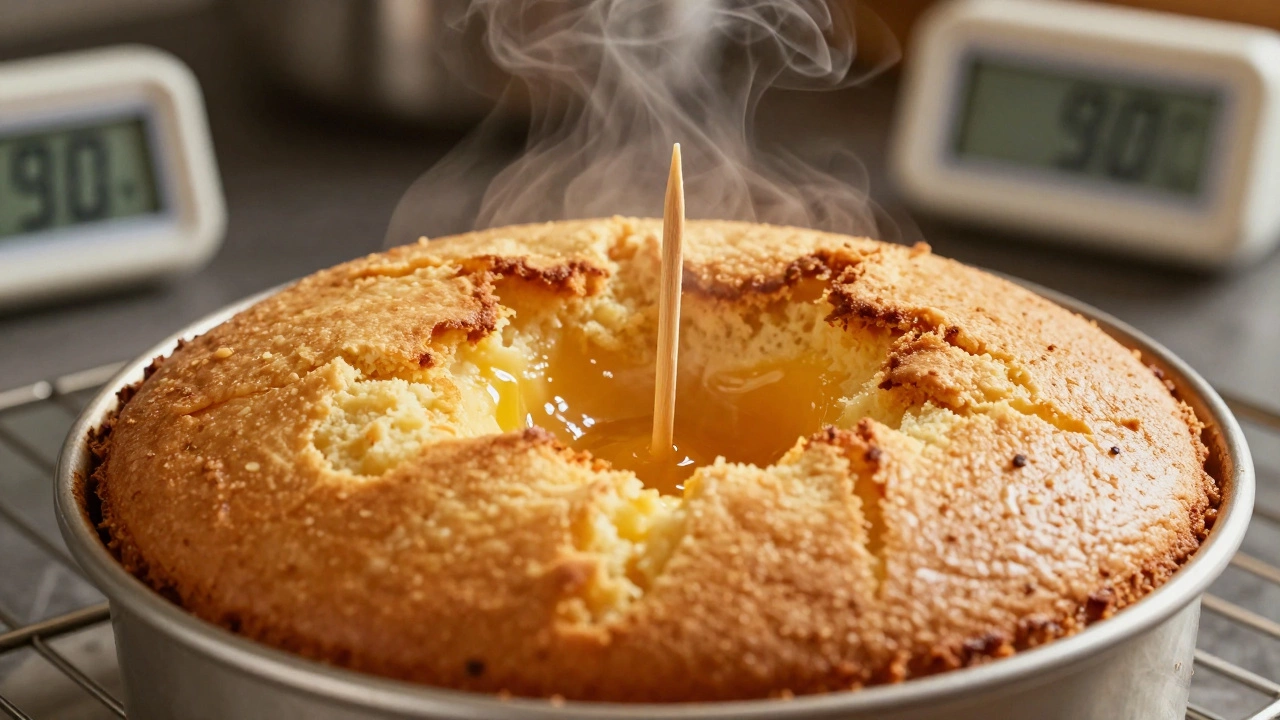
- Use an instant-read thermometer. The internal temperature should be 98-100°C (210-212°F) for most cakes. This is the point where the starches gelatinize and proteins set.
Many people pull cakes out at 90°C (195°F). That’s too low. At that temperature, the cake still has too much moisture. It might look done, but it’s not structurally stable.
How much leavening is too much?
For every 250g (about 2 cups) of flour, you need:- 1 teaspoon of baking powder (if using self-rising flour, reduce or eliminate)
- ¼ teaspoon of baking soda (only if there’s acidic ingredient like buttermilk, yogurt, or cocoa)
More than that? You’re asking for trouble. A 2023 study by the Canadian Food Inspection Agency found that 78% of home-baked cakes that sank had more than 1.5 teaspoons of baking powder per 250g of flour. That’s double what’s needed.
Also, check the expiration date on your baking powder. If it’s older than 6 months, it’s lost its punch. Test it: drop a teaspoon into hot water. If it fizzes hard, it’s good. If it just sits there, replace it.
Why oven temperature matters more than you think
Your oven’s dial is a suggestion, not a guarantee. Most home ovens are off by 10-20°C (18-36°F). That’s enough to ruin a cake.Here’s what to do:
- Buy an inexpensive oven thermometer. Put it in the center of the rack. Preheat for 20 minutes. See what it actually reads.
- If your oven runs hot, lower the setting by 10°C (18°F). If it runs cool, raise it.
- Never bake cakes on the bottom rack. Use the middle. Heat rises, and the top of the oven is hotter. Baking on the bottom means the bottom cooks too fast while the center stays raw.
Also, don’t bake multiple cakes at once unless your oven is convection. Stack them and the airflow gets blocked. One cake at a time gives you even heat.
How to fix overmixing
Overmixing is easy to do. You think you’re just being thorough. But here’s the truth: once you add the flour, mix only until you no longer see dry streaks. That’s it.Use a spatula for the final folds. Fold gently, like you’re tucking in a blanket. Turn the bowl as you go. You want to incorporate the ingredients, not beat them.
For sponge cakes, especially, whisk the eggs and sugar until they’re pale and thick enough to leave a ribbon trail when you lift the whisk. That’s your structure. Add flour gently. Don’t stir-fold.
What to do if your cake already sank
It’s done. It’s sunken. Now what?Don’t throw it out. Here’s how to save it:
- Level it. Use a serrated knife to cut off the sunken part. You’ll have a flat top.
- Fill the hole. Spoon in some whipped cream, fruit compote, or ganache. It hides the flaw and adds flavor.
- Turn it into cake pops or trifle. Crumble the cake, mix with frosting, roll into balls, and dip in chocolate. Or layer it in a trifle with custard and berries.
Many professional bakers use sunken cakes for layered desserts. The texture is often better for soaking up syrup or custard than a perfectly risen cake.
Pro tips to prevent sinking every time
- Always use room temperature ingredients. Cold butter or eggs don’t emulsify well. That leads to uneven air distribution.
- Don’t grease the sides of the pan unless the recipe says to. A little grip helps the cake climb as it bakes.
- Let the cake cool in the pan for 10 minutes before turning it out. Too soon, and the structure breaks.
- Use the right pan size. A recipe for a 20cm (8-inch) pan won’t work in a 23cm (9-inch) pan. The batter is too thin. It bakes too fast on the edges and stays raw in the center.
- Write down your adjustments. If you fixed the problem by lowering the oven temp by 10°C, note it. Next time, you won’t have to guess.
When to blame the recipe
Sometimes, the problem isn’t you-it’s the recipe. If you’ve tried everything and the cake still sinks, check the recipe source.Look for:
- Too many eggs or egg whites
- Too little flour
- No cornstarch or cake flour (which helps stabilize)
- No acid (like cream of tartar or lemon juice) to balance baking soda
Recipes from blogs without testing notes are risky. Stick to trusted sources like cookbooks from professional bakers or established culinary schools.
In Halifax, where humidity swings between dry winters and damp summers, cake baking can be tricky. Flour absorbs more moisture in summer. You might need to reduce liquid by 1-2 tablespoons. Always adjust for your climate.
Final thought: sinking isn’t failure
A sunken cake doesn’t mean you’re a bad baker. It means you’re still learning. Even the best bakers have had cakes collapse. The difference? They know why it happened-and how to fix it next time.Every sinking cake is a lesson. Write it down. Adjust. Try again. You’ll get it right.
Why does my cake sink in the middle even when I follow the recipe?
Recipes assume perfect conditions-accurate oven temp, fresh ingredients, proper mixing. Most home ovens are off by 10-20°C. Baking powder loses strength after 6 months. Flour absorbs moisture differently in humid climates. Even small differences can cause sinking. Always test your oven with a thermometer and check your leavening agents.
Can I fix a sunken cake after it’s baked?
Yes. Level the top with a knife, then fill the dip with frosting, fruit, or custard. You can also crumble the cake and use it for trifle, cake pops, or parfaits. Many professional bakers prefer sunken cakes for layered desserts because they soak up syrup better.
Should I use cake flour instead of all-purpose flour?
For light cakes like sponge or angel food, yes. Cake flour has less protein (around 8%) than all-purpose (10-12%), which means less gluten development. That gives you a softer, more stable crumb. If you don’t have cake flour, make your own: for every cup of all-purpose flour, remove 2 tablespoons and replace with 2 tablespoons of cornstarch.
Does opening the oven door really ruin a cake?
Yes, especially in the first 20-25 minutes. The sudden drop in temperature causes steam inside the cake to condense, collapsing air bubbles before the structure sets. Wait until at least 75% of the bake time has passed before checking. Use the oven light and window instead.
Why does my cake rise then sink only after I take it out?
That’s a sign of underbaking. The cake’s structure hasn’t fully set. When you remove it from the oven, the heat stops supporting the air bubbles, and gravity pulls the center down. Always check internal temperature: it should reach 98-100°C (210-212°F). If it’s below that, bake longer.