
Vegan Candy Checker
Enter a major candy brand or product name to check its vegan status based on current formulations.
Picture this: you're at a party, the bowl of mixed sweets is on the table, and you reach for a familiar red wrapper. Then you pause. Is that gummy bear actually made with pig skin? Is that chocolate bar hiding milk powder? It’s a common dilemma for anyone navigating the world of vegan desserts sweet treats free from animal products like dairy, eggs, and honey. The good news is that the landscape of plant-friendly confectionery has shifted dramatically in recent years. Many of the biggest names in the industry now offer options that don’t just mimic traditional sweets but stand on their own as delicious, ethical choices.
Finding out what major candy is vegan isn't about memorizing obscure ingredients; it's about understanding which big brands have already done the work for you. Whether you are avoiding animal products for ethical reasons, health concerns, or lactose intolerance, knowing which staples are safe can save you from awkward label-reading moments at the grocery store. Let’s break down the major players in the candy aisle and see who makes the cut.
The Gummy Bear Dilemma: Gelatin vs. Pectin
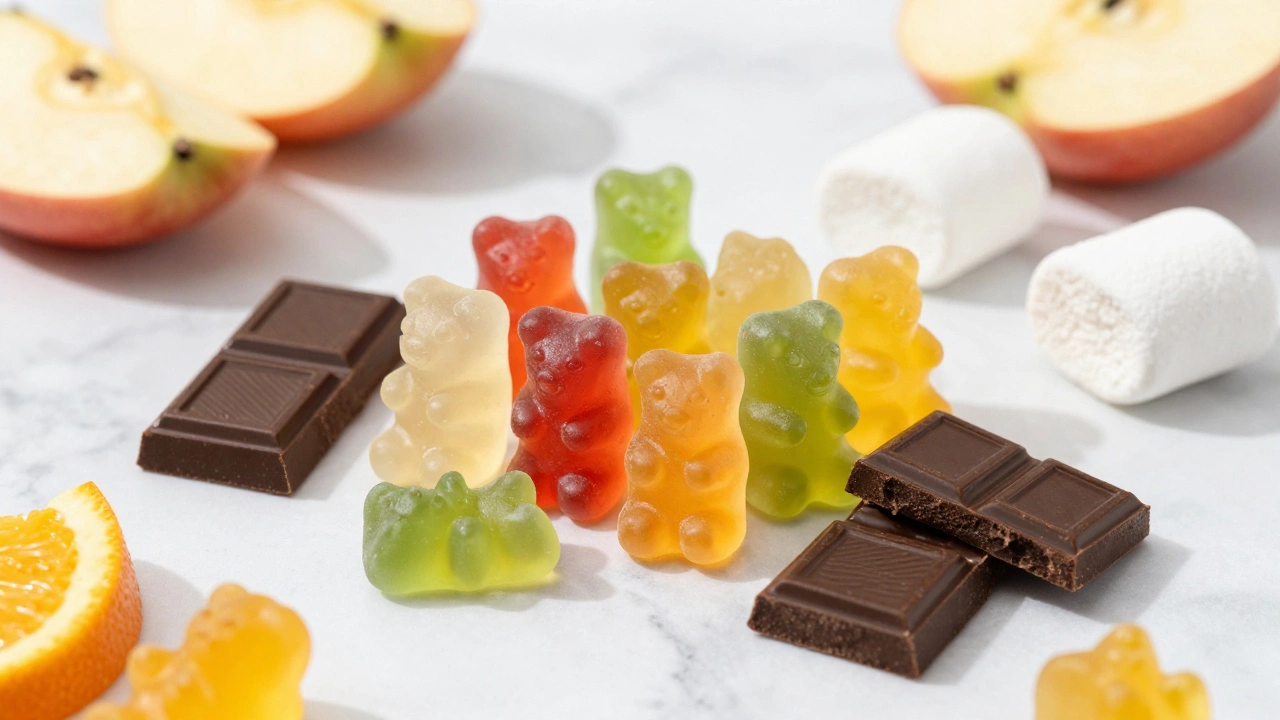
If there is one ingredient that causes the most confusion in the vegan community, it is gelatin. Derived from collagen found in animal bones and skin, gelatin is the standard setting agent for gummies, marshmallows, and chewy candies. For a long time, if you wanted a gummy, you had to settle for tiny, hard-to-find niche brands. That changed when major manufacturers started swapping gelatin for pectin, a fiber derived from fruits like apples and citrus peels.
Haribo a German confectionery company famous for its gummy bears, the giant of the gummy world, still relies heavily on gelatin for its classic Goldbears in North America and Europe. However, they do produce specific lines labeled "Vegetarian" or "Pectin-based" in various markets. If you see Haribo, check the label closely; unless it explicitly says pectin, assume it contains gelatin.
On the other hand, SmartSweets a brand focused on low-sugar, high-fiber snacks using allulose and monk fruit has disrupted the market by making gummies that are not only vegan but also lower in sugar. Their use of erythritol and monk fruit extract means they appeal to vegans watching their carb intake as well. Similarly, YumEarth an organic candy brand known for being free from major allergens and artificial colors has become a staple in many households. Their organic gummy worms and bears are certified vegan, gluten-free, and non-GMO, proving that major accessibility doesn't require compromising on quality or ethics.
Chocolate Giants: Dairy-Free Options
Chocolate is another minefield. Milk chocolate, by definition, contains milk solids. But dark chocolate? It’s often vegan, but not always. Some dark chocolates contain milk fat (cocoa butter equivalent) or are processed on shared equipment with milk, leading to cross-contamination warnings. For strict vegans, this distinction matters.
Hershey's one of the largest chocolate makers in the United States offers several vegan-friendly options. Their Special Dark bars (60% cacao and higher) are typically free from milk ingredients, though they carry a "may contain milk" warning due to facility sharing. If you are sensitive to trace amounts, Hershey's might not be your best bet. However, their Kisses in the plain dark variety are widely considered safe for casual vegans.
Then there is Cadbury a British chocolate brand owned by Mondelez International. In many international markets, Cadbury produces a "Dairy Free" line that uses oat milk or soy milk instead of cow's milk. These are not just dark chocolates but full-flavored milk-style chocolates that happen to be plant-based. This innovation shows how major brands are adapting to consumer demand without sacrificing the creamy texture people love.
Don't overlook Lindt a Swiss chocolatier known for its Lindor truffles and premium bars. Their Excellence line features 70%, 85%, 90%, and even 100% cocoa bars. While the packaging may warn of milk traces, the ingredients list is clean: cocoa mass, cocoa butter, sugar, and vanilla. For many vegans, these high-percentage bars are a reliable indulgence.
Hard Candies and Lollipops: Surprisingly Simple
When you strip away the complexity of gummies and chocolates, hard candies often turn out to be the easiest category to navigate. Sugar, corn syrup, flavorings, and colorings make up the bulk of these treats. The main things to watch out for are beeswax (used in some lollipop coatings) and carmine (a red dye made from crushed insects).
Jolly Rancher a brand of hard candies produced by Ferrero is largely vegan. Their classic fruit flavors-apple, cherry, grape, orange-are made from simple sugars and natural flavors. They do not use gelatin or milk. However, always double-check seasonal varieties, as limited-edition releases sometimes introduce unexpected ingredients like coconut oil or shellac (another insect-derived resin used for shine).
Starburst chewy fruit-flavored candies originally created by Wrigley presents a tricky case. In the United States, Starbursts contain gelatin. However, in the UK and many European countries, they replaced gelatin with starch decades ago, making them accidentally vegan. If you are traveling or buying imported versions, pay attention to the origin. For domestic US buyers, stick to alternatives like Airheads chewy taffy-like candies made by Perfetti Van Melle. Airheads are gelatin-free, dairy-free, and widely available in malls and convenience stores, making them a go-to vegan snack.
Marshmallows and Chewy Treats
Traditional marshmallows are essentially sugar whipped with egg whites and stabilized with gelatin. This combination makes them inherently non-vegan. For years, the only option was to make your own. Now, major brands have entered the fray.
Dandies a brand specializing in egg-free and gelatin-free marshmallows is perhaps the most recognized name in vegan marshmallows. You will find them in the baking aisle of most major supermarkets. They are fluffy, sweet, and perfect for s'mores or floating in hot cocoa. Another rising star is Hippeas known primarily for chickpea puffs, they also offer vegan marshmallow fluff, which brings a unique twist to the traditional treat.
For those who enjoy the chewiness of marshmallows but want something more substantial, Nerds tiny, crunchy, sugar-coated candies remain a solid choice. Despite their bright colors, Nerds do not contain gelatin or dairy. They are essentially flavored sugar spheres. Just be cautious with Nerds Rope, which often contains gelatin or beeswax depending on the formulation.
Comparison of Popular Vegan-Friendly Candies
| Brand/Product | Vegan Status | Key Ingredient to Watch | Best For |
|---|---|---|---|
| Haribo Goldbears (US) | No | Gelatin | Non-vegans |
| YumEarth Organic Gummies | Yes | Pectin (Safe) | Allergen-conscious families |
| Hershey's Special Dark | Mostly Yes* | Milk Trace Warning | Casual vegans |
| Lindt Excellence 70%+ | Yes** | Milk Trace Warning | Dark chocolate lovers |
| Jolly Rancher Hard Candy | Yes | Shellac (Rare) | Quick sugar fix |
| Airheads | Yes | None | Chewy candy fans |
| Dandies Marshmallows | Yes | None | S'mores and baking |
*Note: "Mostly Yes" indicates no animal ingredients in the recipe, but potential cross-contamination in facilities.**Note: Same as above. Always read labels if you have severe allergies or strict ethical standards regarding trace contamination.

Reading Labels Like a Pro
Even with this guide, formulations change. Companies update recipes, switch suppliers, or alter manufacturing processes. To stay confident in your choices, learn to spot the hidden non-vegan culprits:
- Gelatin: Look for "pectin," "starch," or "agar-agar" as alternatives.
- Carmine/Cochineal: A red dye (E120) made from insects. Avoid products listing this under colorings.
- Beeswax/Shellac: Often used to coat hard candies and licorice for shine. Check for "confectioner's glaze" or "resin."
- Vitamin D3: Sometimes added to fortified cereals or chocolates, often derived from sheep's wool lanolin.
- Whey/Lactose/Milk Solids: Obvious dairy indicators, but watch for "natural flavors" which can sometimes hide milk derivatives.
When in doubt, look for the Certified Vegan logo. While not every vegan product carries it, major brands that prioritize transparency often seek this certification to reassure consumers. Organizations like the Vegan Action group verify that products meet strict standards, including no animal testing and no animal-derived ingredients.
Next Steps for Your Sweet Tooth
Transitioning to a vegan diet doesn't mean giving up the comforts of childhood favorites. By focusing on brands like YumEarth, Dandies, and Hershey's dark lines, you can keep your pantry stocked with treats that align with your values. Start by swapping out one non-vegan item at a time. Replace regular gummy bears with pectin-based ones, or trade milk chocolate for high-cacao dark bars. Over time, these small switches become habits, and you'll find that the variety of vegan-friendly options is wider than ever before.
Remember, the goal is progress, not perfection. If you slip up and eat a piece of candy with gelatin, don't stress. The candy industry is evolving rapidly, and new vegan options are launching monthly. Stay curious, read labels, and enjoy the sweetness.
Is Skittles vegan?
In the United States, Skittles are generally considered vegan because they do not contain gelatin or obvious animal-derived ingredients. However, they may contain confectioner's glaze (shellac), which is derived from insects, and some vegans avoid this. In the UK, Skittles were previously not vegan due to gelatin, but formulations have changed over time. Always check the current label for "confectioner's glaze" or "carmine."
Are M&Ms vegan?
No, standard M&Ms are not vegan. They contain milk chocolate, which includes milk fat and milk solids. While the colorful candy shell itself might be free of animal products, the chocolate center makes them unsuitable for a vegan diet. There are no widely available vegan M&M alternatives from Mars Inc. yet.
What is the best vegan gummy brand?
YumEarth is widely regarded as one of the best major brands for vegan gummies due to its organic certification, lack of artificial colors, and widespread availability. SmartSweets is another excellent option if you are looking for low-sugar, high-fiber gummies. Both brands use pectin instead of gelatin.
Is Twix vegan?
No, Twix is not vegan. It contains milk chocolate and a caramel layer that includes butter and cream. The wafer cookie part might be technically vegan, but the entire bar is processed with dairy and contains significant amounts of milk ingredients.
Are Reese's Peanut Butter Cups vegan?
No, Reese's are not vegan. They are made with milk chocolate and peanut butter that contains milk ingredients. Additionally, the processing facilities handle dairy extensively, making cross-contamination likely.