Cake Size Calculator for 40 Guests
What You Need
Calculating servings needed...
Planning a birthday party for 40 people and wondering how big a cake you actually need? It’s not as simple as picking the biggest one on the menu. Too small, and people are left disappointed. Too big, and you’re stuck with stale cake for a week. The right cake size saves money, reduces waste, and keeps everyone happy.
Standard Cake Serving Sizes
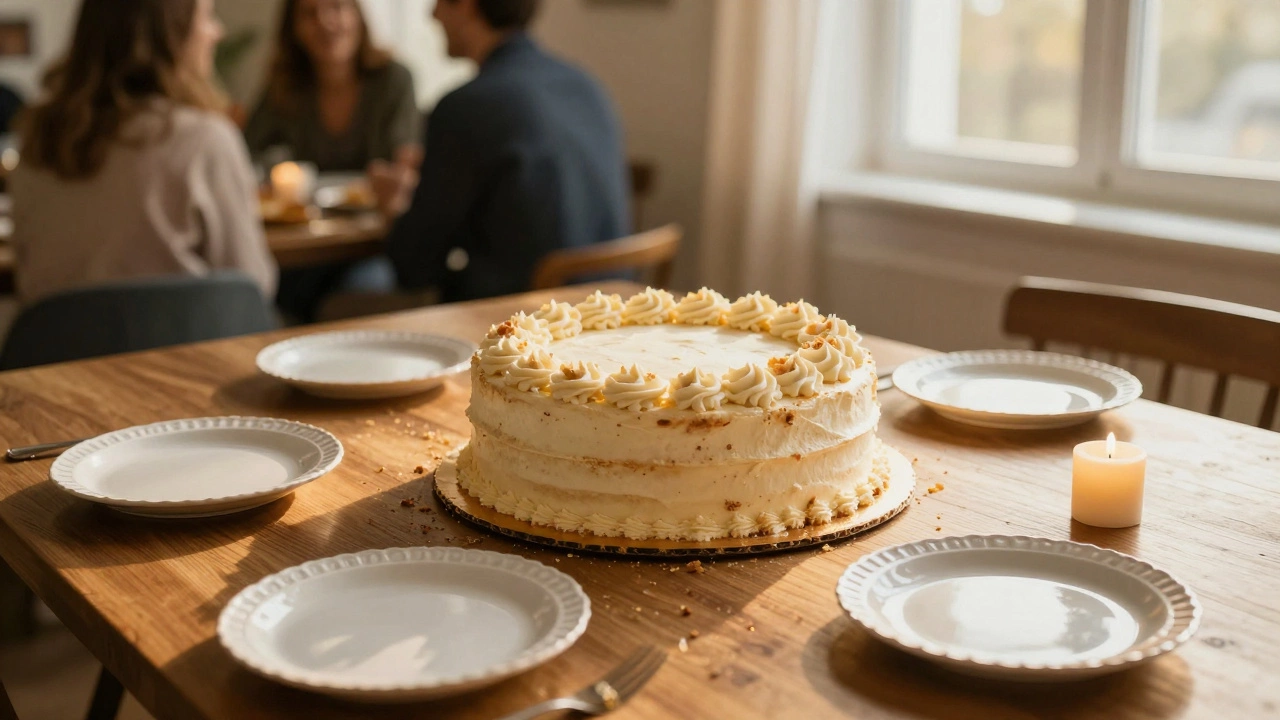
Most bakeries and cake guides use a standard serving size of 1x2 inches (about 2.5x5 cm) for party cakes. That’s a thin slice - not a huge wedge. Think of it like a dessert portion, not a main course. If you’re serving cake alongside other desserts or a full meal, this size works perfectly.
For a 9-inch round cake, you’ll get about 12-14 servings. A 10-inch round gives you 16-18. A 12-inch round? That’s 25-30 servings. So for 40 people, you’ll need more than one cake - or a bigger, multi-tiered option.
How Much Cake Do You Actually Need for 40 Guests?
Here’s the math: 40 guests × 1 serving = 40 servings needed. But not everyone will take cake. Some won’t eat sweets. Others might be full from dinner. Kids might only take a bite. So you don’t need to plan for every single person to have a full slice.
Most event planners recommend planning for 80-90% of guests to take cake. That means 32-36 servings is usually enough for 40 people. But if you know your crowd - like a group of sweet-toothed teens or a family reunion where cake is the main event - aim for 40 servings to be safe.
Best Cake Sizes for 40 People
Let’s break down the most practical cake options:
- Two 10-inch round cakes - Each gives 16-18 servings. Together, that’s 32-36 servings. Perfect if you’re serving other desserts or expect some guests to skip cake.
- One 12-inch round cake + one 8-inch round cake - The 12-inch gives 25-30 servings, the 8-inch gives 10-12. Total: 35-42 servings. This combo is popular for visual impact and flexibility.
- One 14-inch round cake - This single cake gives 35-40 servings. It’s a solid choice if you want one centerpiece cake without the hassle of multiple tiers.
- Three-tier cake: 10-inch, 8-inch, 6-inch - The 10-inch gives 18, the 8-inch gives 12, and the 6-inch gives 8. Total: 38 servings. This looks impressive and is ideal for photo ops.
If you’re ordering from a bakery, ask them to confirm how many servings each size yields. Some use smaller portions (especially for wedding cakes), and others cut larger slices for kids’ parties.
Shape Matters Too
Round cakes are the most common, but square and rectangular cakes give more servings per inch. A 9x13-inch sheet cake (half-sheet) gives 24-30 servings. Two of those? That’s 48-60 servings - more than enough for 40 people, with plenty left over.
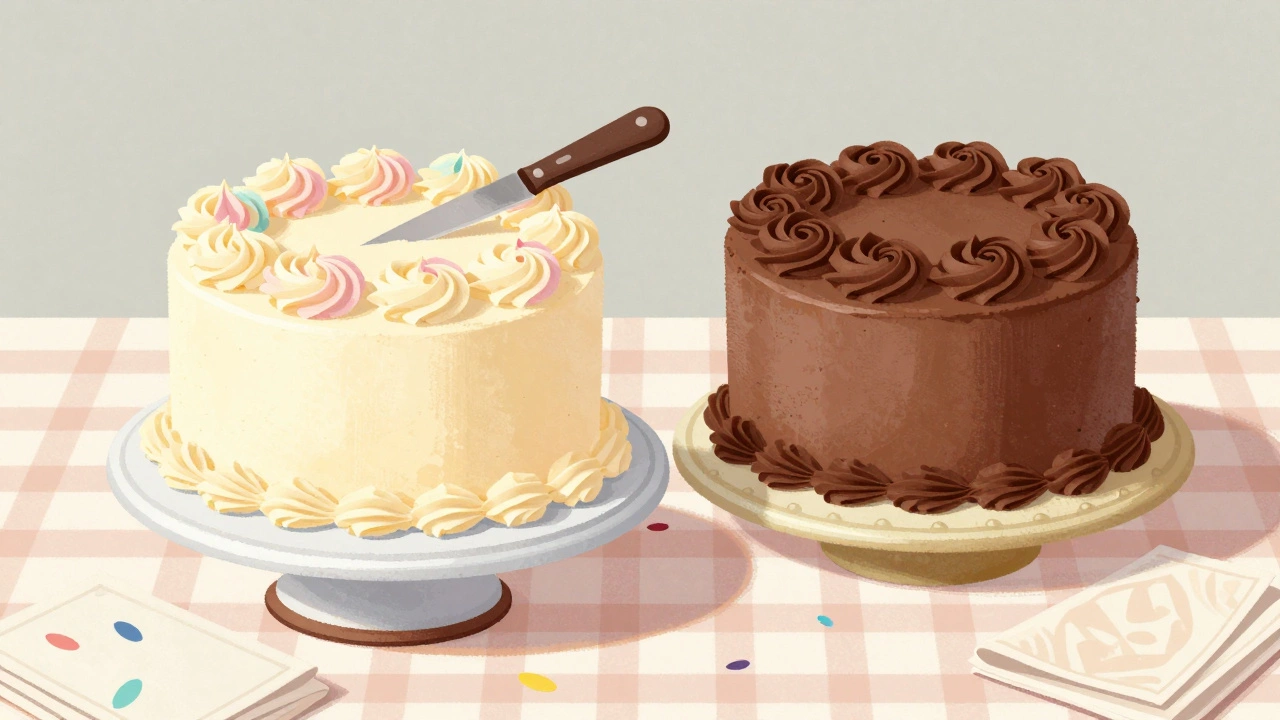
Sheet cakes are easier to cut evenly and serve. They’re also cheaper per serving than tiered cakes. If you’re on a budget and want simplicity, go with two half-sheet cakes. You can even decorate them differently - one chocolate, one vanilla - to please more tastes.
What About Cupcakes or Mini Cakes?
Some people skip the big cake entirely and go for cupcakes. One cupcake = one serving. For 40 people, you’ll need 40 cupcakes. That’s doable, but it takes up a lot of space on the table. Plus, you lose the tradition of cutting the cake.
If you want the best of both worlds, get one 10-inch cake for the cutting ceremony and 20-30 cupcakes for extra servings. That way, people can grab a cupcake if they want seconds, or if they don’t like the main cake flavor.
What If You’re Serving Cake With Other Desserts?
Let’s say you’re also serving cookies, brownies, or a dessert bar. You can safely plan for fewer cake servings - maybe 25-30 total. That means one 12-inch cake or two 9-inch cakes will do just fine.
But if cake is the star - like a birthday where everyone expects a big slice - don’t skimp. Stick to 40 servings. People remember the cake. They don’t remember the cookies.
How to Cut Cake for Maximum Servings
Even the right-sized cake can run out if you cut it wrong. Here’s how to get the most out of it:
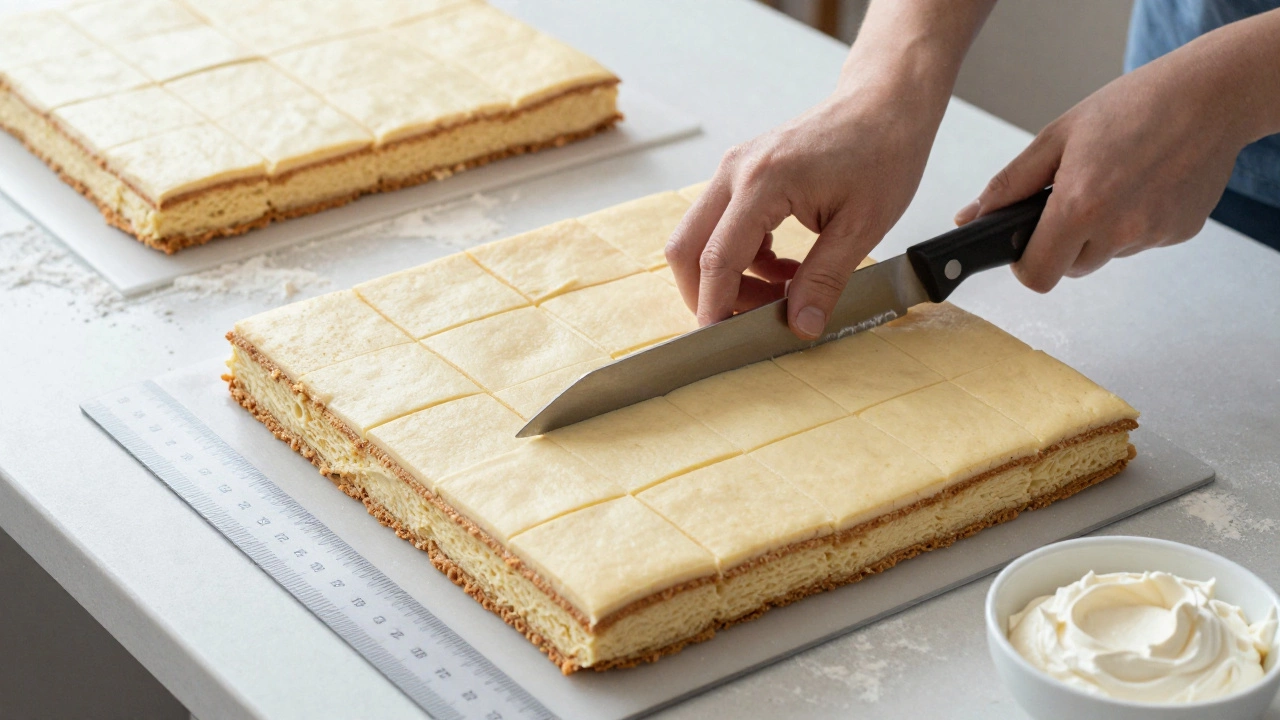
- Use a long, thin knife. Run it under hot water and dry it before each cut. This keeps the cake from crumbling.
- For round cakes, cut thin slices from the outside in. Don’t cut wedges from the center. Think of it like slicing a pie into narrow strips.
- For sheet cakes, cut into 2x2-inch squares. That gives you 36 servings from a 9x13-inch pan.
- Don’t serve cake warm. Let it cool completely. Warm cake falls apart.
Pro tip: If you’re serving cake at a buffet, have someone in charge of cutting. That way, slices stay even and you don’t end up with giant pieces early on.
Leftovers? Here’s What to Do
Even with perfect planning, you might have extra cake. Don’t panic. Wrap it tightly in plastic wrap and store it in the fridge for up to 5 days. Freeze it for up to 3 months - it still tastes fresh after thawing.
Turn leftovers into cake pops, trifle, or bread pudding. Freeze slices in individual portions for quick treats later. Or send people home with a slice in a box. Most guests will appreciate the gesture.
Common Mistakes to Avoid
- Ordering a cake based on looks, not servings. A beautiful 10-inch cake might only feed 18 people.
- Assuming kids will eat less. Kids often take two or three small slices. Plan for them too.
- Forgetting about dietary needs. If you have vegan, gluten-free, or nut-free guests, plan extra servings of those options.
- Waiting until the last minute to order. Popular bakeries book up weeks ahead - especially around holidays.
Final Answer: What Size Cake for 40 People?
For 40 people, you need a cake that serves 35-40 portions. The best options are:
- One 12-inch round cake
- One 14-inch round cake
- Two 10-inch round cakes
- Two 9x13-inch sheet cakes
- One 10-inch cake + 20-30 cupcakes
When in doubt, go slightly bigger. It’s better to have a little extra than to run out and hear someone say, ‘I was hoping for cake.’
And remember - the cake doesn’t have to be fancy to be perfect. A simple, well-made cake with fresh frosting and a personal message means more than a towering, overpriced showpiece.
How many servings does a 9-inch cake give?
A standard 9-inch round cake gives about 12-14 servings when cut into 1x2-inch slices. This is enough for a small gathering but not enough for 40 people.
Is a sheet cake cheaper than a tiered cake?
Yes, sheet cakes are usually 30-50% cheaper per serving than tiered cakes. They require less labor to assemble and decorate, and they’re easier to transport. For 40 people, two half-sheet cakes often cost less than one three-tier cake.
Should I order extra cake for kids?
Yes. Kids often take more than one small slice, and they’re more likely to eat cake than adults. If you expect 10-15 kids at the party, add 5-10 extra servings to your total. A 14-inch cake or two 10-inch cakes will cover this easily.
Can I use a 10-inch cake for 40 people?
A single 10-inch cake gives about 16-18 servings - not enough for 40 people. You’d need at least two 10-inch cakes to serve everyone a full slice. If you’re okay with smaller portions or serving other desserts, one 10-inch cake plus cupcakes could work.
What if I’m serving cake at a wedding-style reception?
Wedding-style servings are usually smaller - about 1x1.5 inches. That means a 12-inch cake can give up to 40 servings. If you’re planning a formal event, ask your baker about wedding cutting guidelines. You might need less cake than you think.
How far in advance should I order a cake for 40 people?
Order at least 2-3 weeks in advance. Popular bakeries in Halifax book up quickly, especially on weekends. If you want custom decorations, flavors, or dietary options, give them 4-6 weeks. Don’t wait until the day before - you risk getting a generic cake or paying extra for rush fees.