Macaron Baking Time Calculator
Input Parameters
Recommended Baking Time
Baking Time: -- minutes
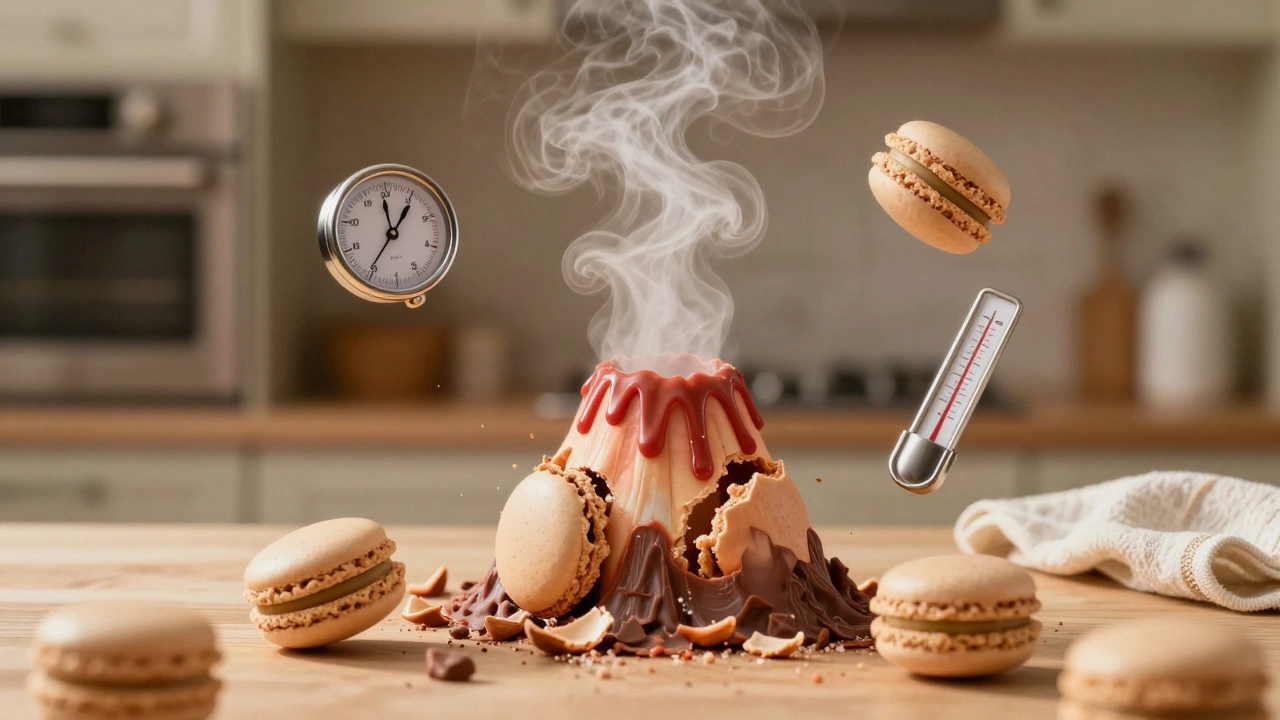
Macarons are delicate. One wrong move - too much heat, too little resting time, wet batter - and instead of smooth, glossy domes with perfect feet, you get cracked, lopsided, or flat shells. If you’ve ever taken a batch out of the oven only to see them split open like tiny volcanoes, you’re not alone. Macarons crack because of air trapped inside the shells, uneven heat, or moisture imbalance. It’s not your fault. It’s physics. And it’s fixable.
Why Macarons Crack: The Real Reasons
Macarons crack because the outer shell hardens too quickly while the inside is still expanding. Think of it like a balloon covered in dried glue. When the air inside tries to push out, the rigid shell can’t stretch - so it bursts. Here’s what actually causes it:
- Too much air in the batter - If you overmix or undermix the meringue, air pockets form. Undermixing leaves large bubbles; overmixing makes the batter too thin and unstable.
- Not enough resting time - Macarons need 20 to 40 minutes to form a skin. If you bake them too soon, the surface hasn’t dried, and steam escapes violently during baking, causing cracks.
- Oven temperature too high - Above 300°F (150°C), the outer shell sets before the inside can rise evenly. The pressure builds, and the top splits.
- Wet almond flour or powdered sugar - Moisture in the dry ingredients makes the batter inconsistent. Even a little humidity can throw off the balance.
- Using a convection oven without adjusting - Fans dry out the surface too fast. Most macaron recipes assume a conventional oven.
One baker in Lyon told me she cracked 17 batches before she realized her almond flour was stored in the fridge. Condensation formed every time she took it out. She now keeps it in an airtight container at room temperature - and her shells haven’t cracked since.
How to Prevent Cracking: A Step-by-Step Fix
Fixing cracked macarons isn’t about guessing. It’s about controlling variables. Here’s what works:
- Use aged egg whites - Separate your eggs 24 hours before making batter. Store them uncovered in the fridge. Aged whites lose moisture and whip up into stiffer, more stable meringues.
- Sift dry ingredients twice - Almond flour and powdered sugar clump easily. Sifting removes lumps and aerates the mix. Skip this, and your batter will have uneven density - a recipe for cracks.
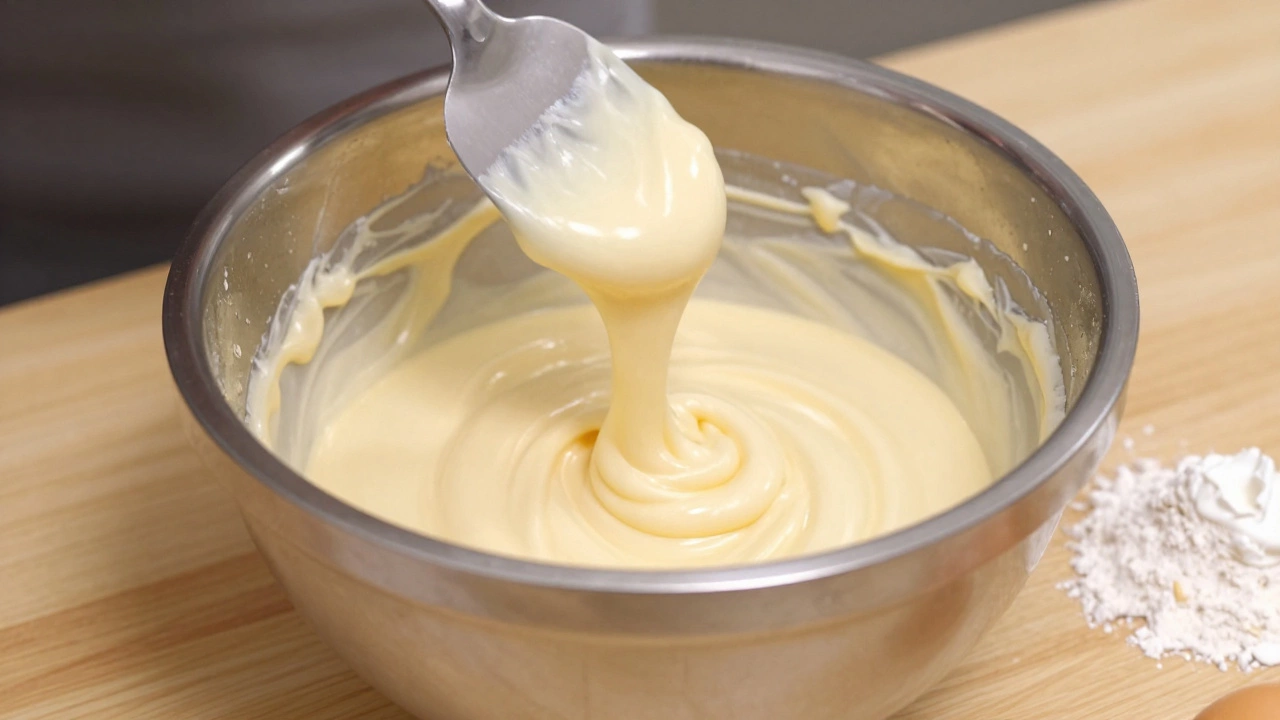
- Macaronage is key - Fold the dry ingredients into the meringue gently but thoroughly. The batter should flow like lava. When you lift the spatula, it should fall in a ribbon and slowly disappear into the rest of the batter in about 10 seconds. Too thick? Undermixed. Too runny? Overmixed.
- Tap and rest - After piping, smack the tray firmly on the counter three to four times. This pops big air bubbles. Then let them sit at room temperature for 30 to 45 minutes. You’ll know they’re ready when you can lightly touch the surface and it doesn’t stick to your finger.
- Bake low and slow - Use 300°F (150°C) for 16 to 18 minutes. Place the tray on the middle rack. If your oven runs hot, put a second empty tray on the rack below to diffuse heat.
One trick professional bakers use: bake one tray at a time. Overcrowding the oven creates uneven airflow. Even a small oven can handle one tray perfectly.
What to Do If They Still Crack
Even with perfect technique, humidity or altitude can interfere. If you’re in a dry climate, your shells may dry too fast. In humid areas, they may not dry enough. Here’s how to adapt:
- Dry climates - Cover the piped macarons lightly with a clean kitchen towel during resting. This slows evaporation.
- Humid climates - Use a dehumidifier in your kitchen or rest them near a fan (not blowing directly on them) for longer - up to an hour.
- High altitude - Lower the oven temperature by 25°F (15°C) and increase resting time by 15 minutes. Less air pressure means faster steam expansion.
Some bakers swear by using a proofing box or oven with a proof setting (around 86°F / 30°C) to control humidity. If you have one, use it. If not, your kitchen counter works - just be patient.
What Cracked Macarons Can Still Be Used For
Don’t throw them away. Cracked shells aren’t ruined - they’re just not picture-perfect. Here’s how to repurpose them:
- Macaron crumbs - Crush them and use as a topping for ice cream, yogurt, or cheesecake.
- Macaron pie crust - Mix crumbs with melted butter and press into a pan. Bake 10 minutes, then fill with lemon curd or chocolate ganache.
- Trifle layers - Layer cracked shells with whipped cream, fruit, and custard. The texture adds crunch.
- Macaron pudding - Soak them in warm custard or milk for 10 minutes, then blend into a smooth dessert.
One Parisian pastry chef told me he uses cracked shells to make his signature ‘macaron ice cream sandwiches’ - the cracks help the filling seep in just right.
Common Myths About Macaron Cracks
There’s a lot of bad advice out there. Let’s clear a few up:
- Myth: You need to add cream of tartar to stabilize the meringue. Truth: It’s unnecessary. Aged egg whites and proper folding do the job.
- Myth: Cracking means you used the wrong brand of almond flour. Truth: Brand matters less than moisture content. Always sift and store properly.
- Myth: If your macarons crack, you’re a bad baker. Truth: Even top pastry chefs have bad batches. Macarons are temperamental. It’s not about skill - it’s about consistency.
The best bakers don’t avoid cracks - they learn from them. Keep notes: temperature, resting time, humidity, batter texture. After three tries, you’ll start seeing patterns.
What to Look for in Perfect Macarons
Good macarons have four signs:
- Smooth top - No cracks, no bumps.
- Defined feet - A ruffled base that lifts slightly off the tray.
- Light, crisp shell - Gives slightly when pressed, then springs back.
- Soft, chewy center - Not crunchy, not gooey.
If you get these, you’ve nailed it. The filling doesn’t matter yet - the shell is the foundation.
| Problem | Most Likely Cause | Fix |
|---|---|---|
| Cracked shells | Too much air, not rested, oven too hot | Tap tray, rest 30-45 min, lower temp to 300°F |
| No feet | Overmixed batter, wet ingredients | Sift dry ingredients twice, use aged egg whites |
| Flat, spread-out shells | Overmixed batter | Fold less - stop when batter flows like lava |
| Crunchy centers | Overbaked | Reduce time by 2 minutes, check with toothpick |
| Colorless shells | Too much food coloring, low heat | Use gel paste, not liquid, and bake at 300°F |
Final Tip: Patience Is the Secret Ingredient
Macarons don’t care how good you think you are. They respond to consistency. The same batter, the same resting time, the same oven setting - repeat it three times, and you’ll get the same result. That’s the magic.
Don’t rush the resting. Don’t open the oven. Don’t blame the recipe. Control what you can - the batter, the air, the heat - and the rest will follow.
Why do my macarons crack only on the top?
Top cracks usually mean the surface dried too fast while the inside was still rising. This happens when the oven is too hot or the macarons weren’t rested long enough. Lower the temperature to 300°F (150°C) and let them sit for at least 30 minutes before baking. Tap the tray after piping to release trapped air.
Can I fix cracked macarons after baking?
You can’t repair the shells, but you can still use them. Crush them into crumbs for toppings, mix with butter for a crust, or soak them in custard for a pudding. The flavor is still perfect - only the appearance is affected.
Does humidity affect macarons?
Yes. High humidity makes it hard for the surface to dry, leading to sticky shells and uneven baking. In humid climates, rest macarons longer - up to an hour - or use a dehumidifier. In dry climates, cover them lightly with a towel during resting to slow drying.
Should I use a convection oven for macarons?
Avoid convection unless you adjust for it. The fan dries the surface too quickly, causing cracks. If you must use one, lower the temperature by 25°F (15°C) and increase resting time. Most professionals use conventional ovens for better control.
How long should I rest macarons before baking?
Rest them for 30 to 45 minutes at room temperature. They’re ready when you can gently touch the surface without the batter sticking to your finger. In humid weather, wait up to 60 minutes. Never skip this step - it’s what creates the skin that prevents cracking.