

Fudge Storage Advisor
Find out if you're storing your fudge correctly. Select your fudge type, current storage location, and climate conditions to get personalized advice.
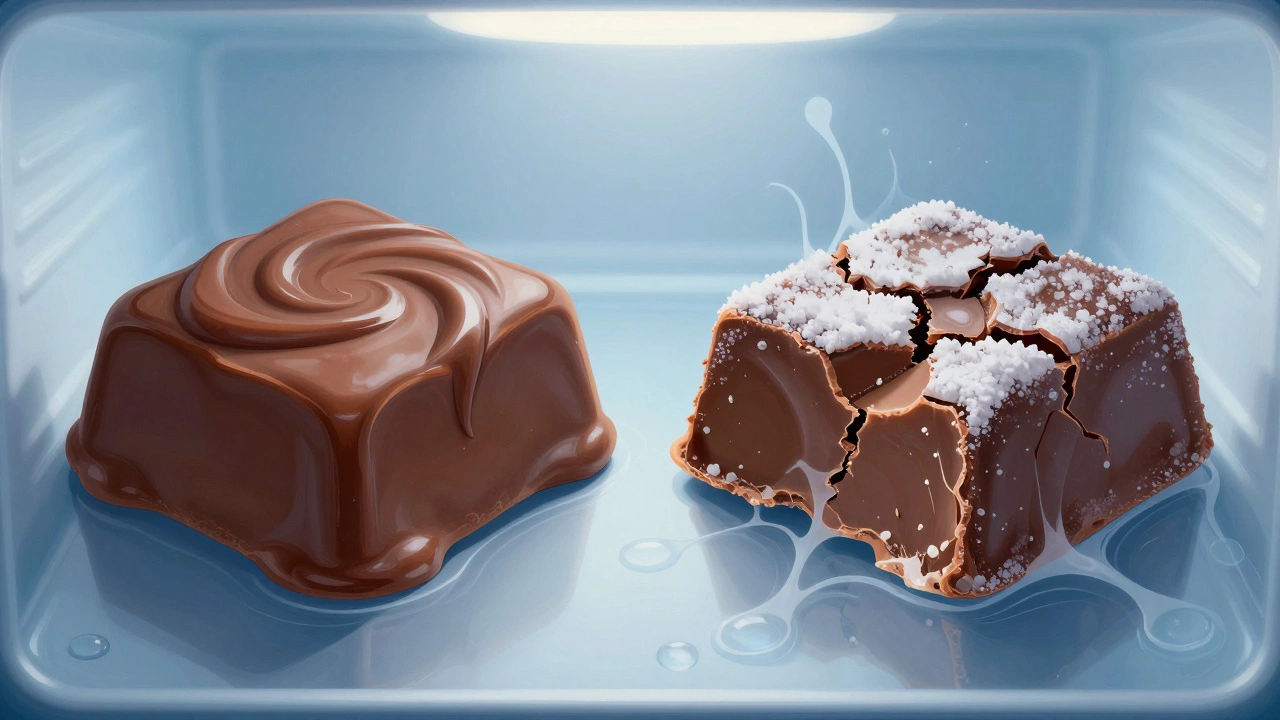
Ever pulled a block of fudge out of the fridge, only to find it hard as a rock, covered in white streaks, and tasting like cardboard? You’re not alone. Most people think the fridge is the safest place to store fudge-cool, dry, and out of the way. But that’s exactly why it’s the worst place for it.
Fudge isn’t just chocolate-it’s a delicate sugar emulsion
Fudge isn’t candy you just melt and pour. It’s a carefully balanced mix of sugar, butter, cream, and chocolate, cooked to the exact temperature where sugar crystals form just right-small, smooth, and invisible. That’s what gives fudge its creamy melt-in-your-mouth texture. When you chill it in the fridge, you’re not just cooling it down. You’re breaking that balance.
The cold air pulls moisture out of the fudge. Sugar draws water like a magnet, and when it loses that moisture, the crystals grow larger and clump together. That’s what makes fudge grainy. The white streaks you see? That’s sugar blooming-pure sugar rising to the surface because the fat and moisture got separated by the cold.
Butter and chocolate hate the fridge
Fudge contains real butter and real chocolate. Neither of them belongs in the fridge. Butter hardens and loses its richness. Chocolate develops fat bloom-a dull, grayish film that looks like mold but is just cocoa butter separating. It’s harmless, but it makes your fudge look old, cheap, and unappetizing.
Real chocolate fudge made with 70% dark chocolate or high-quality milk chocolate doesn’t need refrigeration. It’s designed to be stored at room temperature, just like the bars you buy in a candy shop. The fat in chocolate is stable at 60-70°F. That’s why professional chocolatiers never refrigerate their products.
Moisture is the enemy-fridge air is full of it
Here’s the irony: the fridge is humid. Open the door, and you’ll see condensation on your milk carton. That moisture doesn’t help fudge-it attacks it. When you take fudge out of the fridge, the cold surface pulls water from the air, creating a damp film on the outside. That water gets absorbed into the fudge, making it sticky, soggy, and prone to mold.
And if you wrap it in plastic before putting it in the fridge? That just traps the moisture inside. You’re creating a steam chamber for your fudge. No wonder it turns into a gooey mess after a few days.
Proper storage: cool, dry, and covered
The best place for fudge is your pantry or a kitchen cabinet. Keep it in an airtight container-glass or plastic with a tight seal. Line the bottom with parchment paper, place the fudge in a single layer, then cover with another sheet of parchment before closing the lid. This stops pieces from sticking and lets the fudge breathe just enough.
If you live in a hot, humid climate, you can store it in the fridge-but only as a last resort. And even then, follow these rules:
- Wrap each piece tightly in wax paper, then in aluminum foil.
- Place it in a rigid container to avoid crushing.
- Let it sit at room temperature for 2-3 hours before eating.
That’s right-don’t eat it cold. Let it warm up. The texture will come back. The flavor will bloom. You’ll taste the chocolate again, not the freezer.
How long does fudge really last?
Stored properly at room temperature, homemade fudge lasts 2-3 weeks. If you want to keep it longer, freeze it-not refrigerate. Wrap it in two layers of plastic wrap, then in foil, and put it in a freezer bag. It’ll keep for up to 3 months. Thaw it slowly on the counter overnight. No condensation. No graininess. Just perfect fudge.
Store-bought fudge? Same rules. Check the label-most say “keep at room temperature.” If it says “refrigerate,” it probably has preservatives or low-quality ingredients. Real fudge doesn’t need them.

What happens when you ignore this advice?
Let’s say you put a batch of salted caramel fudge in the fridge because you were afraid it’d go bad. A week later, you take it out. It’s hard. It’s chalky. The caramel layer has separated into a sticky syrup. You try to cut it-it crumbles. You eat a bite anyway. It tastes like sweet dust.
That’s not fudge anymore. That’s a lesson in physics and sugar chemistry.
People waste so much good fudge because they assume cold = fresh. But cold doesn’t preserve flavor-it kills it. Fudge is meant to be soft, rich, and slightly warm when you bite into it. That’s why it melts on your tongue. That’s why it’s called fudge-not rock candy.
Real fudge makers don’t refrigerate
Look at the big names-Fannie May, See’s Candies, local shops in Halifax or Vermont. Do they keep their fudge in the fridge? No. They keep it in glass cases at 65°F, under soft lights. That’s because they know: temperature controls texture. And texture controls joy.
When you serve fudge at room temperature, the butter softens just enough to release the cocoa aroma. The salt in salted fudge dances on your tongue. The vanilla sings. That’s the magic you lose in the fridge.
Bottom line: Keep it out
Don’t put fudge in the fridge. Ever. Unless you’re freezing it for long-term storage. And even then, thaw it right.
Fudge is a treat meant to be enjoyed slowly, at room temperature, with a cup of coffee or a glass of milk. It doesn’t need to be preserved. It needs to be savored.
If you’ve been refrigerating your fudge all this time, you’ve been eating the wrong version of it. Try it the right way once. You’ll never go back.