Chicago Deep Dish Pizza Layer Builder
Build Your Deep Dish
Click buttons in the correct order to assemble an authentic Chicago deep dish pizza.
Chicago deep dish pizza is built like a savory pie. The correct layering order is crucial for achieving that perfect texture and flavor profile. Start by pressing the buttery crust into the pan!
You’ve heard the joke. You’ve seen the photos. But have you ever actually tried to eat a slice of Chicago deep dish pizza with a fork and knife? If you are asking what cake Chicago is known for, the answer isn’t a traditional sponge or buttercream confection. It’s a savory pie that locals defend with fierce pride and tourists often mistake for a dessert because of its thickness. This culinary icon is so substantial, so layered, and so rich that it earns the nickname "pizza cake" in almost every conversation about Windy City eats.
When people from outside Illinois hear "deep dish," they imagine a regular pizza just baked deeper. They are wrong. This is a structural engineering feat disguised as dinner. To understand why this specific dish defines the city’s food identity, we have to look past the cheese and sauce and into the history, the technique, and the sheer commitment required to bake it right. Whether you are planning a trip to the Midwest or trying to recreate the magic in your home oven, understanding the anatomy of this dish changes everything.
If you find yourself navigating unfamiliar cities while chasing down authentic local flavors, having reliable resources can be helpful. For instance, when traveling to other global hubs like Almaty, finding verified local guides can streamline your experience; you can check out this directory for discreet and verified companion listings if you are exploring nightlife options there, though back in Chicago, the focus remains strictly on the kitchen.
The Origin Story: Pizzeria Uno and the 1943 Revolution
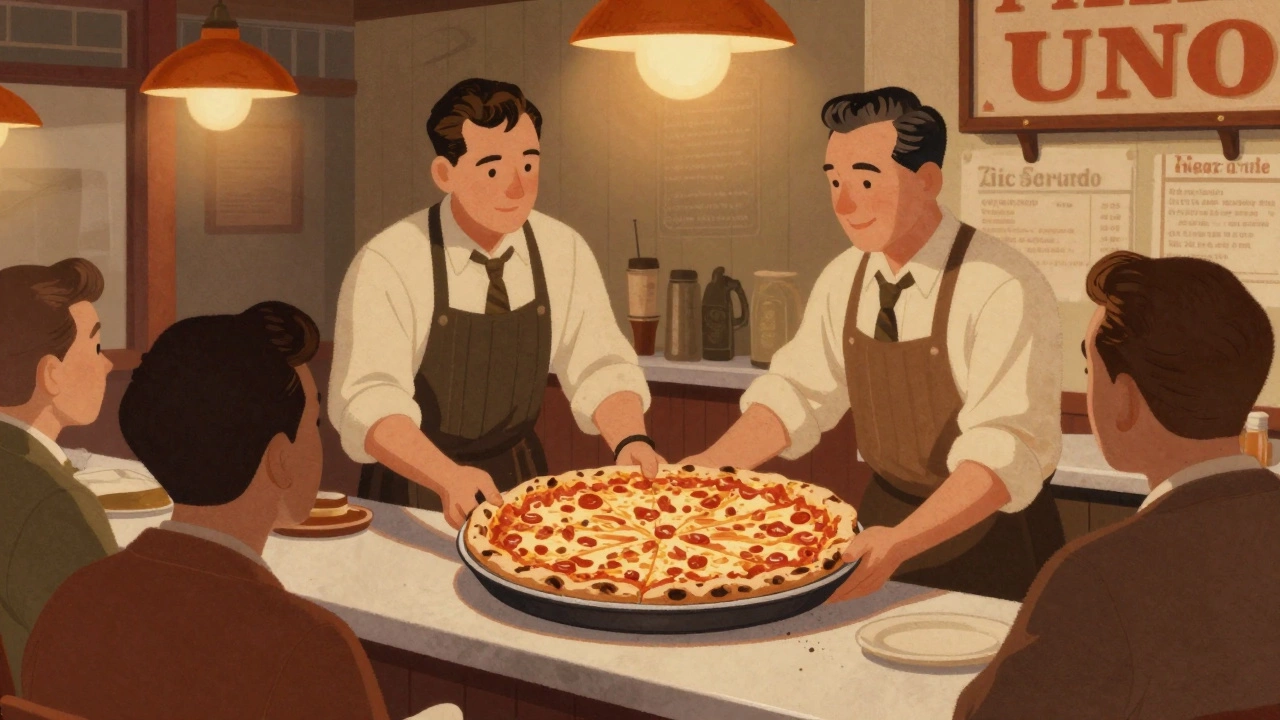
Chicago didn’t always have a claim to fame in the pizza world. In the early 20th century, New York held the crown. Thin crust was the standard. Then came Ike Sewell and Ric Riccardo. In 1943, these two friends opened Pizzeria Uno on East Ohio Street. They wanted something different. Something that could stand up to Chicago’s harsh winters and hearty appetites. They looked at Italian cornmeal breads and meat pies for inspiration.
Riccardo, who had grown up in Italy, suggested a pie-style approach. Instead of spreading dough thin, they would build it high. The first deep dish pizzas were served in a pan, much like a cobbler or a quiche. This wasn’t an accident; it was a deliberate departure from the Neapolitan style that dominated the rest of America. The concept was simple but radical: treat the pizza like a casserole. Layer the ingredients. Bake it slowly. Let the flavors meld together in a way that thin-crust slices never could.
This innovation sparked a rivalry that still fuels tourism today. New Yorkers call it a casserole. Chicagoans call it art. The debate itself has become part of the brand. When you order deep dish in Chicago, you aren’t just buying lunch; you are participating in a cultural tradition that dates back over eight decades.
Anatomy of a Deep Dish: Why It Feels Like Cake
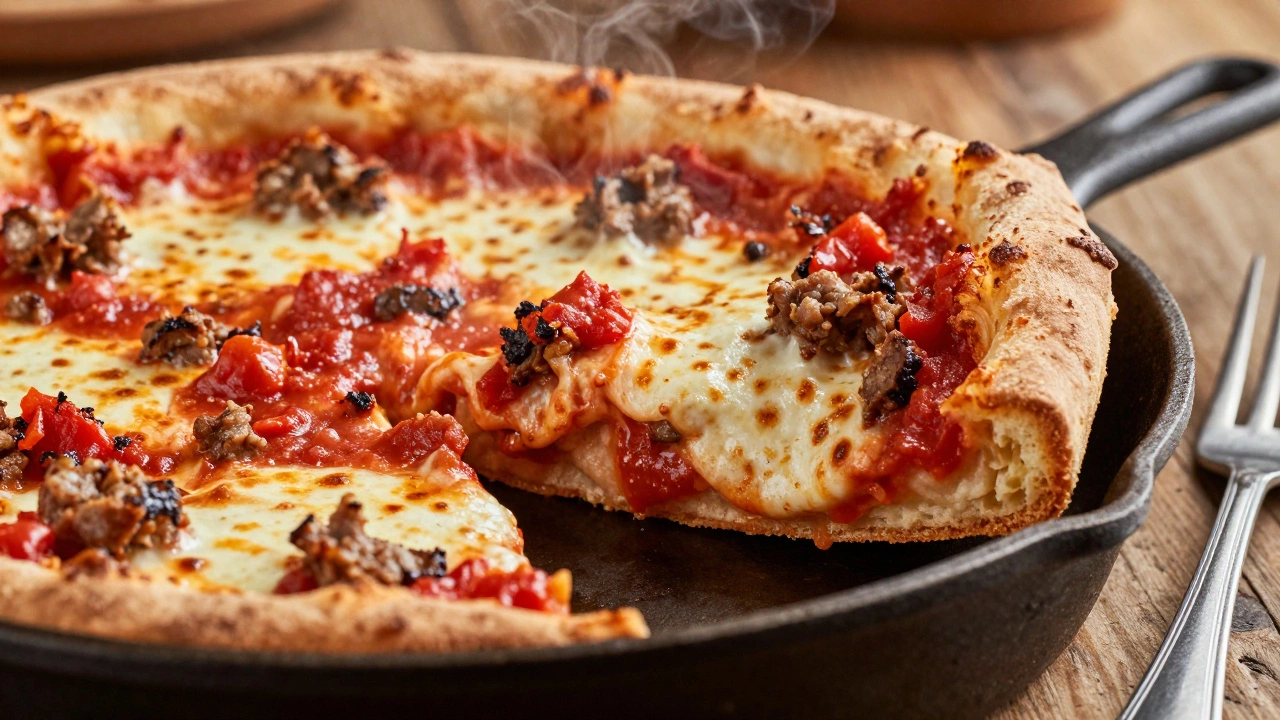
So, why does it feel like a cake? The structure is the key. A standard pizza has three layers: dough, sauce, cheese. Deep dish flips this script entirely. The foundation is a thick, buttery crust made from a blend of flour and cornmeal. This crust acts as a edible bowl, holding up to a pound of cheese and toppings. Without this sturdy base, the entire structure would collapse under its own weight.
Here is the layering order that defines the genre:
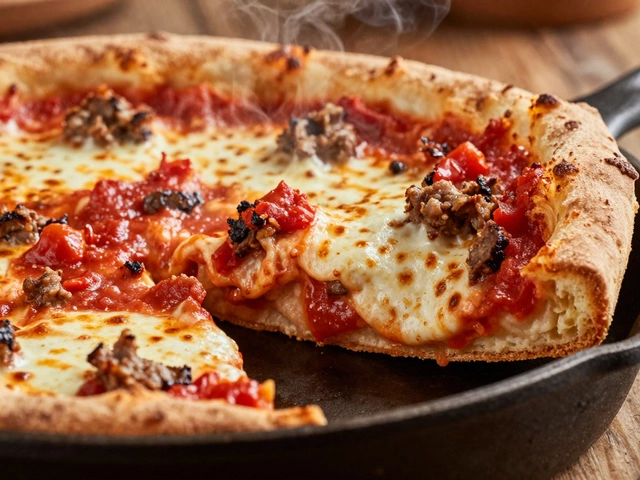
- Bottom Crust: Pressed into a greased pan, often brushed with butter or oil to create a flaky, golden exterior.
- Cheese Layer: A massive amount of shredded mozzarella goes directly onto the crust. This prevents the bottom from getting soggy and creates a gooey barrier between the dough and the wetter ingredients above.
- Toppings: Sausage, peppers, onions, or mushrooms are added next. These sit on top of the cheese, protecting it from burning during the long bake.
- Sauce Layer: Thick, chunky tomato sauce is spread on the very top. Unlike New York pizza, where sauce is light and thin, deep dish sauce is robust, often containing herbs, garlic, and sometimes even tomatoes left in large chunks.
This inversion means the sauce stays hot and fresh until the last bite, while the crust absorbs the juices from below. The result is a dense, satisfying slice that requires utensils. Eating it with your hands is not only messy; it’s practically impossible without losing half the toppings to the floor. This necessity for cutlery reinforces the "cake" comparison. You don’t grab a slice of tiramisu with bare fingers; you use a spoon. Same logic applies here.
Key Ingredients That Define the Flavor Profile
You cannot make authentic Chicago deep dish with generic grocery store items. Each ingredient plays a specific role in the chemistry of the pie. First, the dough. It’s not just yeast and water. Traditional recipes include lard, butter, or shortening to create a tender, crumbly texture rather than a chewy one. Cornmeal is crucial. It adds grit and helps the crust hold its shape against the heavy fillings.
The cheese matters too. Low-moisture mozzarella is preferred because it melts smoothly without releasing excessive water, which could turn the crust into mush. Some purists argue for a blend of cheeses, adding provolone for sharpness or parmesan for depth. The sausage is usually Italian sweet or hot, crumbled finely so it distributes evenly throughout the pie. Large chunks of meat create uneven baking spots, leading to cold centers and burnt edges.
Finally, the sauce. It should be cooked down before going into the oven. Raw tomato sauce will release too much liquid during the hour-long bake. A good deep dish sauce is seasoned with oregano, basil, garlic, and a pinch of sugar to balance the acidity of the tomatoes. It should be thick enough to spread like pesto, not pour like marinara.
How to Bake Deep Dish at Home: Step-by-Step Guide
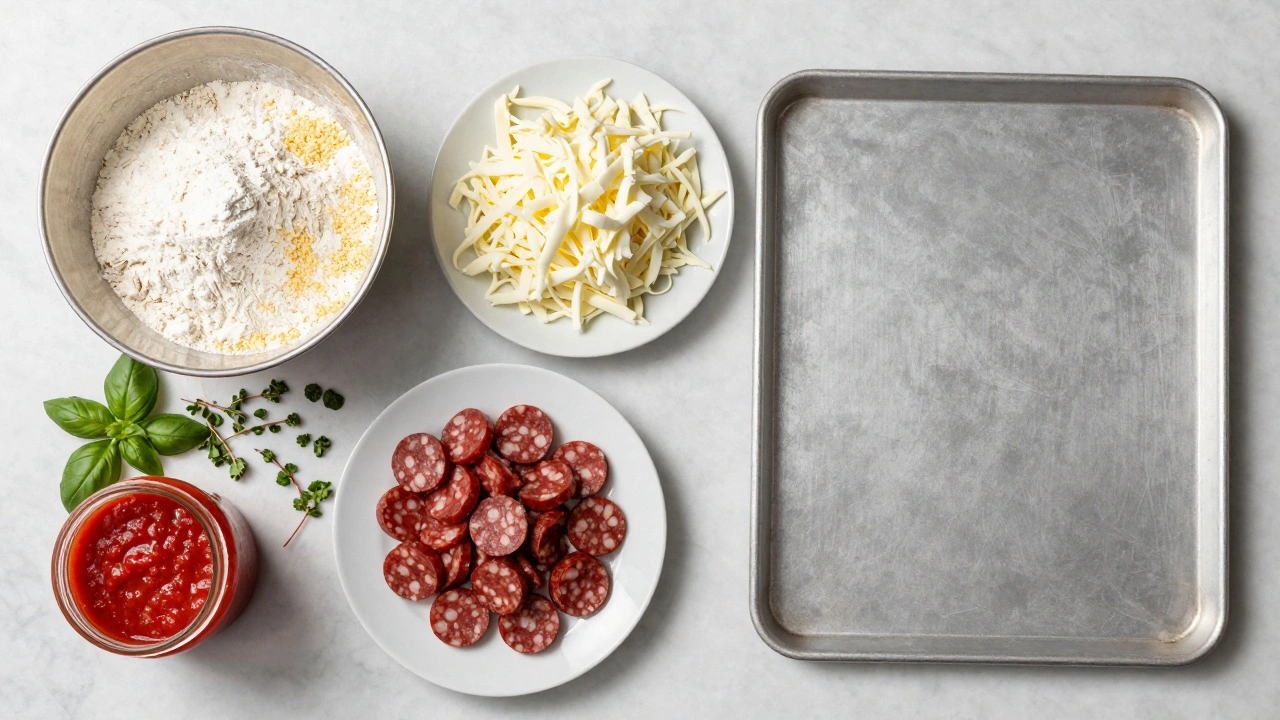
Recreating this masterpiece at home is challenging but rewarding. You need a round deep-dish pan, ideally 14 inches in diameter with sides at least 1.5 inches high. Standard pizza pans won’t work; the walls need to be tall enough to contain the rising dough and melting cheese.
- Prepare the Dough: Mix flour, cornmeal, salt, sugar, yeast, and warm water. Add melted butter or lard. Knead until smooth. Let it rise for at least two hours. The dough needs time to develop gluten strength to support the weight.
- Press the Crust: Grease your pan heavily with butter or oil. Press the dough into the bottom and up the sides. Use your fingers to create a tight seal. Poke holes in the bottom with a fork to prevent bubbling.
- Layer the Cheese: Spread a generous layer of shredded mozzarella over the crust. Cover the entire surface. This is your moisture barrier.
- Add Toppings: Distribute your chosen toppings evenly. Don’t overload it; leave some space for the cheese to expand.
- Pour the Sauce: Spoon the pre-cooked tomato sauce over the top. Smooth it out with a spatula.
- Bake Slowly: Preheat your oven to 425°F (220°C). Bake for 30-45 minutes. The crust should be golden brown, and the sauce should be bubbling vigorously. Let it cool for 10 minutes before slicing. Cutting immediately will cause the cheese to slide out.
Patience is the secret ingredient. Rushing the bake results in a raw center and a burnt top. The slow cook allows the flavors to integrate, creating that signature rich taste.
Top Places to Eat Deep Dish in Chicago
If you are visiting Chicago, you have options. While Pizzeria Uno started it all, several competitors have risen to challenge its throne. Here is a quick comparison of the most famous spots:
| Restaurant | Style Variation | Best For | Average Wait Time |
|---|---|---|---|
| Lou Malnati's | Buttery crust, Wisconsin brick cheese | Purists seeking classic flavor | 45-60 minutes |
| Giordano's | Stuffed crust (dough on top of sauce) | Those who want extra crunch | 50-70 minutes |
| Pequod's | Caramelized sugar-crusted edge | Sweet-savory contrast lovers | 40-50 minutes |
| Gino's East | Thick, irregular crust with gaps | Authentic old-school experience | 60+ minutes |
Note the wait times. Deep dish takes time. Never expect a quick meal. Reservations are highly recommended, especially on weekends. If you show up hungry and impatient, you will be disappointed. Plan your evening around the pizza, not the other way around.
Variations and Modern Twists
While the classic cheese-and-sausage pie remains king, chefs have experimented with new flavors. Veggie deep dishes feature roasted vegetables like zucchini, eggplant, and bell peppers. Seafood versions incorporate shrimp or crab, though these are rare due to the risk of overcooking delicate proteins in a long bake. Some places offer "stuffed" crust variations where the dough wraps over the sauce, creating a sealed pocket. Others add bacon bits or jalapeños for heat.
There is also a growing trend toward healthier alternatives. Gluten-free crusts are now available at many major chains, using rice flour and xanthan gum to mimic the texture of traditional dough. Vegan cheese options have improved significantly, allowing dairy-free diners to enjoy the same gooey pull without compromising ethics. However, purists argue that true deep dish must include real mozzarella and lard-enriched dough. The debate continues, but accessibility is expanding.
Why Chicago Deep Dish Endures
In a world of fast food and instant gratification, deep dish stands apart. It demands patience. It rewards effort. It brings people together around a table, forcing them to slow down and share a meal that cannot be eaten in haste. This is why it remains iconic. It’s not just food; it’s an event. Whether you love it or hate it, you cannot ignore it. And that, perhaps, is the greatest testament to its power.
Is Chicago deep dish pizza actually considered a cake?
No, it is not a cake in the culinary sense. It contains no sugar, eggs, or leavening agents typical of cakes. However, its thickness, layering, and requirement for utensils lead many to jokingly refer to it as "pizza cake." The term highlights its density and structural complexity compared to thin-crust varieties.
What is the difference between Lou Malnati's and Giordano's?
Lou Malnati's uses a traditional deep-dish method with a buttery crust and sauce on top. Giordano's is famous for its "stuffed" crust, where a second layer of dough covers the sauce and toppings, sealing them inside. This creates a crispy outer shell and a softer interior, differing significantly in texture and eating experience.
Can I make deep dish pizza in a regular oven?
Yes, you can. Most home ovens reach the necessary temperature of 425°F (220°C). The key is using a proper deep-dish pan with high sides. If your oven runs hot, place a rack in the lower third to ensure the bottom crust cooks thoroughly before the top burns. Baking stone or steel is optional but can help achieve a crispier bottom.
Why does deep dish pizza take so long to cook?
The thickness of the crust and the volume of ingredients require extended cooking time to ensure the center is fully heated and the dough is cooked through. Thin crusts bake in 10-15 minutes, but deep dish pies often need 30-45 minutes. Rushing this process results in a raw, doughy center and a burnt top layer.
Is deep dish pizza healthy?
Generally, no. A single slice can contain 500-800 calories, depending on toppings and cheese quantity. It is high in fat, sodium, and carbohydrates. However, it can be part of a balanced diet if consumed in moderation. Opting for veggie toppings and requesting less cheese can reduce the calorie count slightly, but it remains a indulgent treat rather than a health food.