Gluten-Free Rice Product Checker
Check Your Rice Product
Enter product name or ingredients to verify gluten-free status based on article guidelines
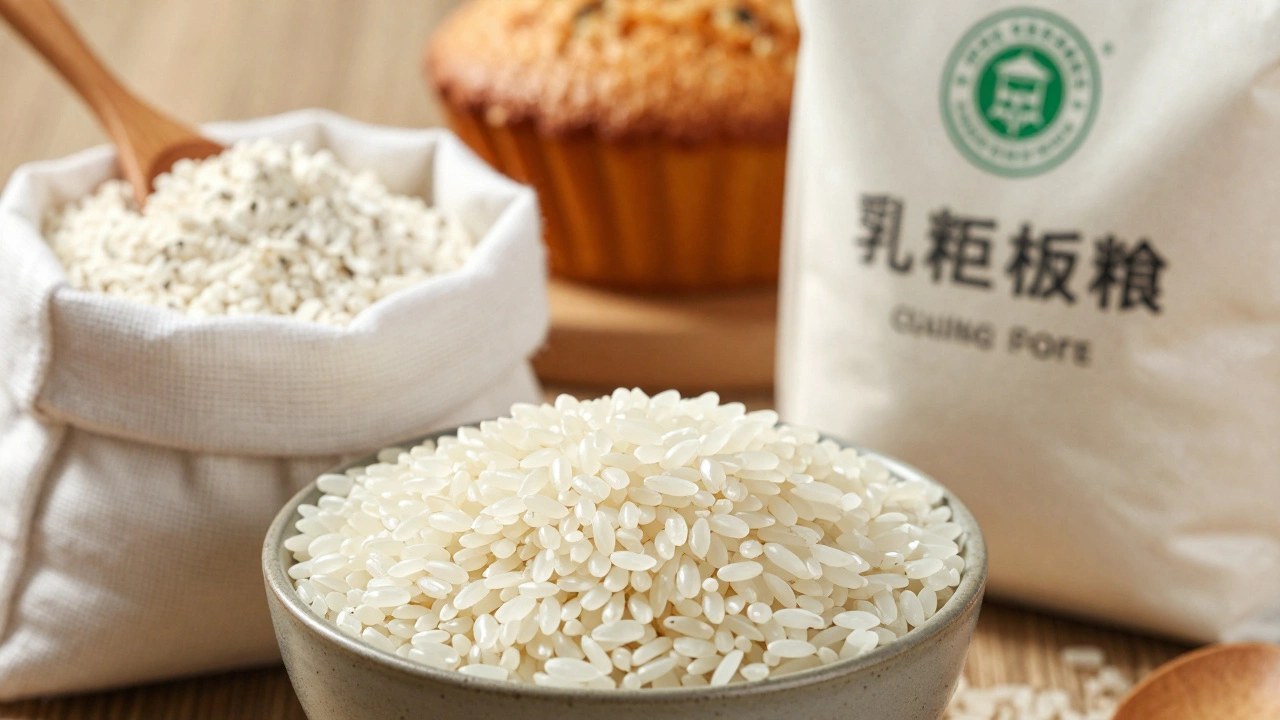
When you're baking gluten-free cakes, every ingredient matters. You check the flour, the baking powder, even the vanilla extract. But what about rice? It's simple, cheap, and often used in gluten-free flour blends. So, does rice have gluten? The short answer is no. Pure rice - whether white, brown, wild, or black - contains no gluten. That makes it one of the safest grains for people with celiac disease or gluten sensitivity.
Why This Matters for Gluten-Free Cakes
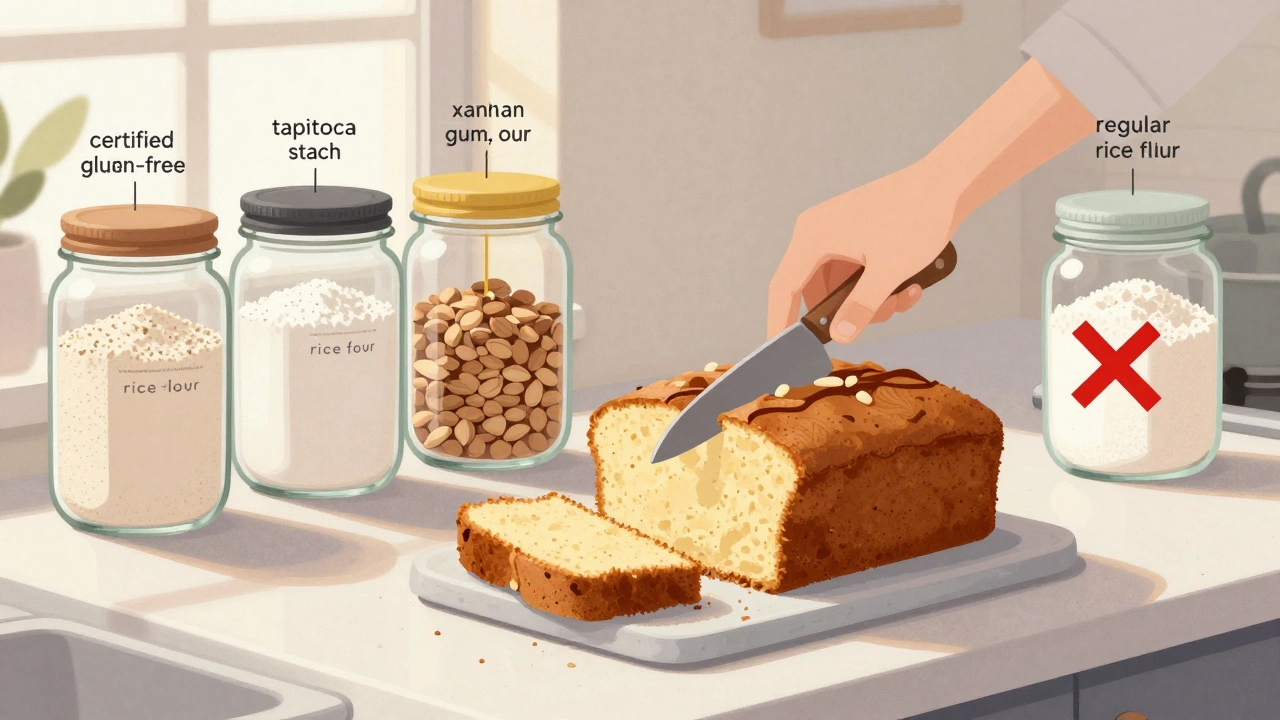
Rice flour is one of the most common bases in gluten-free cake recipes. It’s used in everything from pound cakes to chocolate layer cakes because it’s neutral in flavor and absorbs moisture well. But not all rice flour is created equal. Some brands mix rice flour with wheat starch or malt flavoring to improve texture. That’s where confusion sets in. If you’re baking for someone with celiac disease, you can’t assume rice flour is safe just because it’s made from rice.Look for labels that say gluten-free certified. In Canada, that means the product has been tested and contains less than 20 parts per million of gluten - the legal standard. Brands like Bob’s Red Mill, King Arthur, and Natura use dedicated gluten-free facilities. Avoid products that only say “natural” or “made in a facility that also processes wheat.” That’s not enough.
The Science Behind Rice and Gluten
Gluten is a protein found in wheat, barley, rye, and their crossbred varieties. It gives bread its chew and cake its structure. Rice, on the other hand, has a completely different protein profile. Its main proteins are globulins and glutelins, none of which trigger the immune response that gluten does in sensitive people. That’s why rice has been a staple in gluten-free diets for decades.Even sticky rice - the kind used in sushi - is gluten-free. Its stickiness comes from amylopectin, a type of starch, not gluten. Some people think glutinous rice means it contains gluten, but that’s a misnomer. The word “glutinous” refers to its sticky texture, not the protein gluten.
Hidden Sources of Gluten in Rice Products
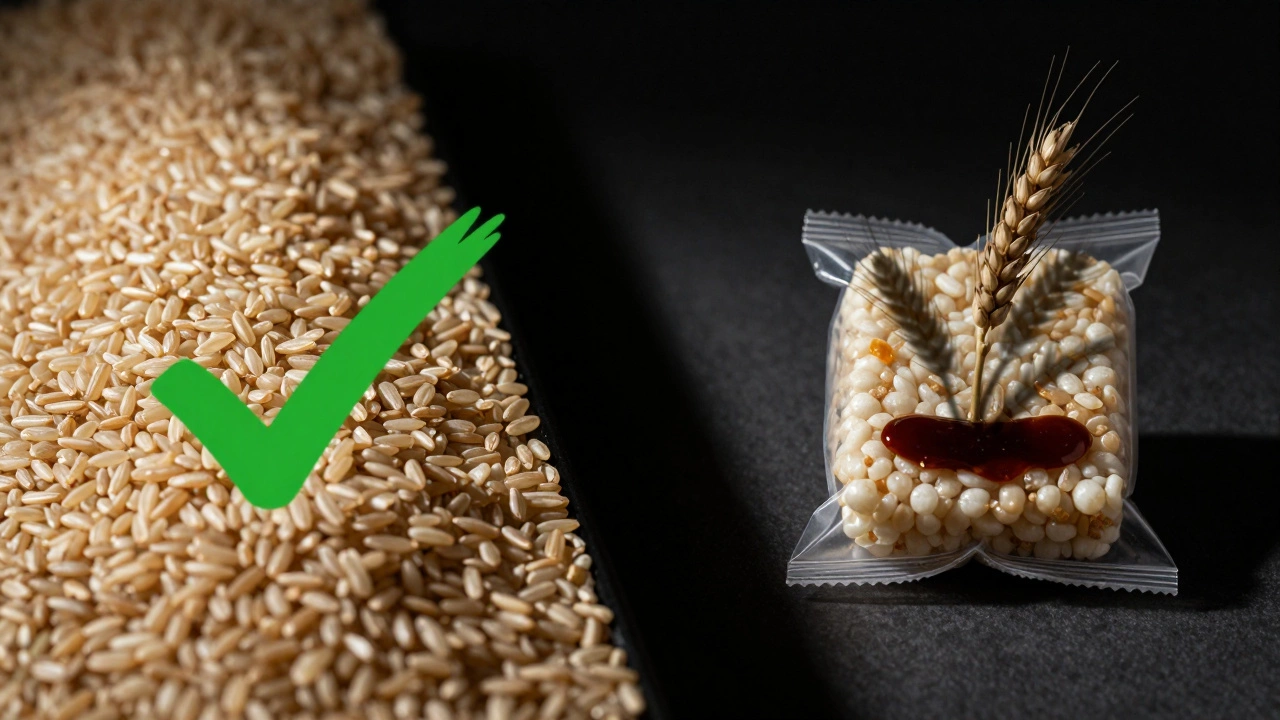
While plain rice is safe, processed rice products can be risky. Here are common culprits:- Rice cakes: Some are coated with barley malt or flavored with wheat-based ingredients.
- Rice noodles: Check labels - some are made with wheat flour to improve texture.
- Seasoned rice mixes: These often contain soy sauce (which usually has wheat) or hydrolyzed wheat protein.
- Rice-based snacks: Flavored chips or crackers may use malt vinegar or wheat starch as binders.
- Instant rice: Sometimes processed in facilities that handle wheat, leading to cross-contact.
When in doubt, stick to plain, unseasoned rice. Cook it yourself from whole grains. That’s the most reliable way to avoid contamination.
How Rice Flour Works in Gluten-Free Cakes
Rice flour doesn’t have the elastic properties of wheat flour, so cakes made with it can turn out dry or crumbly. That’s why most gluten-free cake recipes combine rice flour with other ingredients:- Tapioca starch adds chewiness.
- Potato starch helps retain moisture.
- Xanthan gum or guar gum mimics gluten’s binding power.
- Almond flour or oat flour adds richness and structure.
A typical gluten-free cake flour blend might be 50% rice flour, 25% tapioca starch, 15% potato starch, and 10% almond flour - with a pinch of xanthan gum. This combo gives you a cake that rises well, stays moist, and doesn’t taste gritty.
Real-World Testing: What Happens When You Bake With Rice Flour
In 2023, a study by the Canadian Celiac Association tested 12 popular gluten-free cake mixes that listed rice flour as the first ingredient. Four of them tested positive for gluten above 20 ppm. Why? Because they used shared equipment or added wheat-derived maltodextrin. One brand even included barley malt flavoring - hidden under “natural flavors.”That’s why reading labels isn’t optional. Even if a cake mix says “gluten-free,” if it contains rice flour and maltodextrin without certification, it’s not safe. Look for the Canada Gluten-Free Certification Program logo or the Coeliac UK symbol. These mean independent testing was done.
What About Brown Rice vs. White Rice?
Both brown and white rice are gluten-free. Brown rice has more fiber and nutrients because it includes the bran and germ. White rice is more refined, so it’s lighter in texture - which makes it better for delicate cakes. But nutritionally, brown rice is superior. For baking, use white rice flour for a finer crumb. Use brown rice flour if you want a nuttier flavor and more fiber.Some bakers blend the two: 70% white rice flour for texture, 30% brown rice flour for depth. That’s a trick used in many professional gluten-free bakeries in Halifax and beyond.
Can You Use Rice as a Direct Substitute for Wheat Flour?
No. You can’t swap rice flour 1:1 for wheat flour in a regular cake recipe. Rice flour absorbs less water and lacks gluten’s structure. If you try, you’ll end up with a cake that falls apart or tastes like chalk.Instead, use a gluten-free flour blend designed for cakes. Or, if you’re experimenting, follow a recipe made specifically for rice flour. Many trusted sources - like the Celiac Disease Foundation and the Gluten-Free Society - offer tested recipes. Don’t wing it.
Final Checklist for Gluten-Free Baking With Rice
- Choose certified gluten-free rice flour - not just “pure rice.”
- Avoid rice products with added malt, soy sauce, or “natural flavors” unless labeled gluten-free.
- Use rice flour as part of a blend, not alone, for better texture.
- Store rice flour in an airtight container - it can go rancid faster than wheat flour.
- When baking for others, always ask if they have celiac disease or just sensitivity - the tolerance levels differ.
At the end of the day, rice is one of the most reliable tools in gluten-free baking. It’s affordable, widely available, and naturally safe. But safety depends on how you use it. Don’t assume. Always check. Always verify. Your cake - and your guests - will thank you.