Cheesecake Cream Selector
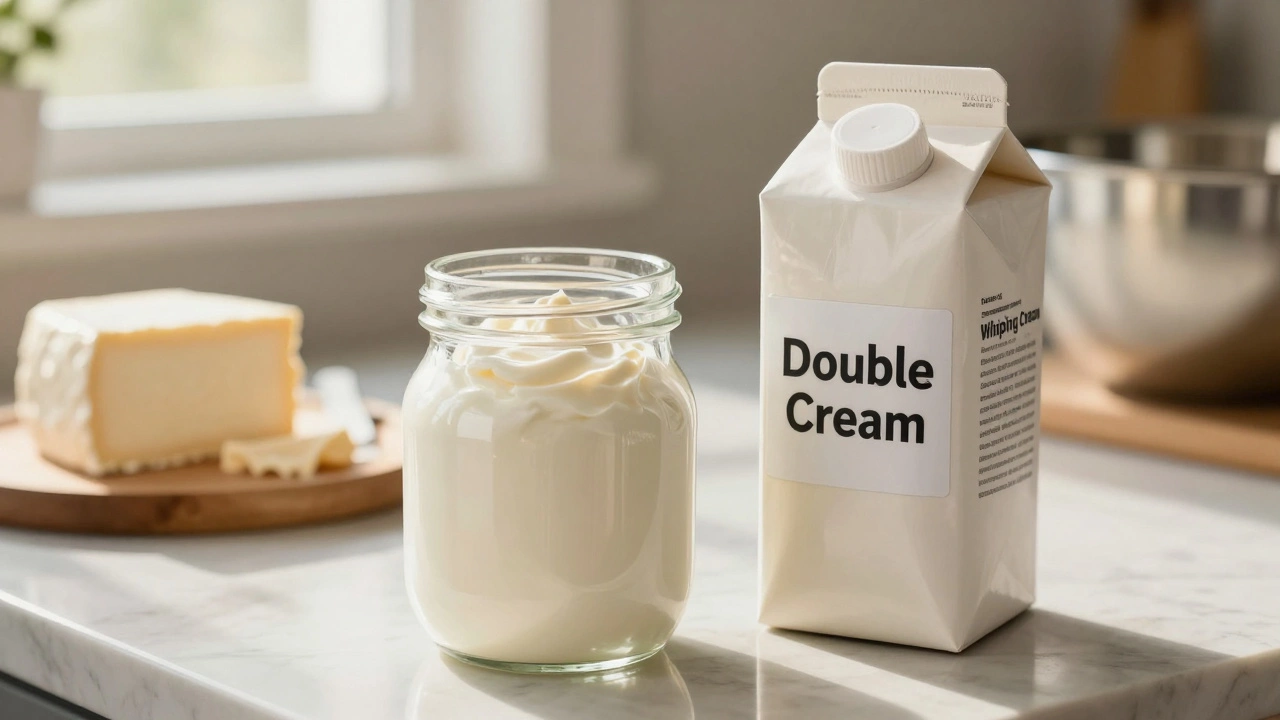
Fat Content Comparison:
Why This Choice?
Pro Tips for Success
You’re staring at two cartons in the fridge. One says "Whipping Cream," the other says "Double Cream." You have a batch of cream cheese ready to go, and you need to know which one will save your cheesecake from becoming rubbery or separating in the oven. It’s a common crossroads for home bakers, especially if you’ve ever switched between recipes from the US, the UK, or Canada.
The short answer? For a traditional, dense New York-style cheesecake, double cream is usually the superior choice because of its higher fat content. However, if you are making a lighter, fluffier style or living in a region where double cream isn’t standard, whipping cream works perfectly fine with a few adjustments. Let’s break down exactly why the fat percentage matters so much and how to choose the right one for your specific bake.
The Fat Factor: Why Percentage Matters More Than Name
To understand which cream wins, we first have to look at what’s actually inside the carton. In baking, fat does three critical things: it tenderizes the crumb, carries flavor, and stabilizes the emulsion (keeping the water and fat from splitting). When you swap creams, you aren’t just swapping names; you are swapping chemical structures.
| Cream Type | Typical Fat Content | Primary Use in Baking | Risk Level in Cheesecake |
|---|---|---|---|
| Double Cream | 48% - 50% | Dense custards, ganache, rich sauces | Low (Very Stable) |
| Heavy Whipping Cream | 36% - 40% | Meringues, whipped toppings, light mousses | Medium (Requires Care) |
| Light Whipping Cream | 18% - 30% | Coffee creamer, light soups | High (Likely to Split) |
Double cream, popular in the UK and widely available in Canada, sits at around 48% to 50% milk fat. This high concentration means there is very little water in the mix. Water is the enemy of a smooth cheesecake because as it evaporates during baking, it can cause cracks and shrinkage. Double cream provides a luxurious, dense mouthfeel that complements the tanginess of cream cheese without adding excess moisture.
Whipping cream, particularly the "heavy" variety common in the US, typically ranges from 36% to 40% fat. While still excellent for baking, that extra 10% difference is mostly water. If you use whipping cream in a recipe designed for double cream, you are introducing more liquid into the batter. This isn’t necessarily bad, but it changes the texture. Your cheesecake might end up slightly softer and less firm, resembling a mousse more than a dense brick.
Texture and Taste: What Happens in the Oven?
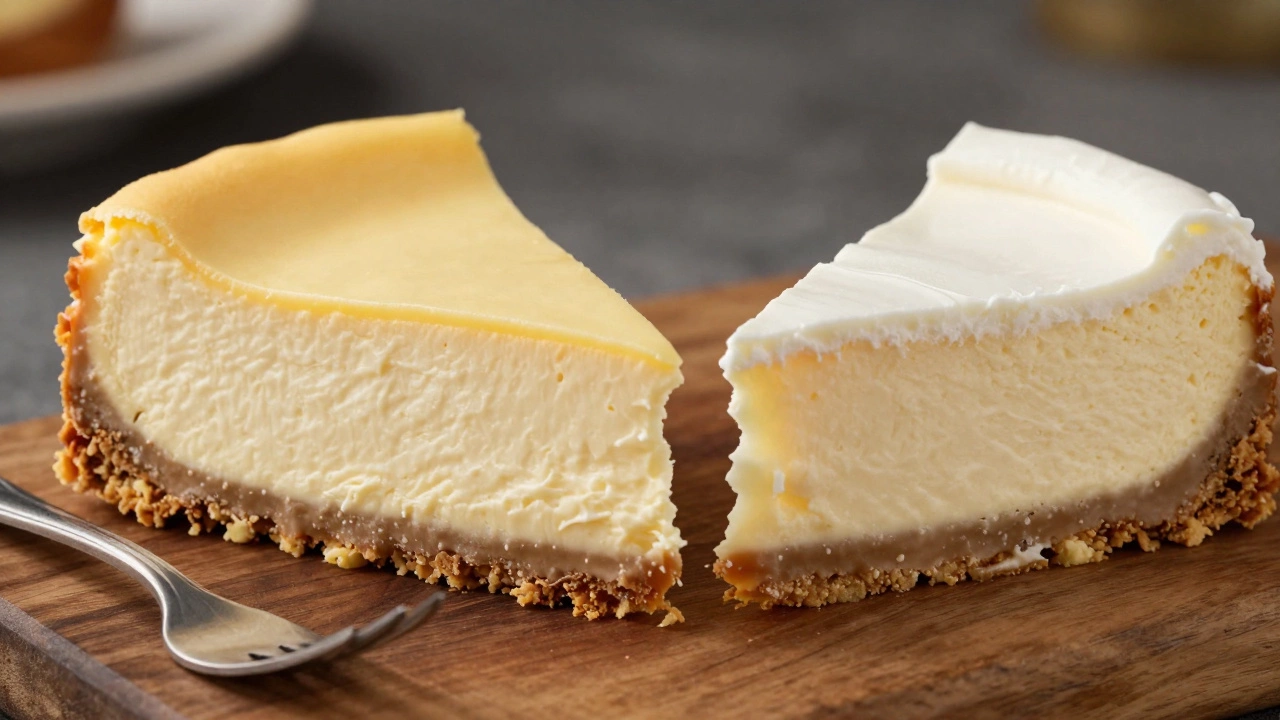
Let’s talk about the actual eating experience. Have you ever bitten into a cheesecake that felt gritty or separated? That’s often an issue with fat stability. Because double cream has more fat globules packed tightly together, it creates a smoother emulsion when mixed with cream cheese. The result is a slice that holds its shape beautifully on the plate and has a velvety finish.
If you use whipping cream, the lower fat content means the structure is slightly weaker. During the cooling process, a cheesecake made with whipping cream might sink a tiny bit more in the center. This isn’t a disaster-it’s just physics. The air bubbles trapped in the lower-fat cream expand differently under heat. To counter this, many professional bakers who prefer the lighter taste of whipping cream will reduce the amount of sugar slightly or add a touch more cornstarch to help bind the extra moisture.
Flavor-wise, double cream tastes richer. Think of the difference between butter and margarine, but subtler. The higher fat content in double cream carries the vanilla and citrus notes better, making the overall dessert feel more indulgent. Whipping cream is milder, which can be a pro if you’re using strong toppings like berry compote or caramel, as it won’t compete for attention.
Regional Availability: The Naming Game
Here is where things get tricky depending on where you live. If you are in the United States, you likely don’t see "double cream" on shelves. Your highest fat option is usually "Heavy Cream" or "Heavy Whipping Cream" at 36-40%. In this case, you are effectively using whipping cream standards. American recipes are formulated with this in mind, so they work perfectly.
In the UK and Australia, "Double Cream" is the standard heavy cream. If you try to substitute it with "Single Cream" (which is closer to half-and-half), your cheesecake will fail completely. It won’t set. In Canada, we have both. We have our own version of heavy cream (often labeled 35% M.F.) and we also have double cream (48% M.F.). Canadian bakers have the luxury of choosing based on the desired outcome rather than availability.
If you are following a British recipe that calls for double cream but you only have US-style heavy whipping cream, do not panic. You can make it work. Just know that your final product will be slightly lighter. If you want to mimic the density of double cream using whipping cream, you can simmer the whipping cream gently to reduce some of the water content before adding it to your batter, though this adds time and complexity.
When to Choose Which: A Decision Guide
So, which one should you grab today? It depends on the style of cheesecake you are aiming for.
- Choose Double Cream if: You want a classic, dense New York-style cheesecake. You are making a baked cheesecake that needs to hold its shape for slicing. You prefer a richer, more decadent flavor profile. You are worried about cracking (the lower water content helps prevent this).
- Choose Whipping Cream if: You are making a no-bake cheesecake (where the fat structure is less critical because gelatin sets it). You want a lighter, fluffier texture similar to a bavarian cream. You are in the US and following a standard American recipe. You plan to top it with very intense flavors that need a neutral base.
There is also a hybrid approach. Some bakers swear by mixing equal parts heavy cream and sour cream. Sour cream adds acidity and tang, while the cream adds fat. This combination can sometimes outperform pure double cream in terms of flavor balance, even if the texture is slightly different.
Troubleshooting Common Issues
Even with the right cream, cheesecakes can go wrong. Here is how the type of cream affects common problems.
The Cracked Top: Cracks are usually caused by overmixing (incorporating too much air) or temperature shock. Double cream’s stability makes it slightly more forgiving here because it doesn’t whip as easily into stiff peaks, meaning you are less likely to accidentally aerate the batter too much. If you use whipping cream, be gentle. Mix on low speed until just combined.
The Separated Look: If your cheesecake looks curdled or oily, the emulsion broke. This happens when the fat separates from the water. High-heat baking exacerbates this. Double cream withstands heat better due to its fat matrix. If you used whipping cream and it separated, next time try tempering the cream-warm it slightly to match the temperature of the cream cheese before mixing. Temperature consistency is key.
The Soggy Bottom: This is rarely the cream’s fault and usually points to a crust issue or underbaking. However, if you used a low-fat cream (like light whipping cream), the excess water might have leaked into the crust. Stick to the high-fat options listed above to avoid this.
Pro Tips for the Perfect Batter
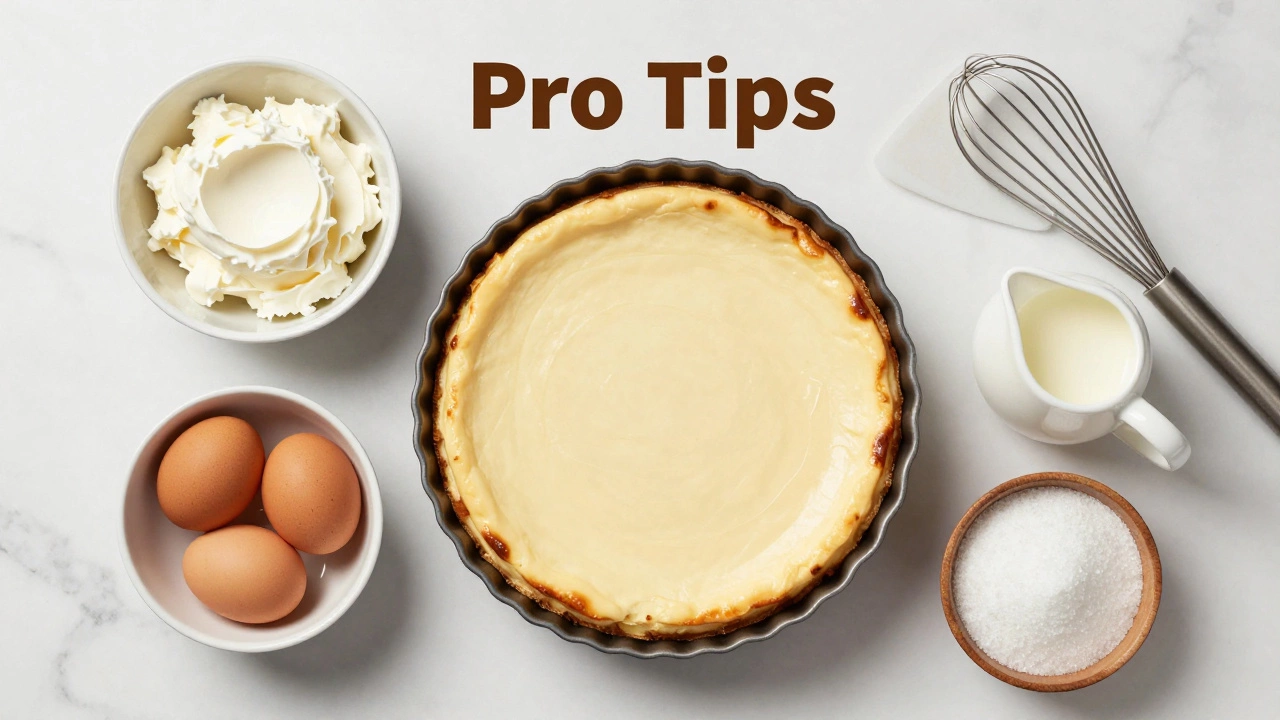
No matter which cream you choose, these techniques will elevate your cheesecake:
- Room Temperature Ingredients: Take your cream cheese and cream out of the fridge at least two hours before baking. Cold cream cheese creates lumps. Lumpy batter leads to uneven baking. Smooth batter equals smooth cake.
- Don’t Overbeat: Once you add the eggs, mix only until incorporated. Overbeating introduces air bubbles that expand in the oven and then collapse, causing sinking and cracks. This applies to both double and whipping cream.
- The Water Bath: Using a bain-marie (water bath) regulates the temperature. It prevents the edges from cooking faster than the center. This is especially helpful if you are using whipping cream, as it gives the structure more time to set gently.
- Cool Slowly: Turn off the oven and crack the door open. Let the cheesecake sit in there for an hour. This gradual cooling prevents thermal shock, which is a major cause of cracking.
Frequently Asked Questions
Can I substitute whipping cream for double cream in a cheesecake recipe?
Yes, you can substitute whipping cream for double cream, but expect a slightly lighter and softer texture. Because whipping cream has less fat (around 36-40%) compared to double cream (48-50%), it contains more water. This extra moisture can make the cheesecake less dense. To compensate, you might want to reduce any other liquids in the recipe slightly or ensure you don't overmix the batter to avoid incorporating too much air.
Is heavy cream the same as double cream?
No, they are not the same. Heavy cream (common in the US) typically has a fat content of 36% to 40%, while double cream (common in the UK and Canada) has a much higher fat content of 48% to 50%. Double cream is richer, thicker, and more stable for baking dense desserts like cheesecake. If a recipe calls for double cream and you only have heavy cream, you can use it, but the result will be slightly less rich.
Why does my cheesecake crack when I use whipping cream?
Cracking is often caused by overmixing, which incorporates too much air, or by rapid temperature changes. Whipping cream whips more easily than double cream, meaning it’s easier to accidentally beat too much air into your batter. These air bubbles expand in the oven and burst, causing cracks. Additionally, the higher water content in whipping cream can lead to more evaporation and shrinkage. To prevent this, mix gently and cool the cheesecake slowly in the turned-off oven.
Can I use light whipping cream for cheesecake?
It is not recommended to use light whipping cream (usually 18-30% fat) for baked cheesecake. The fat content is too low to create a stable emulsion with the cream cheese. The high water content will likely cause the cheesecake to separate, become grainy, or fail to set properly. Stick to heavy whipping cream or double cream for best results. If you must use a lower-fat option, consider a no-bake cheesecake set with gelatin instead.
Does the type of cream affect the sweetness of the cheesecake?
Indirectly, yes. Fat carries flavor. Double cream, with its higher fat content, enhances the perception of richness and can make the cheesecake taste sweeter even if you use the same amount of sugar. Whipping cream is milder, so the tang of the cream cheese might come through more strongly. If you find your cheesecake tastes too tart when using whipping cream, you might adjust the sugar slightly upward to balance the flavor profile.
Which cream is better for no-bake cheesecake?
For no-bake cheesecakes, heavy whipping cream is often preferred because it is whipped to soft peaks to provide volume and airiness. Since the structure comes from gelatin or melted chocolate rather than egg coagulation, the high fat content of double cream isn't as critical for stability. In fact, double cream can be difficult to whip to the desired fluffy consistency needed for a no-bake filling. Whipping cream gives you that light, mousse-like texture that defines great no-bake cheesecakes.