
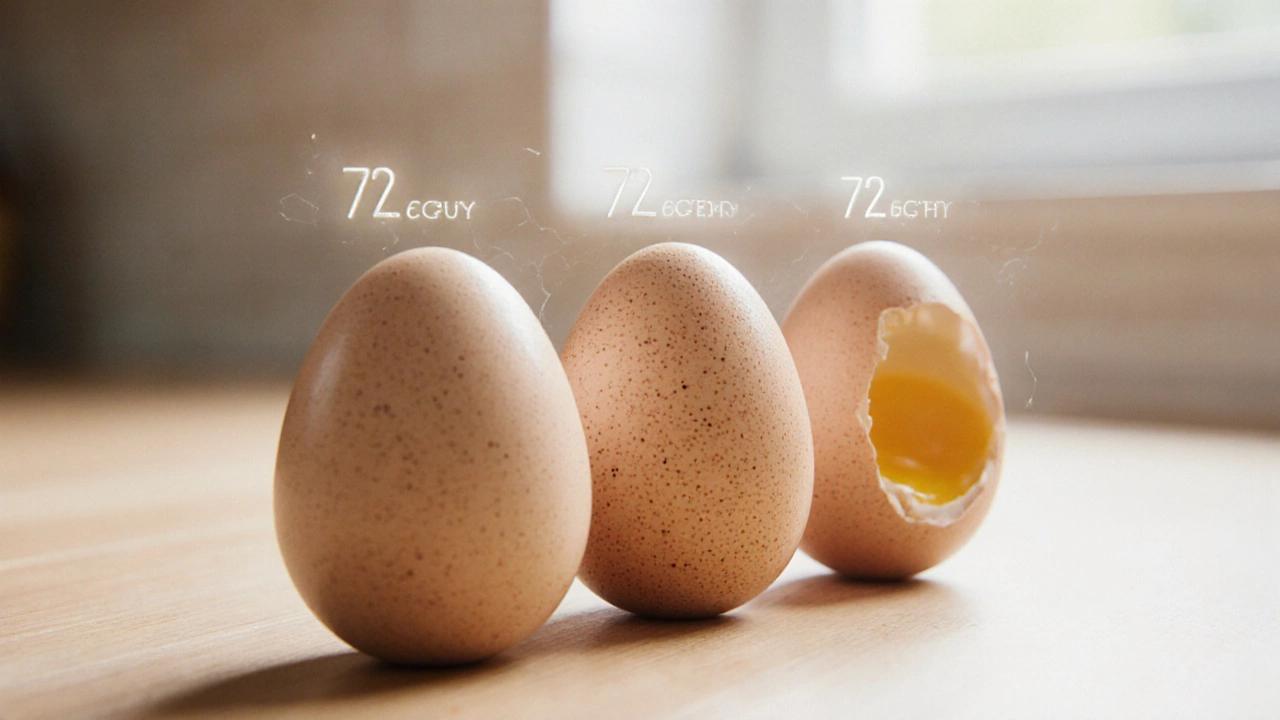
Egg Calories Calculator
Calculate the exact calorie count for 3 raw eggs based on size. Perfect for tiring out egg-based recipes like tiramisu while tracking your daily intake.
Ever wondered exactly how many calories you’re adding when you crack open three raw eggs? Whether you’re whipping up a classic tiramisu or just curious about your breakfast, the numbers matter. Below you’ll find a straight‑forward breakdown, real‑world examples, and tips for keeping your desserts on track without sacrificing flavor.
Key Takeaways
- A large raw egg contains roughly 72 calories.
- Three large raw eggs total about 216 calories.
- Egg size (small, medium, large, extra‑large) changes the calorie count by up to 20 %.
- Understanding egg calories helps you control the overall energy load in tiramisu and other desserts.
- Simple swaps-using half‑egg yolks or egg whites-can trim calories without hurting texture.
What Is a Raw egg?
A raw egg is the uncooked form of a chicken egg, consisting of the albumen (white), the yolk, and the protective shell. Because it hasn’t been heated, the nutritional profile stays intact: protein, fats, vitamins, minerals, and the calorie content you see on food labels.
Raw Egg Nutrition at a Glance
The U.S. Department of Agriculture (USDA) FoodData Central lists the following average values for a large (≈57 g) raw egg:
- Calories: 72 kcal
- Protein: 6.3 g
- Total fat: 4.8 g (mostly unsaturated)
- Cholesterol: 186 mg
- Vitamin D: 1.1 µg
- Key minerals: iron, selenium, phosphorus
These numbers shift slightly with egg size because the weight of the yolk and white changes. For accurate tracking, use the size‑specific table below.
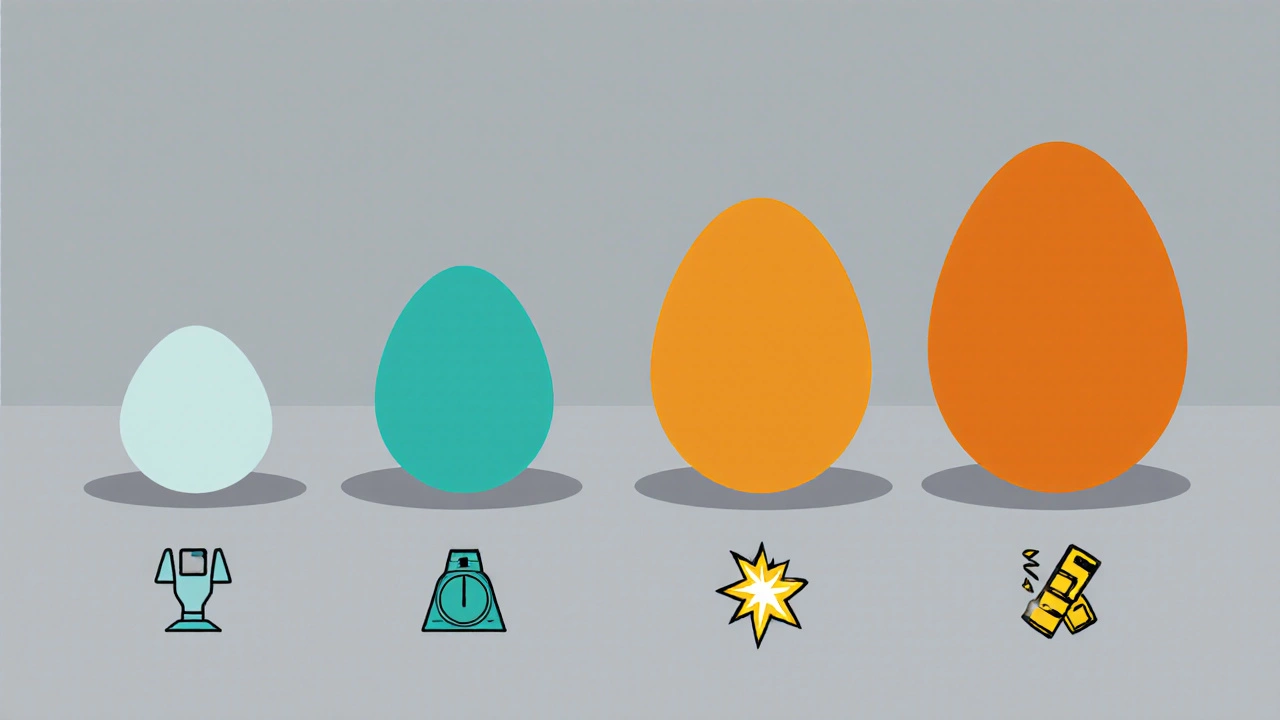
Calorie Breakdown by Egg Size
| Size | Weight (g) | Calories (kcal) | Protein (g) | Fat (g) |
|---|---|---|---|---|
| Small | 38 | 48 | 4.1 | 3.2 |
| Medium | 44 | 58 | 4.8 | 3.8 |
| Large | 57 | 72 | 6.3 | 4.8 |
| Extra‑large | 63 | 80 | 7.0 | 5.4 |
Calculating the Calories for Three Eggs
If you’re using three large raw eggs, the math is simple:
- One large raw egg = 72 kcal.
- Multiply by three: 72 × 3 = 216 kcal.
For other sizes, just pick the appropriate row from the table above. For example, three medium eggs would be 58 × 3 = 174 kcal.
Why Egg Calories Matter in Tiramisu
Tiramisu traditionally calls for raw egg yolks beaten with sugar, then folded into mascarpone. Those yolks bring richness, but they also contribute a notable share of the dessert’s total calories. A classic 8‑serving tiramisu made with four large egg yolks can easily add 288 kcal (4 × 72) just from the eggs-roughly 14 % of the whole dish’s energy.
Knowing the exact count lets you adjust the recipe:
- Swap one yolk for an extra egg white, dropping about 40 kcal while keeping the structure.
- Use a blend of whole eggs and light‑fat mascarpone to keep the creamy texture but lower the fat load.
Practical Tips to Manage Egg Calories in Desserts
- Measure, don’t guess. A kitchen scale ensures you’re using the exact egg size the recipe assumes.
- Consider liquid‑egg substitutes for some dishes; they usually contain fewer calories per volume.
- Combine egg whites from two eggs with one yolk to keep the foamy texture but shave off 30‑40 kcal.
- If you’re watching cholesterol, remember that the yolk holds most of it-about 186 mg per large egg.

Common Misconceptions About Raw Egg Calories
Myth #1: “Raw eggs have fewer calories than cooked eggs.” The calorie count stays the same; heat only changes the form, not the energy content.
Myth #2: “Egg whites are calorie‑free.” A single large egg white still provides about 17 kcal, mainly from protein.
Myth #3: “All eggs are created equal.” Free‑range, organic, or omega‑3‑enriched eggs can have slightly different fat profiles, but the calorie difference is usually less than 5 %.
Quick Checklist for Egg‑Based Recipes
- Identify egg size required by the recipe.
- Calculate total egg calories using the table.
- Decide if you need a yolk‑only, white‑only, or whole‑egg swap.
- Adjust other high‑calorie ingredients (sugar, cream) accordingly.
- Record the final calorie total for the entire dish.
Frequently Asked Questions
How many calories are in a small raw egg?
A small raw egg (about 38 g) provides roughly 48 kcal.
Do raw eggs have the same calories as boiled eggs?
Yes. Cooking does not add or remove calories; it only changes water content and texture. A boiled large egg still has about 72 kcal.
Can I replace all yolks with egg whites in tiramisu?
You can, but the dessert will lose some richness and the characteristic yellow hue. A common compromise is two yolks plus four whites, cutting about 80 kcal while keeping texture.
Where can I find reliable calorie data for eggs?
The USDA FoodData Central database is the gold standard for U.S. foods. European readers can refer to the CIQUAL database.
Does the egg shell contain calories?
No. The shell is made of calcium carbonate and contributes essentially zero calories.