Fudge Texture Predictor
Enter your recipe details to see if you are heading for smooth velvet or gritty sand.
You’ve spent an hour stirring a pot of boiling sugar, watching the temperature climb, waiting for that perfect soft-ball stage. Then you pour it into the pan, let it cool, and cut into a square. Instead of that melt-in-your-mouth creaminess you promised yourself, you get a gritty, sandy bite. It’s frustrating, right? But here is the secret most recipe blogs gloss over: sugar crystals aren’t just bad luck; they are a chemical inevitability you can control if you know what to look for.
Most people think fudge fails because they stirred too much or not enough. While agitation matters, the real culprit is usually invisible. You’re trying to force tiny sucrose molecules to pack together neatly without letting them form large, jagged structures first. If you want fudge that feels like velvet rather than sandpaper, you need to manage three things: interference, temperature shock, and seeding. Let’s break down exactly how to stop those crystals from ruining your batch.
Why Does Fudge Turn Gritty?
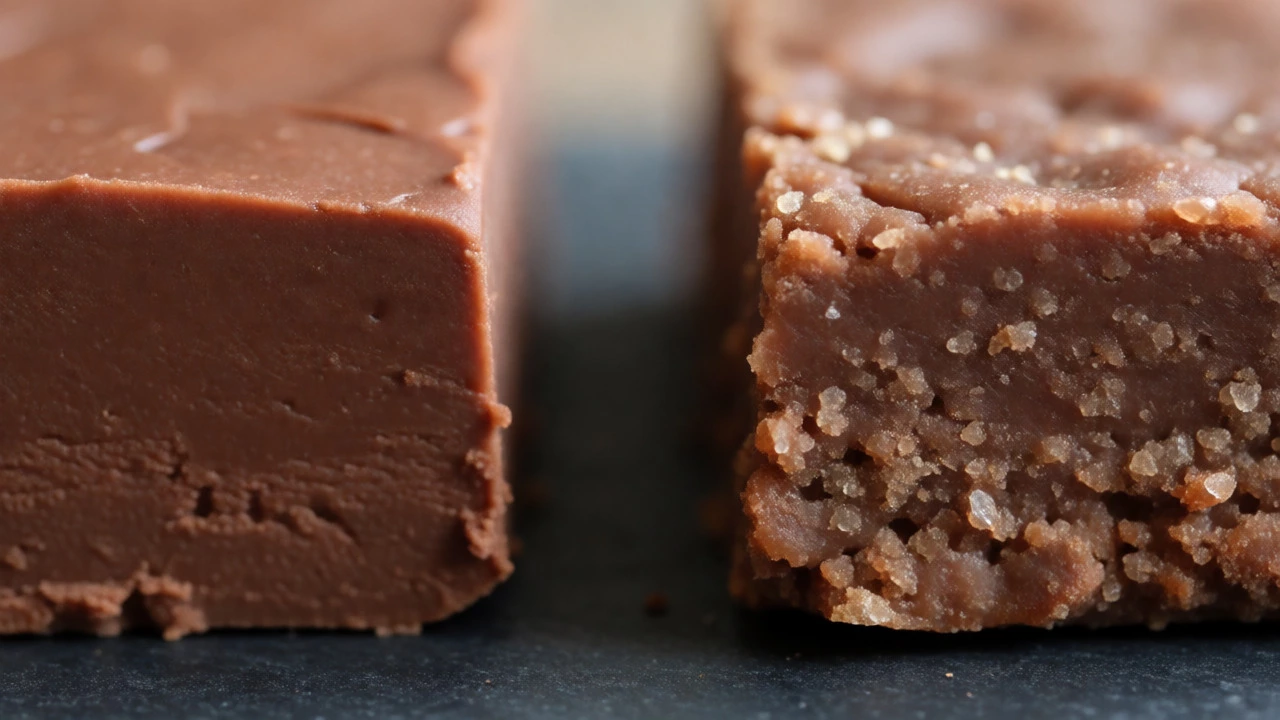
To fix the problem, you have to understand the enemy. Fudge is essentially a supersaturated solution of sugar and water. When you boil the mixture, you dissolve every last grain of sugar. As it cools, that sugar wants to come out of the solution and turn back into solid crystals. In fudge, we actually *want* some crystallization-that’s what gives it structure. The trick is getting millions of microscopic crystals instead of a few large, coarse ones.
Grittiness happens when existing crystals act as seeds. If even one large crystal forms early on-maybe by scraping the side of the pot with a wooden spoon-it attracts other sugar molecules. They rush to join it, growing larger and larger until you feel them between your teeth. This process is called nucleation. Your goal isn't to stop crystallization entirely (that would give you hard candy), but to encourage rapid, uniform formation of tiny crystals while preventing large ones from taking hold.
The Role of Interfering Agents
If pure sugar water always turns gritty, why do professional confectioners get such smooth results? They use interfering agents. These are ingredients that physically block sugar molecules from latching onto each other. Think of them as traffic cones in a highway of sugar molecules-they keep the flow moving smoothly so big pile-ups don’t happen.
The most common interfering agents are fats and corn syrup. Butter, heavy cream, and condensed milk contain fat and proteins that coat sugar crystals, stopping them from growing too large. Corn syrup contains glucose and maltose, which are different types of sugar molecules that don’t fit neatly into the sucrose crystal lattice. By adding these, you reduce the chance of large crystals forming.
| Agent | Mechanism | Effect on Texture |
|---|---|---|
| Corn Syrup | Contains glucose/maltose which disrupt sucrose lattice | Prevents large crystals; adds chewiness |
| Heavy Cream | Fat coats crystals; slows growth rate | Adds richness; promotes creamy mouthfeel |
| Condensed Milk | High viscosity and protein content interfere with bonding | Creates dense, smooth consistency |
| Marshmallow Fluff | Protein foam traps air and interferes with crystallization | Aerated, light, and very smooth |
If your recipe calls for only granulated sugar and water, you are walking a tightrope. Adding even a tablespoon of light corn syrup per cup of sugar can dramatically improve stability. If you prefer a natural approach, ensure you are using high-fat dairy products. Skim milk won’t help nearly as much as heavy cream because it lacks the fat needed to coat those developing crystals.
Temperature Control Is Non-Negotiable
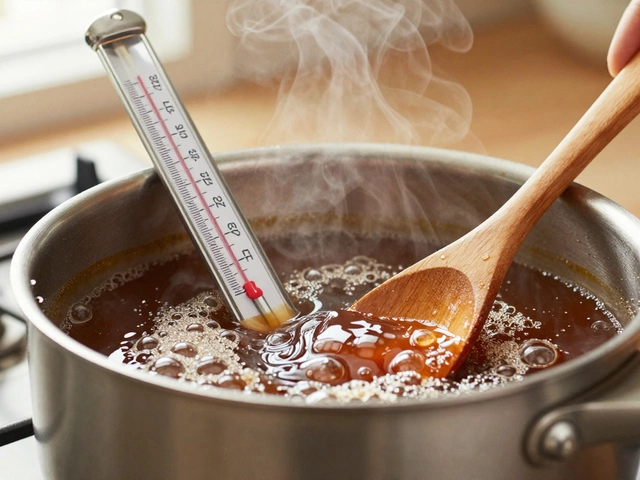
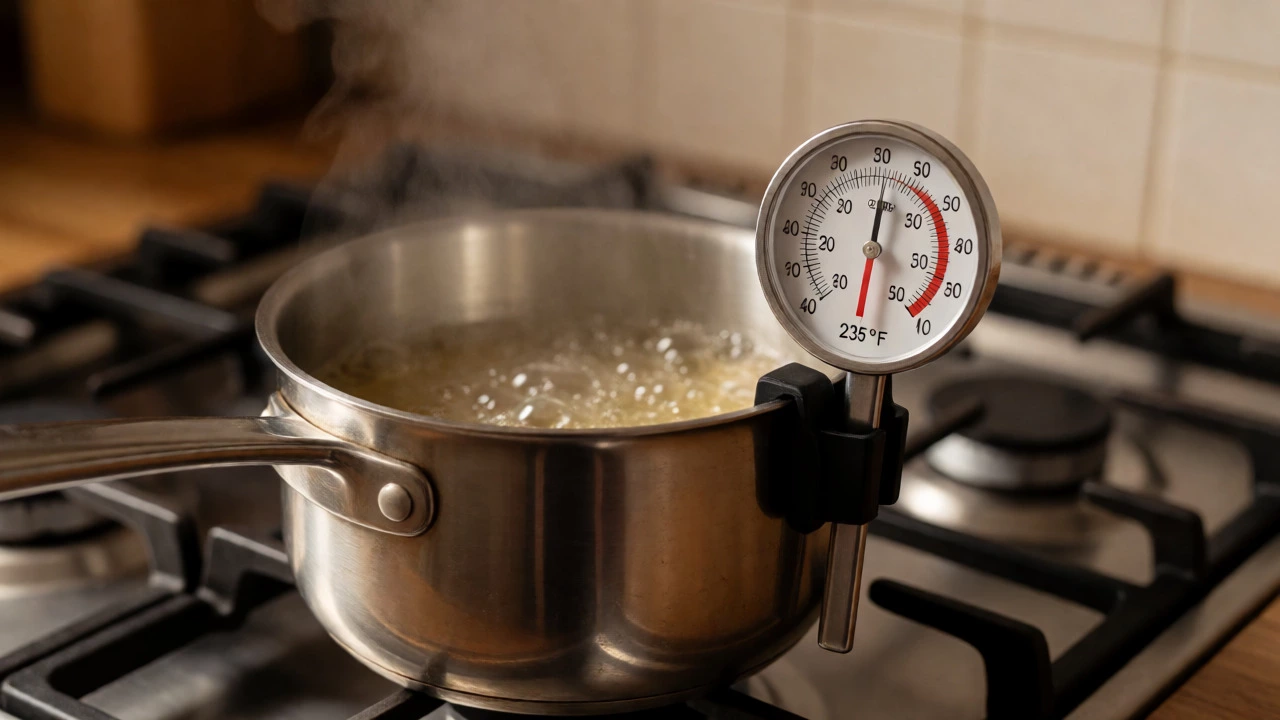
Guessing the temperature is where most home cooks lose the battle. You cannot eyeball "soft-ball stage." You need a reliable candy thermometer. Why? Because the difference between smooth fudge and hard candy is often just two degrees Fahrenheit. If you cook the mixture too long, you evaporate too much water. Less water means higher saturation, which forces sugar to crash out of solution quickly and violently, creating large, rough crystals.
Conversely, if you pull the pot off the heat too early, there is still too much water. The fudge will remain sticky and soft, never setting properly. The sweet spot for most standard fudge recipes is between 234°F and 240°F (112°C - 115°C). Always calibrate your thermometer in boiling water first (it should read 212°F at sea level). If it reads 214°F, subtract two degrees from your target temperature.
Another critical temperature mistake is cooling too fast. Pouring hot fudge directly into a cold metal pan causes thermal shock. The edges set instantly, trapping moisture inside and creating uneven texture. Use a room-temperature pan lined with parchment paper. This allows the mixture to cool gradually, giving crystals time to form evenly throughout the mass.
The Stirring Myth: Agitation vs. Seeding
You’ve probably heard the advice: "Don't stir the fudge while it boils!" This is partially true, but often misunderstood. Stirring during the initial boil helps dissolve the sugar completely. Once the sugar is dissolved and the mixture reaches a rolling boil, stop stirring. Why? Because splashing sugar crystals from the sides of the pot back into the liquid introduces "seeds." These seeds trigger premature crystallization before you’re ready.
Instead of stirring, brush down the sides of the pot with a wet pastry brush. This dissolves any stray crystals clinging to the walls, returning them to the solution safely. Do this a few times during the boil, then leave it alone.
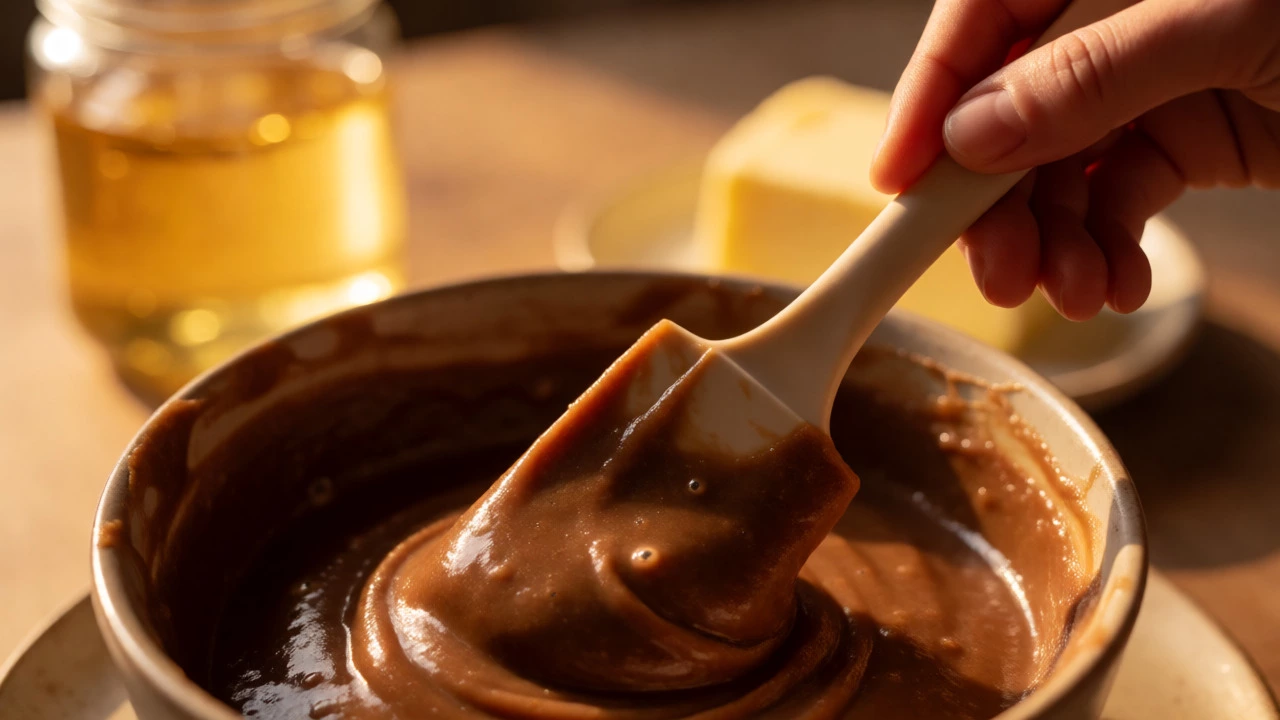
The real action happens after you remove the pot from the heat. Now you must beat the mixture vigorously. This is counterintuitive-you were told not to stir earlier, but now you need to whip it. Beating introduces air bubbles and encourages the formation of many small nuclei simultaneously. You are essentially forcing thousands of tiny crystals to start growing at once, rather than letting a few large ones dominate. Beat until the glossy sheen disappears and the fudge looks matte and thick. If you under-beat, it stays shiny and soft. If you over-beat, it becomes dry and crumbly. Watch for the change in luster; that is your signal to stop.
Clean Equipment Matters More Than You Think
Sugar is hygroscopic-it loves water-and it is also sticky. Any leftover residue from previous batches acts as a seed. If your saucepan has dried-on caramel spots, those are pre-made crystals waiting to infect your new batch. Scrub your pots thoroughly before starting. Better yet, use a clean, stainless steel pot specifically for candy making. Copper is great for heat conductivity but harder to keep perfectly clean.
Also, avoid using wooden spoons for stirring the boiling mixture. Wood is porous. It absorbs sugar syrup, dries out, and releases tiny particles back into the pot. These particles become nucleation sites. Use silicone spatulas or metal spoons that can be easily washed and sterilized. If you must use wood, soak it in water for ten minutes before using it to prevent absorption.
Troubleshooting Common Mistakes
Even with perfect technique, things go wrong. Here is how to diagnose the issue based on the final product:
- Gritty and Sandy: Likely caused by undissolved sugar at the start or seeding from the pot sides. Ensure all sugar is fully dissolved before the mixture boils. Brush the sides diligently.
- Dry and Crumbly: You cooked it too hot or beat it too long. Too much water evaporated, leaving no moisture to bind the crystals. Next time, pull the pot off the heat at the lower end of the temperature range.
- Sticky and Soft: Undercooked. Not enough water was removed, so the sugar concentration wasn't high enough to set firmly. Cook longer or add more chocolate/butter which sets via fat solidification rather than sugar crystallization.
- Grainy Surface Only: The top cooled faster than the bottom. Cover the pan loosely with foil as it cools to prevent a skin from forming, which can trap large crystals on the surface.
Advanced Tips for Perfect Fudge
If you want restaurant-quality smoothness, consider adding a pinch of cream of tartar or a teaspoon of lemon juice to your sugar-water mixture before boiling. Acid breaks down sucrose into glucose and fructose (inversion), which act as powerful interfering agents. Just be careful-too much acid can make the fudge taste sour or cause it to stay too soft. Start with 1/8 teaspoon per pound of sugar.
Humidity plays a role, too. On humid days, sugar absorbs moisture from the air, making it harder to reach the correct concentration. You may need to cook the fudge slightly longer to compensate. Conversely, in dry climates, watch closely to avoid overcooking. Living in Halifax, I notice our damp coastal air requires me to cook my fudge about one minute longer than the recipe states compared to when I visited Arizona.
Finally, patience is key. Don't rush the cooling phase. Let the fudge cool to about 110°F (43°C) before beating. If you beat it while it's too hot, the crystals dissolve again, and you’ll end up with a gooey mess. If you wait until it's completely cold, it’s already set into large crystals. Finding that warm-but-not-hot window takes practice, but it’s the difference between good fudge and great fudge.
Can I save fudge that has already turned gritty?
Not really. Once large crystals form, they are permanent. However, you can repurpose it. Melt the gritty fudge down with a little milk or cream to make a chocolate sauce or ice cream topping. The heat and added liquid will dissolve the crystals again.
Does brown sugar cause crystals in fudge?
Brown sugar contains molasses, which includes invert sugars that actually help prevent crystallization. However, it also contains more moisture and impurities. If you substitute brown sugar for white, reduce the liquid in the recipe slightly to account for the extra moisture, otherwise the fudge may remain too soft.
Why does my fudge stick to the knife when cutting?
This usually indicates the fudge hasn't fully set or was stored improperly. Ensure it has cooled completely to room temperature before cutting. For cleaner cuts, dip your knife in hot water and wipe it dry between slices. Warm knives glide through the sugar matrix without dragging.
Is corn syrup necessary for smooth fudge?
It is highly recommended but not strictly mandatory. Traditional Scottish tablet relies on aggressive beating rather than corn syrup. However, for beginners, corn syrup provides a safety net against crystallization. If you omit it, be extremely precise with your temperature and beating technique.
How long should I beat the fudge?
There is no fixed time; it depends on the volume and temperature. Generally, 5 to 10 minutes of vigorous beating is typical. Stop when the mixture loses its shine, thickens significantly, and holds a ribbon shape when lifted. Over-beating leads to dry, crumbly fudge.