Cheesecake Style Selector & Comparison Tool
Not sure which cheesecake fits your mood? Answer a few questions to find your perfect slice!
Ever wondered why some cheesecakes feel like a light cloud and others feel like a dense, creamy brick of heaven? If you've stood in the bakery aisle staring at two different labels, you're not alone. The truth is, while they both share a name, a New York style cheesecake and a standard variety are completely different beasts in terms of how they feel in your mouth and how they're made in the oven.
Quick Facts for Dessert Lovers
- Texture: NY style is dense and rich; regular is often lighter and airier.
- Key Ingredient: NY style uses significantly more cream cheese and often adds heavy cream.
- Cooking Method: NY style almost always requires a slow bake, often in a water bath.
- Flavor: NY style has a more intense, tangy cheese profile.
The Secret is in the Density
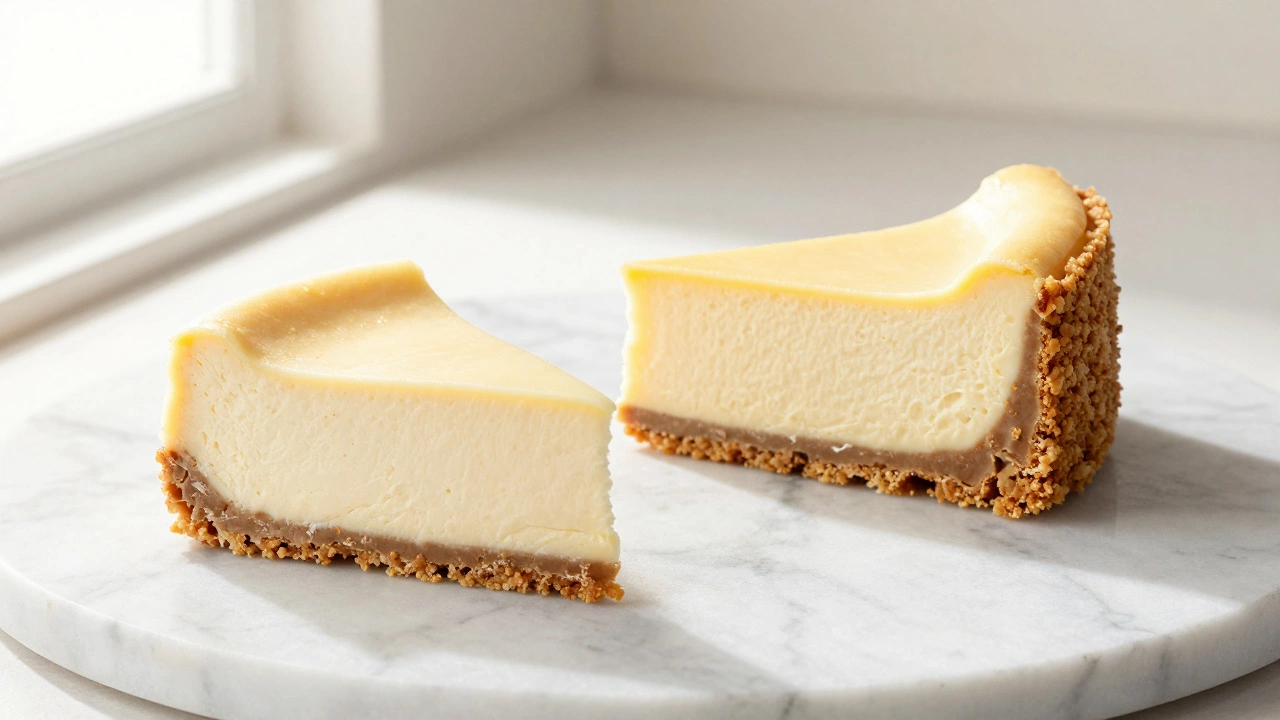
When people talk about a "regular" cheesecake, they're usually referring to a more generalized version-think of the ones you find in a standard home recipe or a light cafe slice. These are often softer and can sometimes lean toward a mousse-like consistency. New York Style Cheesecake is a dense, rich, and creamy variation of the dessert that emphasizes a high ratio of cream cheese to other ingredients. It's not just a marketing term; it's a specific structural choice. If you take a bite, you'll notice it doesn't just melt away; it lingers, providing a heavy, satisfying mouthfeel that makes it feel more like a meal than a snack.
Ingredients That Change the Game
If you look at a standard recipe, you'll see a balanced mix of cream cheese, sugar, and eggs. But to get that iconic city-style density, bakers change the formula. They load up on more Cream Cheese, which provides the structural backbone. But the real magic happens when they add heavy cream or sour cream. These fats create a smoother, more cohesive texture that eliminates the air pockets you'd find in a lighter cake.
Think of it like the difference between a sponge cake and a pound cake. A regular cheesecake uses eggs to create lift and air. A New York style version uses the eggs primarily as a binder, keeping the cake tight and creamy. This is why you won't find a NY cheesecake that feels "foamy." It's all about the fat-to-air ratio.
| Feature | Regular Cheesecake | New York Style |
|---|---|---|
| Cream Cheese Volume | Moderate | Very High |
| Added Fats | Butter or light cream | Heavy cream or sour cream |
| Egg Role | Provides lift/air | Acts as a binder |
| Mouthfeel | Soft, airy, light | Dense, velvety, rich |
The Art of the Slow Bake
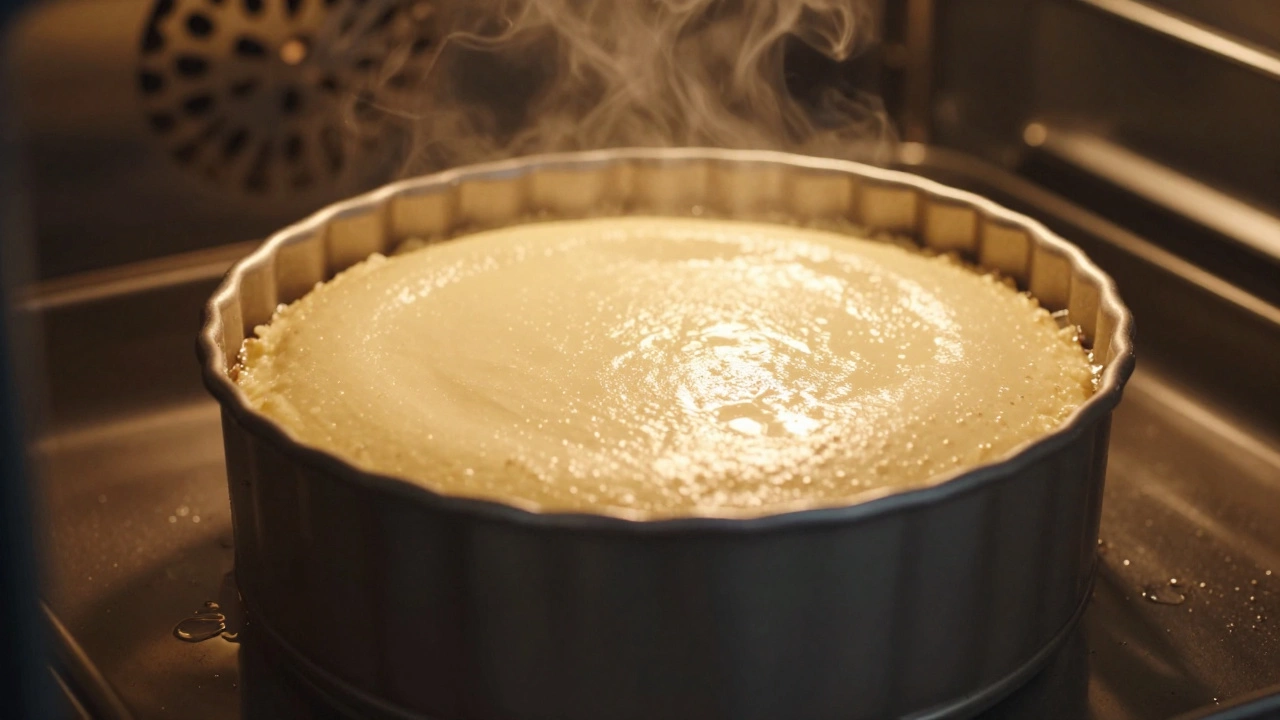
You can't just throw a New York style cake in the oven and hope for the best. Because it's so dense, the outside tends to burn before the middle is set. This is where the Water Bath (or bain-marie) comes into play. By placing the springform pan inside a larger pan of hot water, you create a humid environment that regulates the temperature. This prevents the top from cracking and ensures the heat penetrates the thick center evenly.
In contrast, a regular cheesecake might be baked at a higher temperature for a shorter time, or even set in the fridge without any baking at all (like a no-bake version). The NY style requires patience. You're essentially poaching the cake in its own steam, which is why it achieves that signature smooth, porcelain-like top.
The Role of the Crust
While the filling is the star, the base plays a huge part in the experience. A regular cheesecake often uses a thin layer of Graham Cracker Crust. It's a sweet, sandy foundation that doesn't fight with the filling. However, because New York style cakes are so heavy, the crust needs to be sturdier. You'll often find the crust is thicker and more compressed, sometimes with a bit more melted butter to ensure it doesn't crumble under the weight of the dense filling.
Some traditionalists even swap graham crackers for a shortbread base to add an extra layer of buttery richness. This creates a structural contrast-the crunch of the base against the velvet of the cheese-that keeps the dessert from feeling too one-dimensional.
Which One Should You Choose?
It really comes down to what you're craving. If you've just finished a massive Thanksgiving dinner and want something that feels like a treat without weighing you down, a regular, lighter cheesecake is the way to go. It's refreshing and doesn't demand your full attention.
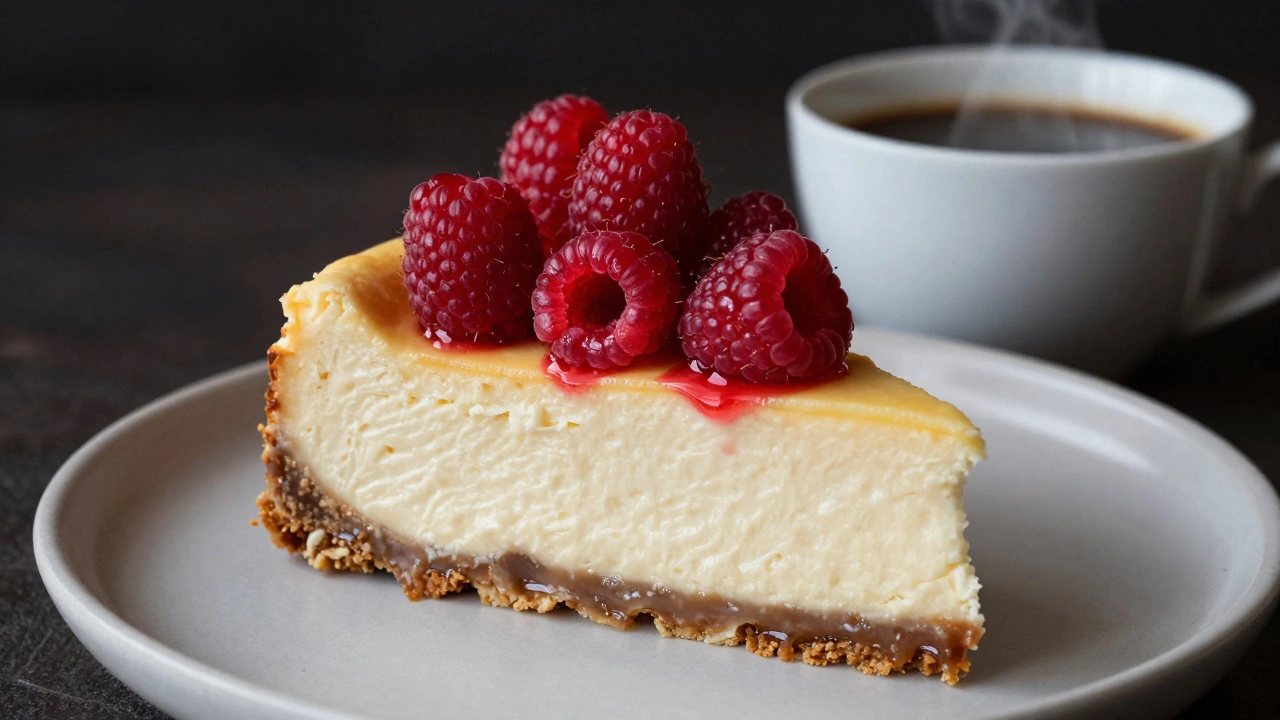
But if you're looking for a centerpiece dessert-something that feels indulgent and luxurious-the New York style is unbeatable. It's the kind of cake that pairs perfectly with a strong cup of coffee or a handful of tart Fresh Raspberries. The acidity of the fruit cuts through the heavy fat of the NY style, creating a balanced bite that a lighter cake just can't replicate.
Common Mistakes to Avoid
If you're attempting to bake these at home, the biggest pitfall is temperature. For both styles, but especially the NY version, your Room Temperature Ingredients are non-negotiable. If your cream cheese is cold, you'll end up with tiny lumps in the batter. No matter how much you whisk, those lumps stay. Let your cheese and eggs sit on the counter for at least an hour before you start.
Another common error is over-mixing. While you want a smooth batter, beating in too much air will turn your New York style cake into a regular cheesecake. Once the ingredients are combined, stop. If you over-whip, you're essentially introducing bubbles that will expand in the oven and then collapse, leaving you with a sunken center.
Can I make a New York style cheesecake without an oven?
Not really. The defining characteristic of a New York style cheesecake is its baked, dense texture. No-bake versions rely on gelatin or chilling to set, which results in a much lighter, fluffier consistency similar to a mousse. To get that specific "NY" feel, you need the heat of the oven to bind the fats and proteins together.
Why does my cheesecake always crack on top?
Cracks usually happen because the cake overbaked or cooled too quickly. The edges set first, and as the center continues to rise and then fall, it pulls the top apart. Using a water bath and letting the cake cool slowly inside the oven with the door cracked open can prevent this.
Is New York style cheesecake higher in calories?
Generally, yes. Because it uses a higher volume of cream cheese and often incorporates heavy cream or sour cream, it is more calorie-dense than a standard or "light" cheesecake. However, because the flavor is so rich, you usually feel satisfied with a smaller slice.
What is the best way to slice a dense cheesecake?
Use a sharp knife dipped in hot water. Wipe the knife clean with a towel between every single cut. This ensures you get a clean, sharp edge instead of dragging the creamy filling across the crust, which makes the cake look messy.
Can I substitute Greek yogurt for sour cream?
Yes, you can. Greek yogurt provides a similar tang and thickness. However, keep in mind that yogurt has slightly more water content, so your cheesecake might be a tiny bit softer and less "dense" than a traditional New York version.
Next Steps for Your Baking Journey
If you've mastered the dense New York style, try experimenting with flavor infusions. Adding a splash of vanilla bean paste or a pinch of lemon zest can brighten the heavy profile of the cake. For those who find the NY style too intense, try a "hybrid" approach by reducing the cream cheese by 20% and adding a bit more whipped egg white to the batter.
Whether you prefer the lightness of a regular slice or the indulgence of a city-style wedge, the key is all in the prep. Respect the temperature of your ingredients and the patience of the bake, and you'll have a dessert that tastes like it came from a high-end bakery.