Macaron Storage Calculator
Calculate Your Macaron Storage
Select your macaron filling type and time since baking to see optimal storage method and freshness duration.
Storage Recommendation
Recommended Duration:
Macarons are delicate. One wrong move-too much heat, too much moisture, too long on the counter-and they lose their crisp shell, their creamy center, their magic. You baked them perfectly. You filled them with ganache, lemon curd, or salted caramel. Now what? Where do you put them so they stay fresh, not soggy, not stale?
Don’t leave them on the counter
It’s tempting. They look beautiful sitting out in their little box, maybe next to a coffee cup. But room temperature is their enemy. After just 4 hours, the shells start to soften. The filling begins to seep. By the next day, they’re chewy in all the wrong ways. If you’re serving them within 2 hours, sure, leave them out. But anything longer? That’s asking for trouble.
The fridge is your best friend
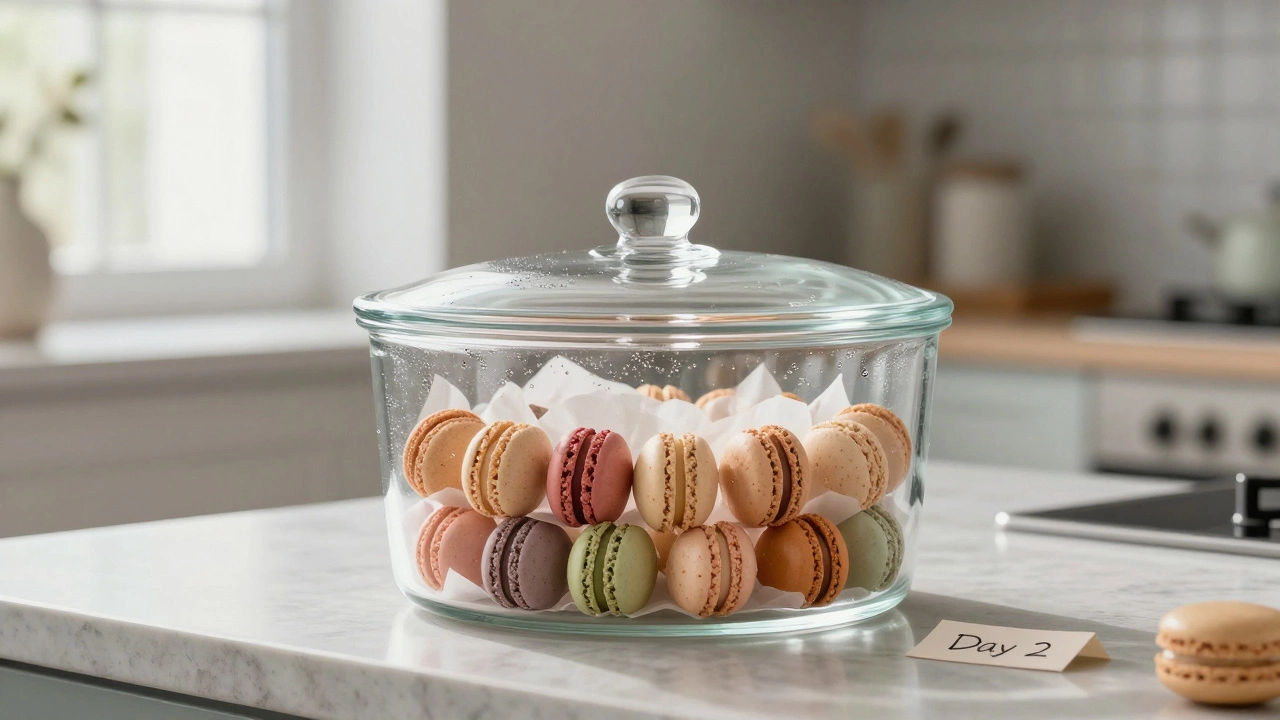
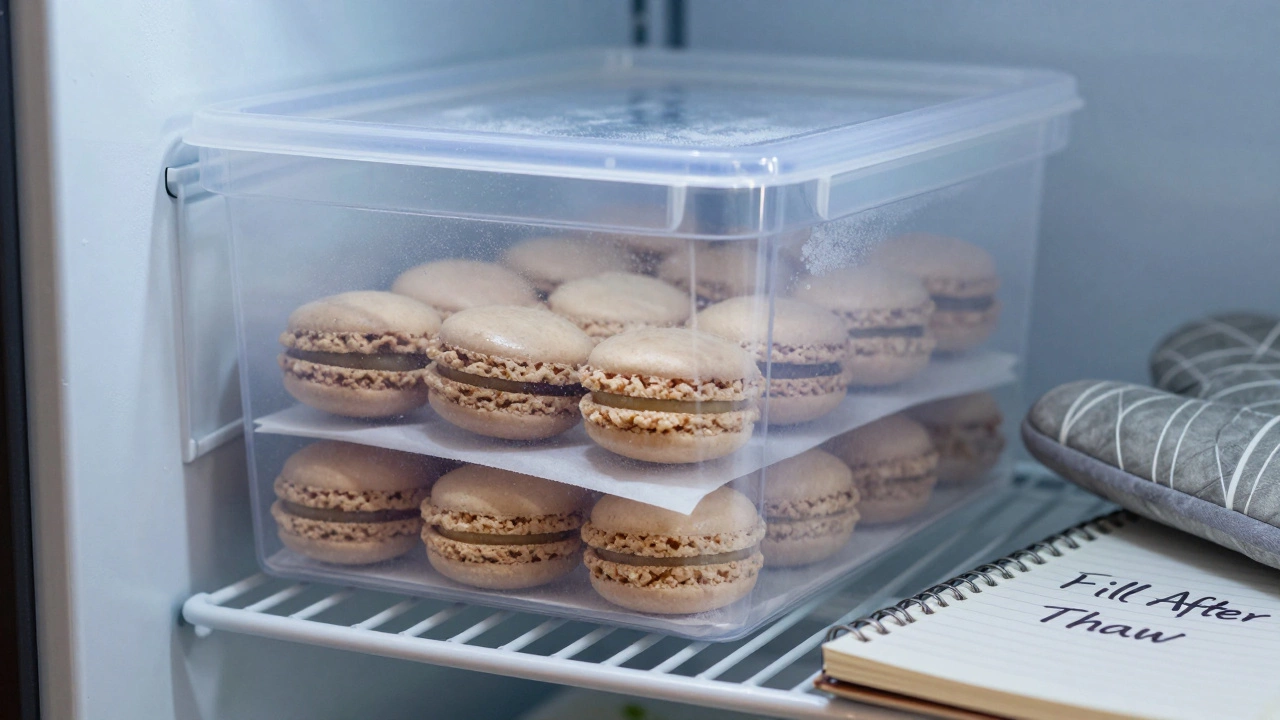
Store macarons in the fridge if you plan to eat them within 3 to 5 days. But don’t just toss them in bare. They need protection. Use an airtight container-glass or food-grade plastic. Line the bottom with parchment paper to prevent sticking. Place the macarons in a single layer, not stacked. If you have to stack them, put parchment between each row.
Why does this work? The fridge keeps moisture out of the shells while letting the filling mature. The cold slows down staling. The airtight seal stops them from absorbing fridge odors-no one wants macarons that taste like last night’s garlic salmon.
Pro tip: Let them sit at room temperature for 20 to 30 minutes before eating. Cold macarons are fine, but the filling tastes better, and the shell snaps crisply when it’s not icy.
Freezing macarons for long-term storage
Need to keep them for more than a week? Freeze them. Macarons freeze beautifully-better than most cookies. Here’s how:
- Place unfilled shells on a baking sheet lined with parchment. Freeze for 1 hour. This prevents them from sticking together later.
- Transfer them to an airtight container, separating layers with parchment paper.
- Label the container with the date. They’ll stay good for up to 3 months.
When you’re ready to eat them, thaw the shells in the fridge overnight. Then fill them. Filling before freezing? That’s risky. The filling can weep, and the shells get soggy during thawing. Always fill after thawing.
Some bakers freeze filled macarons successfully-but only if they’re made with stable fillings like buttercream or ganache. Avoid fruit curds or whipped cream. They break down.
What not to do
Don’t store macarons in the fridge without a lid. They’ll dry out and absorb smells. Don’t use zip-top bags unless they’re heavy-duty and sealed tightly. Regular plastic bags let air in-and air is the enemy.
Don’t refrigerate them right after baking. Let them cool completely first. Warm macarons create condensation inside the container. That’s a quick path to soggy shells.
Don’t store them near onions, cheese, or strong spices. Even in a sealed container, macarons are porous. They’ll pick up flavors like a sponge.
How to tell if they’ve gone bad
Macarons don’t mold quickly. But they do lose quality. Here’s how to spot trouble:
- Soft shells that never crisp up after sitting out? They’ve absorbed too much moisture.
- Odd smell-sour, yeasty, or off? Toss them.
- Discoloration on the filling? Especially if it’s fruity or dairy-based. That’s a sign of spoilage.
- Separation in the filling-oil floating on top or water pooling? That means the emulsion broke.
If the shell still snaps when you bite it, and the filling tastes fresh, they’re fine. If not, don’t risk it.
Storage by filling type
Not all macarons are the same. The filling changes how long they last and how you store them.
| Filling Type | Refrigerator Life | Freezer Life | Special Notes |
|---|---|---|---|
| Ganache (chocolate, caramel, etc.) | 5-7 days | 3 months | Stable. Can be frozen filled. |
| Buttercream | 5 days | 2-3 months | Best unfilled, then filled after thawing. |
| Lemon or fruit curd | 2-3 days | Not recommended | High moisture content. Sogs shells fast. |
| Whipped cream | 1 day | Do not freeze | Breaks down quickly. Best eaten same day. |
| Jam or fruit puree | 3 days | 2 months (unfilled) | Store unfilled. Fill after thawing. |
Traveling with macarons
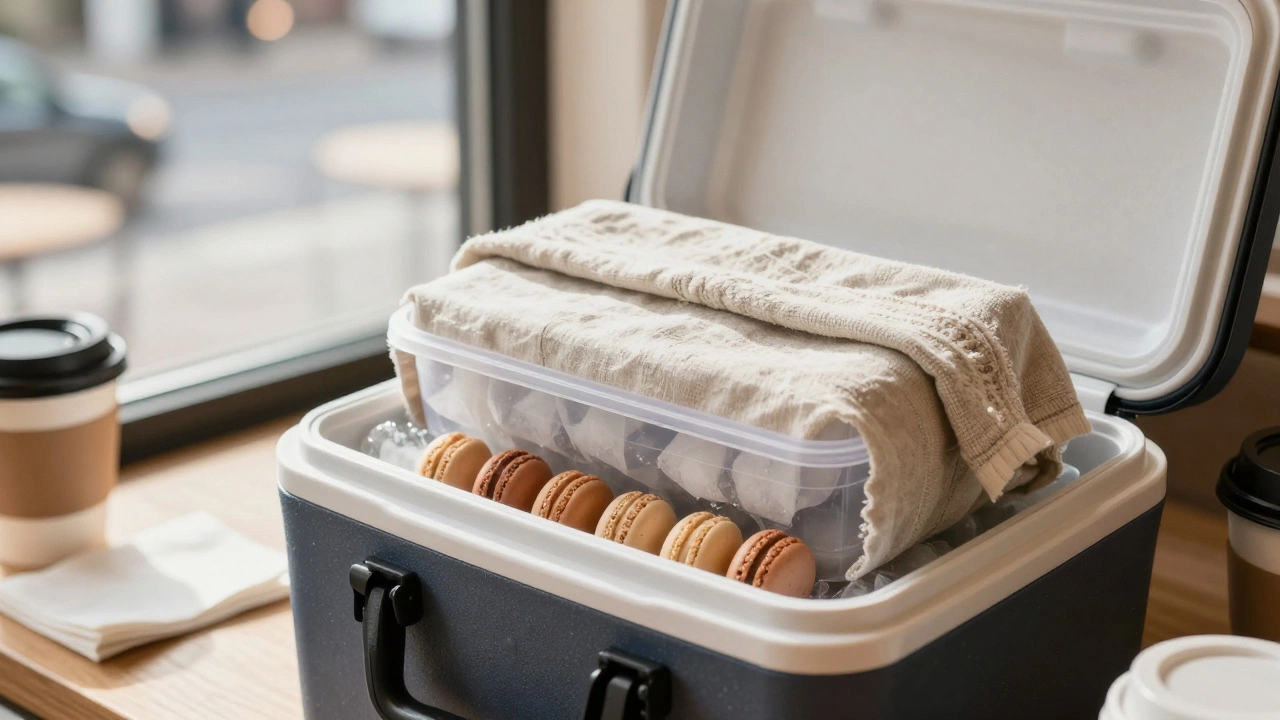
Bringing them to a party? Use a rigid container with a tight seal. Pack them in a cooler with a small ice pack if it’s hot outside. Don’t let them bounce around. Wrap the container in a towel for extra cushioning. They’re fragile-not just physically, but flavor-wise.
Why storage matters more than you think
Macarons are a balance of textures. The crisp shell, the soft chew, the creamy center. That’s what makes them special. Poor storage ruins that balance. You don’t just lose taste-you lose experience.
Think of it like a pastry chef’s reputation. One soggy macaron in front of a client, and they’ll remember it. One perfectly crisp, flavorful macaron, and they’ll come back. Storage isn’t an afterthought. It’s part of the craft.
Final tip: Label everything
Write the date and filling type on the container. You’ll thank yourself later. I once opened a container thinking it was vanilla ganache. Turned out it was raspberry. And I’d made it three weeks ago. Didn’t taste great. Learned my lesson.
Good macarons are worth the effort. Store them right, and they’ll reward you with flavor, texture, and beauty-even days after baking.