Macaron Freshness Calculator
Macaron Storage Calculator
Freshness Guide
Optimal Freshness: Within 48 hours for best texture and flavor
Room Temp: Best eaten within 24 hours
Refrigerated: Up to 5 days (shells soften)
Frozen: Up to 3 months (thaw 20 mins before eating)
Why It Matters: Ladurée macarons use fresh ingredients without preservatives. Eating within 48 hours ensures perfect crisp shell and creamy filling.
Enter your purchase date and storage method to see optimal eating window.
When you think of macarons, you probably picture delicate, colorful cookies with a crisp shell and a soft, chewy center. But not all macarons are created equal. Somewhere in Paris, tucked into a quiet alley near the Champs-Élysées, a name has become synonymous with the dessert itself. Ask anyone who’s tasted a real French macaron, and they’ll point to one shop above all others: Ladurée.
How Ladurée Became the Default Answer
Ladurée didn’t invent the macaron-that honor goes to Italian nuns who brought almond cookies to France in the 1500s. But in 1862, Louis Ernest Ladurée turned the simple almond cookie into something extraordinary. He paired two delicate shells with a rich, buttery filling, creating the modern macaron as we know it. His shop, on the Rue Royale, quickly became a favorite among Parisian elites. By the early 1900s, Ladurée macarons were being served at royal dinners and aristocratic tea parties.
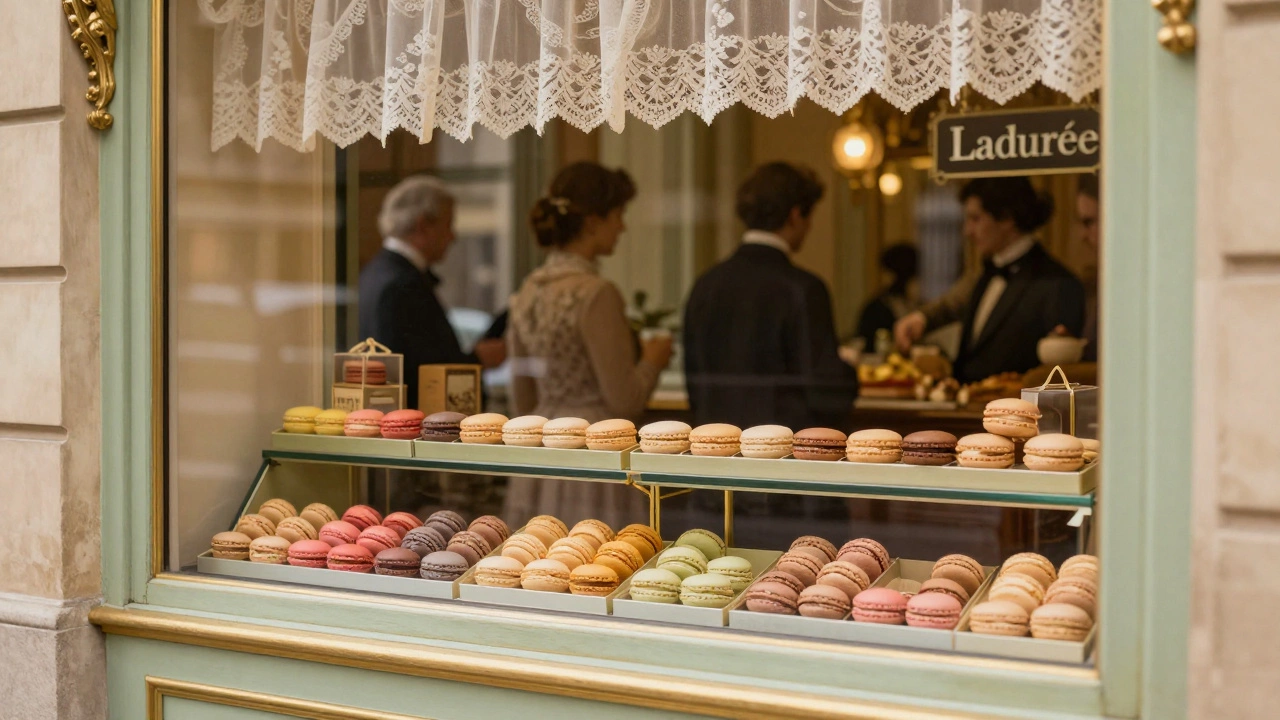
Today, Ladurée sells over 10 million macarons a year. That’s more than any other bakery in the world. Their signature flavors-rose, pistachio, salted caramel, and raspberry-are so iconic, they’re often the first thing people think of when someone says "macaron."
Why Ladurée Stands Out
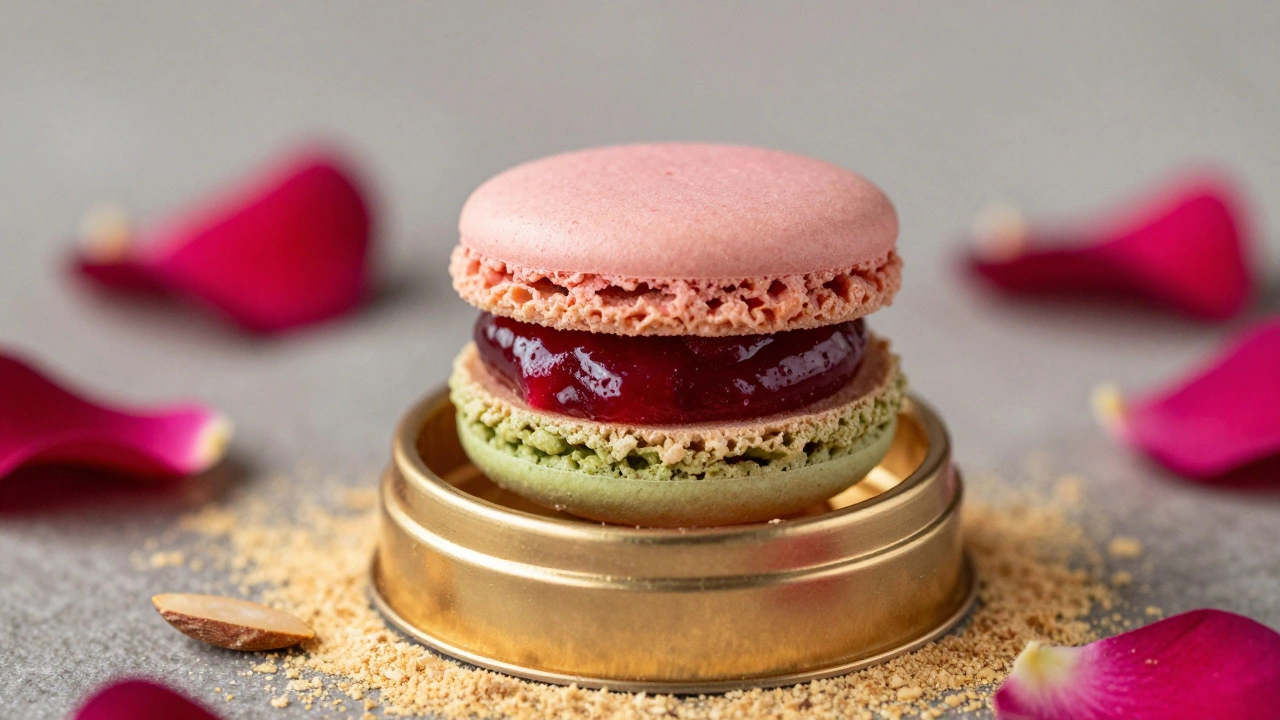
Not every macaron that looks pretty is made well. Many bakeries focus on color, not texture. But Ladurée’s recipe has stayed nearly unchanged for over 150 years. The shells are baked with precision: thin enough to crack slightly at the edges, but sturdy enough to hold their shape. The filling? Not too sweet, not too runny. It’s balanced. You can taste the quality of the almond flour, the purity of the vanilla, and the freshness of the fruit purees.
They don’t use artificial colors or flavors. Their pink macarons? Made with beetroot extract. Their green ones? Matcha powder. Even their chocolate filling uses single-origin cocoa beans from Venezuela. That’s not marketing-it’s craftsmanship.
Compare that to mass-produced macarons sold in supermarkets. Those often have a gritty texture, overly sugary fillings, and shells that crack too easily. They’re designed for shelf life, not taste. Ladurée’s macarons are made fresh daily. They’re meant to be eaten within 48 hours. That’s why they’re sold in small batches, in elegant boxes, and why people line up for hours just to buy a dozen.
The Global Influence of a French Name
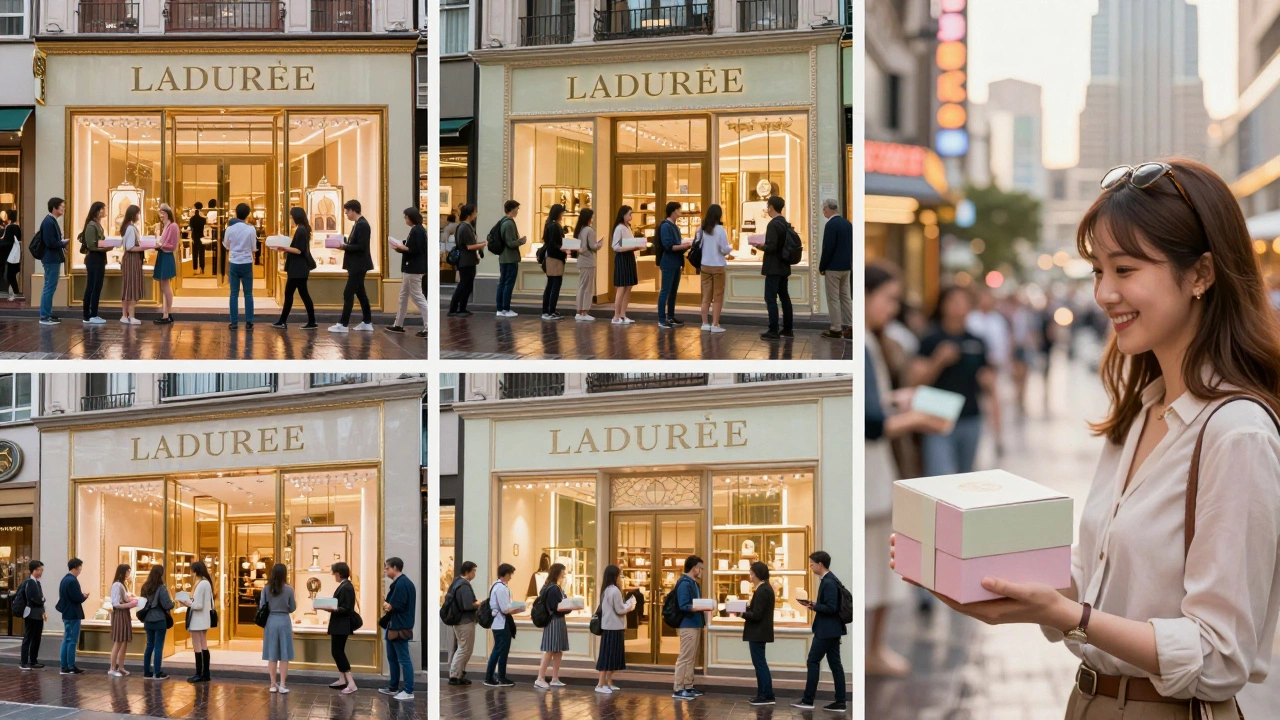
Ladurée didn’t stop in Paris. They opened shops in Tokyo, New York, Dubai, and even Seoul. Each location follows the same standards: no shortcuts, no bulk production. In New York, their Madison Avenue store sells out by noon on weekends. In Tokyo, customers wait up to two hours just to get a box. Why? Because for many, eating a Ladurée macaron isn’t just about dessert-it’s about experiencing a piece of French culinary heritage.
Even competitors admit it. Pierre Hermé, another famous French pastry chef, once said in an interview: "Ladurée made macarons a global phenomenon. They turned a humble cookie into an art form."
What Makes a Macaron "King"?
There are other great macaron makers. Pierre Hermé is known for bold flavor combinations. Fauchon offers elegant, minimalist designs. But none have the cultural weight of Ladurée. The "king" isn’t just the best-tasting-it’s the most influential.
Ladurée defined the modern macaron aesthetic: pastel colors, symmetrical shapes, signature packaging. They inspired hundreds of bakeries around the world to elevate their own versions. You can’t walk into a high-end café in Toronto, Sydney, or São Paulo without seeing a macaron that owes something to Ladurée’s template.
They also changed how people think about dessert. Before Ladurée, macarons were seen as old-fashioned. Now, they’re a luxury item, a gift, a status symbol. People buy them for birthdays, anniversaries, and even corporate events. That shift didn’t happen by accident. It happened because Ladurée made the macaron unforgettable.
Is There a Real Rival?
Some argue that Pierre Hermé makes better macarons. And maybe they’re right-his caramel sea salt flavor is legendary. Others say the macarons from L’Atelier de Joël Robuchon are more refined. But here’s the thing: those bakeries didn’t turn macarons into a worldwide obsession. Ladurée did.
It’s not about who has the most flavors. It’s about who made the macaron matter. Ladurée didn’t just sell cookies-they sold an experience. A moment. A memory.
Can You Taste the Difference?
If you’ve only ever had a supermarket macaron, you might not believe me. But try one from Ladurée. The first bite should be crisp, then give way to something creamy and delicate. The filling shouldn’t overwhelm the shell. The flavors should layer gently-like a perfume, not a punch.
That’s why people travel across continents just to taste them. That’s why, even in 2026, with so many new bakeries popping up daily, Ladurée still holds the crown.
So, who is the king of macarons? It’s not a mystery. It’s a name you’ve seen on a gold-plated box, in a window display, in a photo on Instagram. It’s not just a bakery. It’s the reason macarons exist as we know them today.
Is Ladurée the original maker of macarons?
No, Ladurée didn’t invent macarons. The original almond cookies came from Italian nuns in the 16th century. But Ladurée, founded in 1862, was the first to pair two shells with a creamy filling, creating the modern macaron that became globally famous.
Why are Ladurée macarons so expensive?
Ladurée uses high-quality, natural ingredients-single-origin cocoa, real rose petals, fresh fruit purees-and makes each batch by hand. They don’t use preservatives or artificial flavors, and they bake in small quantities daily. That level of craftsmanship and freshness comes at a cost, but it’s why their macarons taste so different from mass-produced versions.
Can you buy authentic Ladurée macarons outside of Paris?
Yes. Ladurée has over 150 stores worldwide, including locations in New York, Tokyo, Dubai, and Toronto. They ship internationally too, though the macarons are best eaten within two days of delivery. Always check the packaging date-they’re made fresh daily at each location.
Are there any macarons that rival Ladurée’s quality?
Yes, bakeries like Pierre Hermé, L’Atelier de Joël Robuchon, and even smaller artisan shops in Lyon or Marseille make exceptional macarons. Some even experiment with more daring flavors. But none have matched Ladurée’s global influence or cultural footprint. They’re the benchmark.
How long do Ladurée macarons last?
For the best flavor and texture, eat them within 48 hours. They can be stored in the fridge for up to 5 days, but the shells will soften. For longer storage, freeze them in an airtight container-they’ll keep for up to 3 months. Just let them sit at room temperature for 20 minutes before eating.