Cheesecake Acid Stabilizer Calculator
Enter your ingredient weights above to see the recommended acid adjustments.
You’re staring at a recipe for New York-style cheesecake and see an odd instruction: add one teaspoon of white vinegar. You pause. Vinegar? In dessert? It sounds like a mistake, or maybe a prank from your grandmother. But trust the process. That tiny splash isn’t there to make your cake taste like pickles. It’s doing heavy lifting behind the scenes to ensure your slice is silky, stable, and perfectly balanced.
Most home bakers assume sugar and fat are the only players that matter. They aren’t. Acid plays a critical role in how dairy proteins behave during heating. If you’ve ever had a cheesecake that cracked on top, tasted overly sweet without depth, or had a grainy texture instead of a smooth creaminess, missing this ingredient might be the culprit. Let’s break down exactly what that vinegar does so you can stop guessing and start baking with confidence.
The Chemistry of Creaminess
To understand why vinegar matters, you have to look at what cheesecake actually is. At its core, it’s a custard made primarily of cream cheese, which is a fresh dairy product with high fat content and casein proteins. When you heat these proteins, they coagulate (set). The goal is to get them to set gently, forming a network that traps moisture and air, creating that dense yet light mouthfeel.
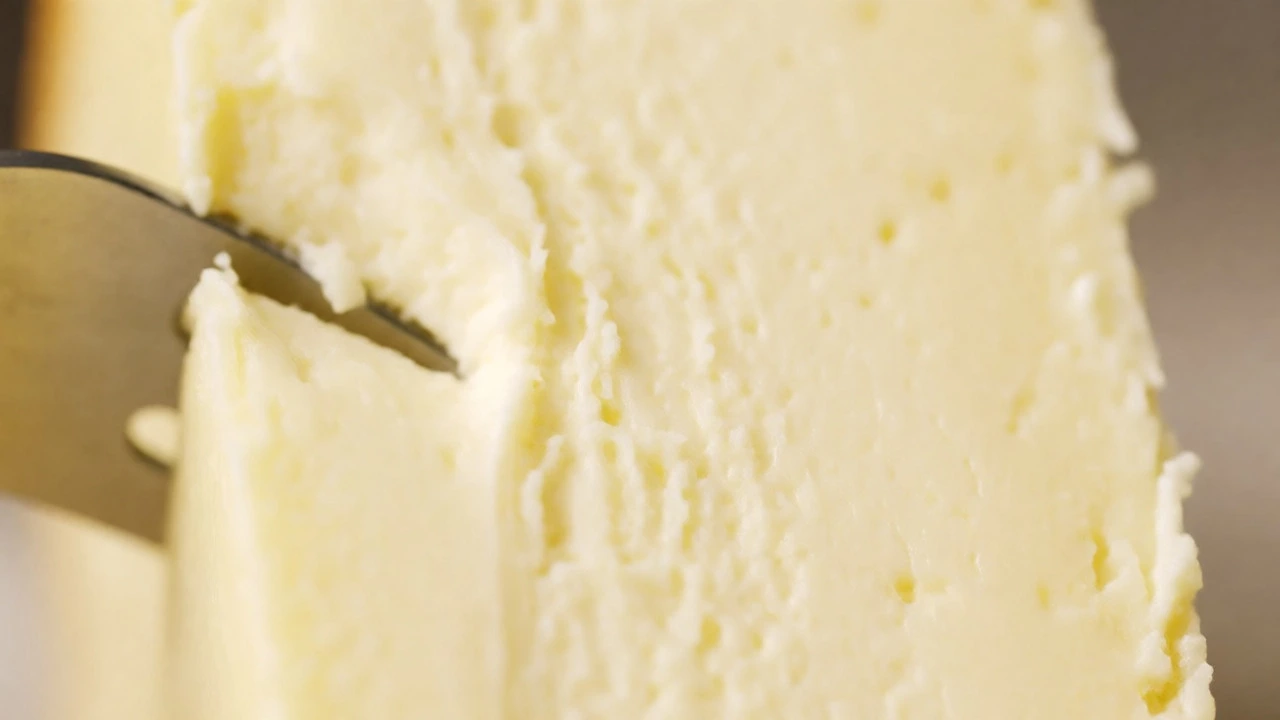
Vinegar introduces acetic acid into the mix. This lowers the pH level of the batter slightly. Why does that help? Because acidic environments stabilize egg proteins and slow down the coagulation rate of the casein in the cheese. Without acid, the proteins clump together too quickly when exposed to oven heat. Rapid clumping squeezes out water (syneresis), leading to a dry, crumbly texture. With vinegar, the setting process is slower and more uniform. The result? A smoother, creamier interior that holds its shape when sliced but melts in your mouth.
Balancing Sweetness and Cutting Fat
Cheesecake is undeniably rich. We’re talking about blocks of full-fat cream cheese, sour cream, eggs, and often a cup or more of sugar. On paper, that sounds delicious. In practice, without counterbalance, it can feel cloying or heavy on the palate after just two bites.
Vinegar acts as a flavor brightener. It doesn’t add a "vinegary" taste if used correctly-usually no more than half a teaspoon per standard 9-inch pan. Instead, it cuts through the richness. Think of it like adding a squeeze of lemon to fried fish or balsamic glaze to strawberries. The acid lifts the other flavors. It makes the vanilla pop, the citrus zest shine, and the sweetness feel less like a sugar bomb and more like a complex dessert.
| Ingredient Type | Primary Function | Flavor Profile Impact | Texture Effect |
|---|---|---|---|
| White Vinegar | Stabilizes proteins; lowers pH | Neutral; enhances existing flavors | Smoother, less prone to cracking |
| Lemon Juice | Adds acidity and aroma | Tart, citrusy notes | Can curdle if added too early |
| Sour Cream | Adds fat and mild lactic acid | Tangy, rich depth | Denser, moister crumb |
| No Acid Added | Proteins coagulate rapidly | Flat, overly sweet perception | Risk of graininess or cracks |
Preventing Cracks and Graininess
Nobody wants a cheesecake that looks like a dry riverbed. Cracking happens when the outer edges set faster than the center. As the center continues to cook and expand, it pushes against the rigid crust, causing fractures. While overmixing and high oven temps are the usual suspects, protein structure plays a huge role here.
The acetic acid in vinegar helps keep the protein network flexible for longer. By delaying the hard set, the batter remains pliable during the initial heating phase. This allows the cake to expand evenly without tearing. Furthermore, if you’ve ever noticed a gritty or grainy texture in your homemade version, that’s usually undissolved sugar crystals or broken emulsions. Acid helps dissolve sugar more effectively and keeps the fat and water phases mixed better, preventing that unpleasant crunch between your teeth.
Which Vinegar Should You Use?
Not all vinegars are created equal for this purpose. You want something neutral that provides acidity without introducing competing flavors.
- White Distilled Vinegar: This is the gold standard for cheesecake. It has a clean, sharp acidity and virtually no distinct flavor once baked. It disappears completely, leaving only its structural benefits.
- Apple Cider Vinegar: A decent alternative if you don’t have white vinegar. It adds a very faint fruity note, which pairs well with berry toppings but might clash with delicate vanilla or chocolate profiles.
- Balsamic Vinegar: Avoid this unless you’re making a specific balsamic-strawberry variation. The sugars and strong molasses flavor will alter the color and taste significantly.
- Rice Vinegar: Too mild. You’d need to use much more to achieve the same pH drop, which risks adding unwanted liquid volume.
Stick to white distilled vinegar for consistent results. It’s cheap, pantry-staple friendly, and does the job without drama.
How Much Is Too Much?
This is where most people hesitate. They worry their house will smell like a salad dressing factory. Here’s the rule of thumb: for a standard 9-inch cheesecake using three 8-ounce blocks of cream cheese, use ½ to 1 teaspoon of vinegar. That’s it.
If you go beyond one teaspoon, you risk crossing the threshold where the acid becomes perceptible. You’ll taste tanginess that wasn’t intended. Remember, the goal is subtle stabilization, not pickling. Start with ½ teaspoon if you’re nervous. You can always adjust next time, but you can’t un-vinegar a batter.
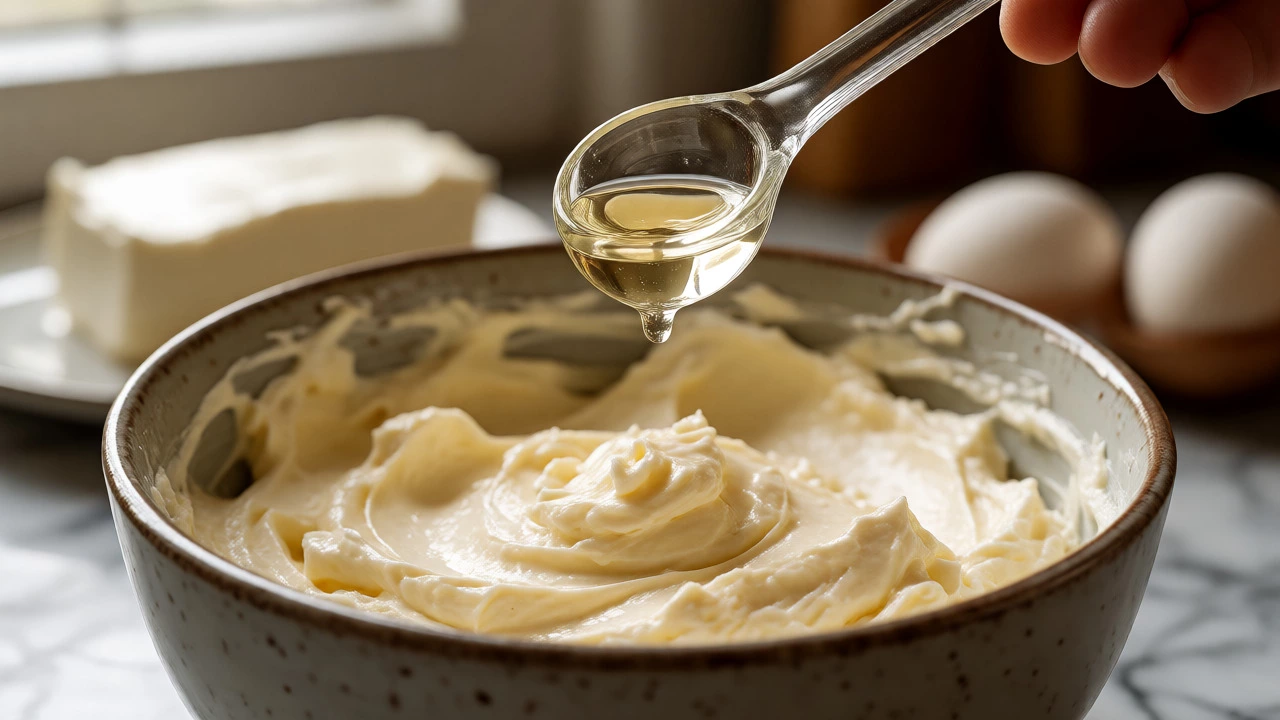
Also, timing matters. Whisk the vinegar into the cream cheese and sugar mixture before adding the eggs. Adding it later, when the batter is already aerated, can cause uneven distribution. Mixing it in early ensures every part of the batter gets the pH adjustment it needs.
Alternatives to Vinegar
What if you hate vinegar, or simply don’t have any? You have options, though they change the final profile slightly.
- Lemon Juice: Use ½ teaspoon of fresh lemon juice. It works similarly chemically but adds a bright citrus note. Great for New York-style or lemon-blueberry cakes.
- Sour Cream: Many recipes already call for this. Sour cream contains lactic acid. If your recipe includes a full cup of sour cream, you might not need additional vinegar because the acidity is already present. Check your specific recipe ratios.
- Cream of Tartar: A pinch (¼ teaspoon) dissolved in a little warm milk can work. It’s a solid acid stabilizer often used in meringues, but it’s less common in wet cheesecake batters.
If your recipe calls for both sour cream and vinegar, don’t skip the vinegar. The sour cream provides bulk and fat, while the vinegar provides the concentrated acidity needed for protein stability.
Real-World Testing: What Happens If You Skip It?
I tested this in my Halifax kitchen last winter. I made two identical batches of classic vanilla bean cheesecake. Batch A followed the traditional method with 1 tsp of white vinegar. Batch B omitted it entirely.
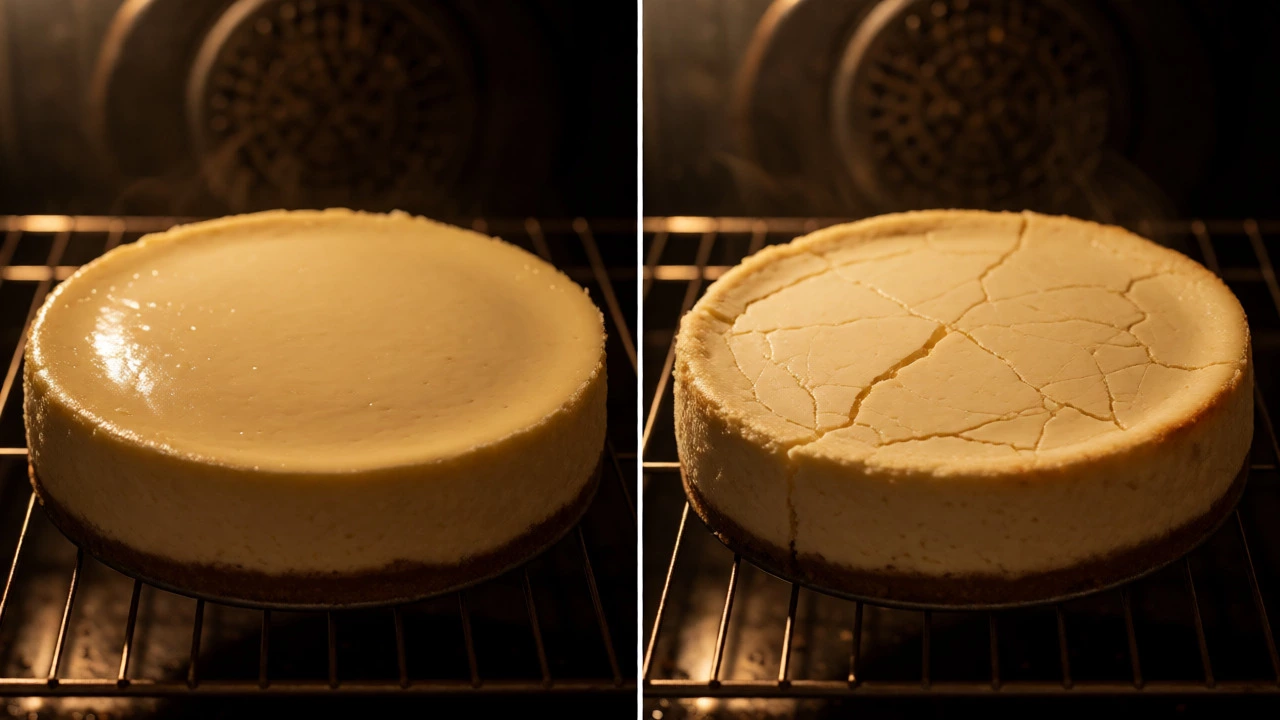
Batch A baked up beautifully. The surface was smooth, glossy, and crack-free. The texture was dense but yielded easily to a fork. The flavor was rich but clean.
Batch B showed signs of stress. Small spiderweb cracks appeared around the rim within minutes of coming out of the oven. The texture was slightly drier and felt more "chalky" on the tongue rather than creamy. The sweetness hit harder upfront because there was no acid to round off the edges. It wasn’t ruined-it was still edible-but it lacked the professional polish of Batch A.
This confirms that vinegar isn’t a gimmick. It’s a functional tool. Skipping it saves you one ingredient but costs you quality.
Troubleshooting Common Cheesecake Issues
If you’re still struggling with your cheesecakes, consider these factors alongside the vinegar question:
- Room Temperature Ingredients: Cold cream cheese leads to lumps. Lumps prevent even cooking. Always let your dairy sit out for at least two hours before mixing.
- Low and Slow Baking: High heat cooks the outside too fast. Bake at 325°F (160°C) and turn off the oven after the timer goes off, letting the cake cool inside with the door ajar. This gradual temperature drop prevents shock-induced cracking.
- Don’t Overmix After Eggs: Once you add eggs, mix on low speed only until combined. Overmixing whips in too much air, which expands in the oven and causes rise-and-fall collapses.
Does vinegar make cheesecake taste sour?
No, not if you use the correct amount (typically ½ to 1 teaspoon per 9-inch cake). The small quantity of acetic acid reacts with the dairy proteins and evaporates partially during baking. It enhances the other flavors rather than dominating them. If you taste vinegar, you likely used too much or didn’t mix it in thoroughly.
Can I use apple cider vinegar instead of white vinegar?
Yes, you can substitute apple cider vinegar in a 1:1 ratio. However, it may impart a very slight fruity or fermented note. This is fine for fruit-topped cheesecakes but might distract from a pure vanilla or chocolate profile. White distilled vinegar is preferred for neutrality.
Why does my cheesecake crack even with vinegar?
Vinegar helps, but it’s not a cure-all. Cracking is primarily caused by overbaking or rapid cooling. Ensure you bake at a low temperature (around 325°F/160°C) and cool the cheesecake gradually in the turned-off oven with the door slightly open. Also, avoid opening the oven door frequently during baking.
Is vinegar necessary for no-bake cheesecakes?
Generally, no. No-bake cheesecakes rely on gelatin or whipped cream for structure, not heat-coagulated proteins. Vinegar won’t help them set. However, some people add a drop of lemon juice or vinegar to no-bake fillings purely for flavor balance to cut the sweetness, similar to how it works in baked versions.
What if I forget to add vinegar?
Your cheesecake will still be edible and tasty. It might be slightly sweeter and more prone to minor cracking or a grainier texture, but it won’t fail catastrophically. Don’t panic. Just enjoy the fact that you made a homemade treat, and try adding the vinegar next time for optimal results.