Macaron Cost Breakdown Simulator
Production Variables
Adjust the sliders to see how specific factors impact the final retail price.
Cost Analysis
$0.00 per box
Cost Breakdown Components
Why this price?
Adjust the variables to see how ingredient quality, labor intensity, and waste rates contribute to the final cost of macarons compared to standard baked goods.
You pick up a small box of six colorful discs from a high-end patisserie. You glance at the receipt and do a double-take. $12? For what looks like two cookies with some jam in the middle? It’s a common reaction. When you compare a macaron to a standard chocolate chip cookie or even a fancy cupcake, the price per gram seems absurd. But that sticker shock isn’t just because they’re French. It’s because making them correctly is one of the most unforgiving processes in professional baking.
If you’ve ever tried to make them at home, you know the pain. If you haven’t, imagine trying to paint a masterpiece while balancing on a tightrope. That’s essentially what a pastry chef does every morning. The high price tag reflects a perfect storm of premium ingredients, massive labor intensity, extreme waste rates, and the delicate logistics of keeping them fresh. Let’s break down exactly where your money goes when you buy those little treats.
The Ingredient Trap: It’s Not Just Sugar
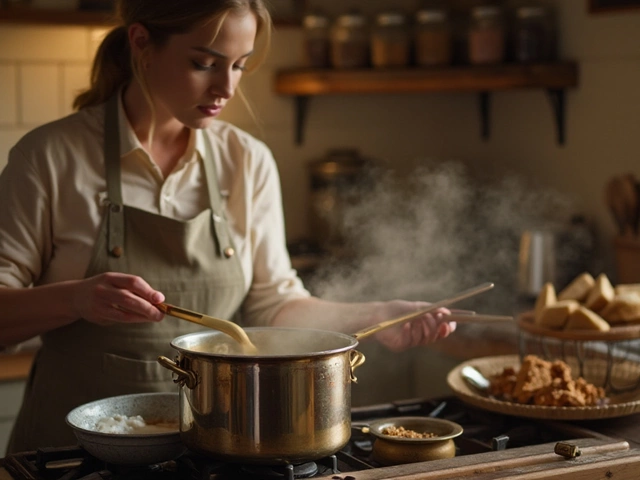
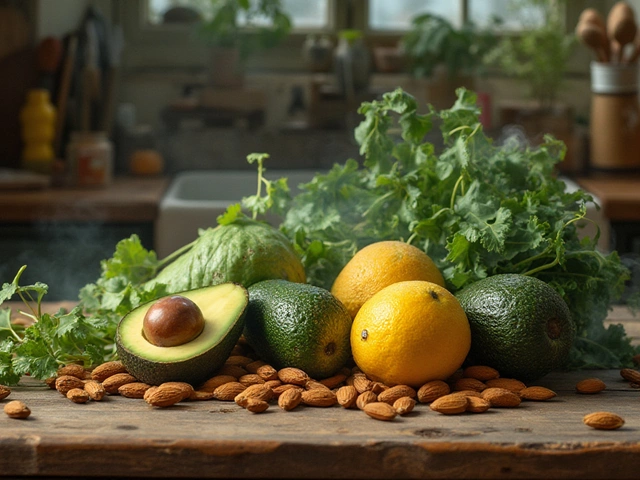
At first glance, the ingredient list for a macaron looks cheap: almond flour, egg whites, sugar, and food coloring. If you bought these items at a grocery store, you might think you could make them for pennies. But commercial baking doesn’t work like home cooking. Patisseries don’t buy bulk generic brands; they buy specific, high-grade components that ensure consistency.
Almond flour is the biggest variable here. Cheap almond flour is gritty, unevenly ground, and can ruin the smooth texture known as the 'foot' of the macaron. Professional bakeries use finely sifted, blanched almond meal that costs significantly more than standard flour. Then there are the eggs. Many high-end shops insist on organic or pasteurized egg whites to minimize salmonella risk and ensure a stable meringue. This cuts their yield and raises their cost per batch.
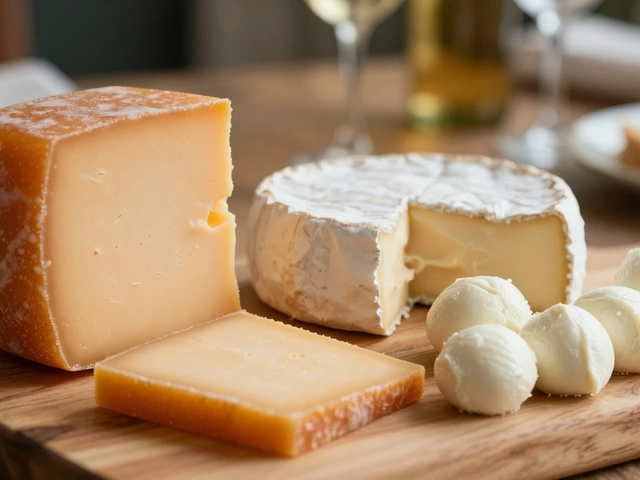
But the real cost driver is the filling. A macaron shell is just a vessel. The value comes from what’s inside. We aren’t talking about jarred strawberry jam. We’re talking about ganache made with couverture chocolate, fresh butter, and cream. Some flavors require exotic ingredients like passion fruit puree, raspberry coulis, or even matcha powder imported from Japan. These flavorings are concentrated and expensive. A single box of macarons might contain five different fillings, each requiring its own set of premium raw materials.
The Labor Intensity: Hours, Not Minutes
This is where the math gets brutal for the consumer but makes sense for the baker. Making macarons is not a 'mix and bake' process. It is a multi-day operation that requires precision timing and skilled hands.
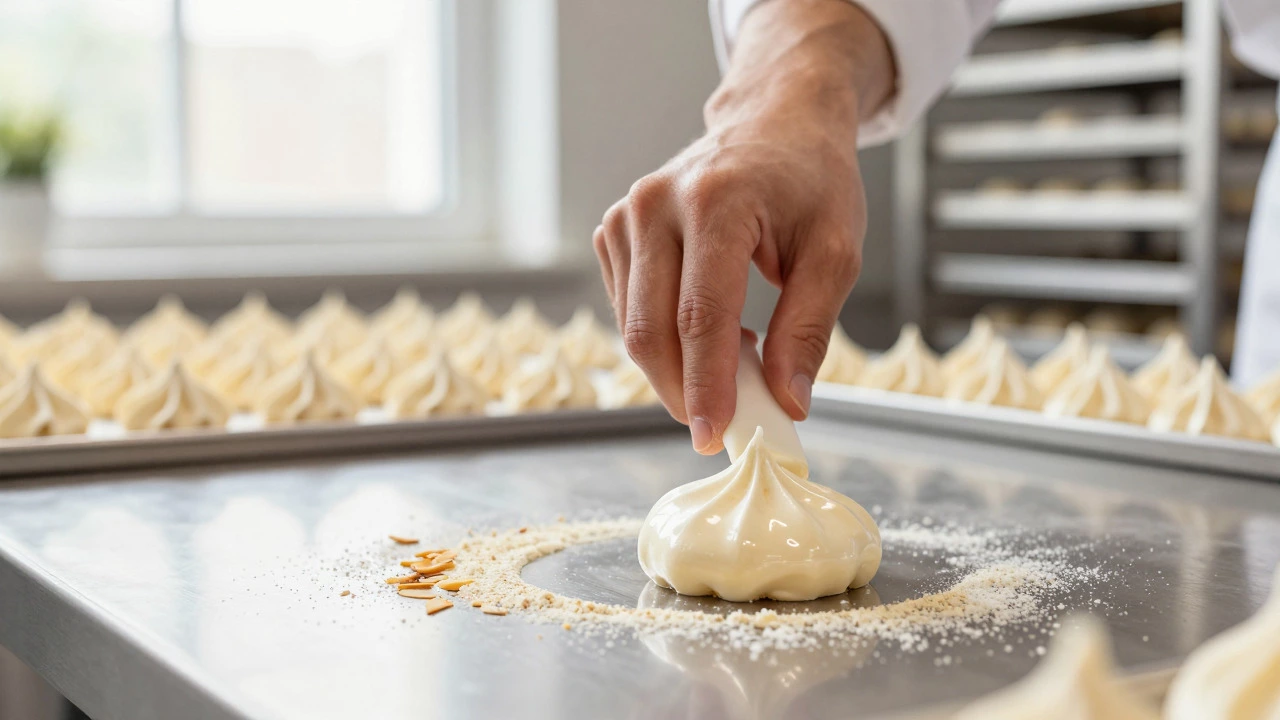
A batch of macarons usually starts with whipping the meringue. This has to be done by hand or with specialized equipment to control the temperature and stiffness of the peaks. Then comes the 'macaronage'-folding the dry ingredients into the meringue. This step is purely tactile. Too much folding, and the batter runs out too far, creating flat pancakes. Too little, and the shells crack and have no feet. There is no machine that can reliably judge this consistency yet. It requires a human eye and hand.
After piping, the shells must rest to form a skin before baking. They bake quickly, but then they must cool completely before being filled. And here’s the kicker: you can’t fill them immediately after baking because the residual moisture will make the shells soggy. Most serious bakeries pipe the shells one day, let them dry, bake them the next morning, and fill them later that day or the following morning. This ties up counter space, labor, and inventory for 48 to 72 hours.
Furthermore, assembling the boxes is slow. Each macaron must be paired perfectly by size and color. A mismatched pair looks amateurish and damages the brand. This manual assembly adds significant labor hours to the final product.
The Waste Factor: The Hidden Tax
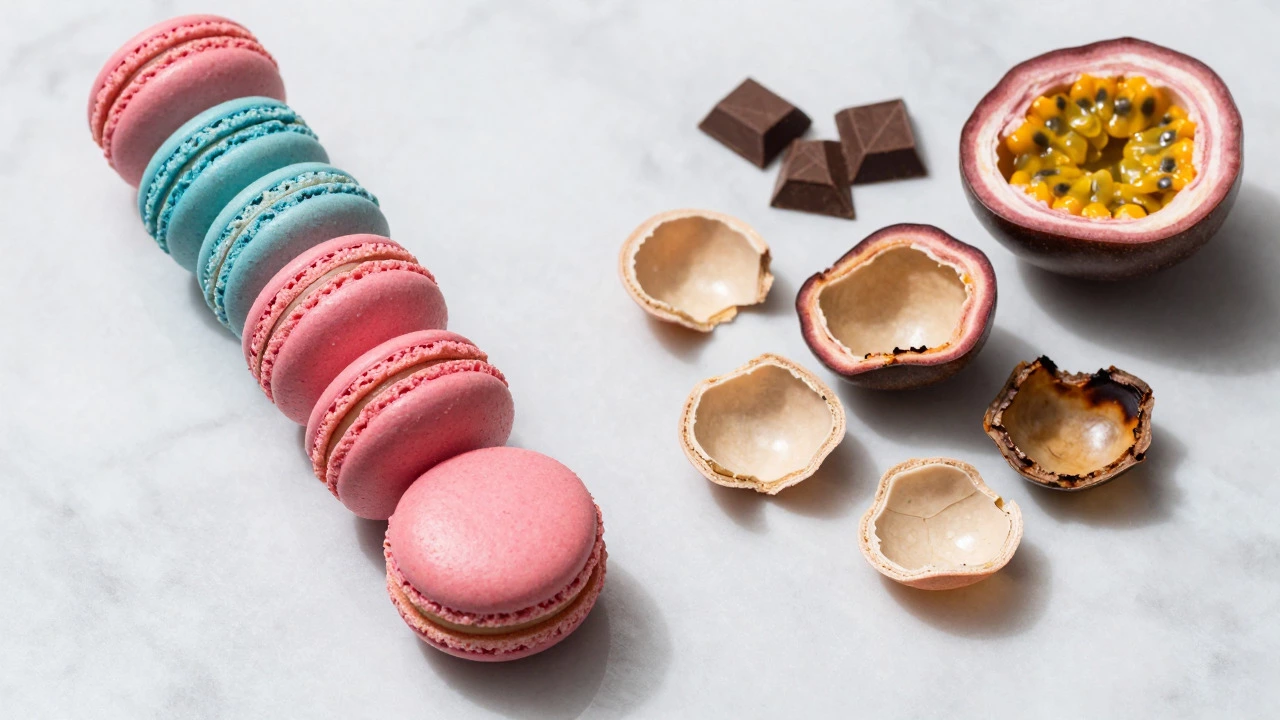
If you think the price covers only the successful macarons, you’re wrong. You are also paying for the failures. In professional kitchens, waste is a line item. For macarons, that line item is huge.
Even experienced chefs have bad days. Humidity changes in the kitchen can cause shells to spread. Oven hot spots can burn the bottoms. A slight variation in the humidity of the egg whites can affect the meringue structure. It is not uncommon for a bakery to discard 10% to 30% of a batch due to cosmetic flaws or structural issues. These 'seconds' might taste fine, but they don’t look right. Since macarons are sold on aesthetics as much as taste, anything imperfect is often thrown away or given away to staff, not sold to customers.
Let’s say a bakery aims to sell 100 boxes. They might need to bake enough shells for 130 boxes to account for breakage during transport, cracking during baking, and pairing errors. That extra 30% represents wasted ingredients and wasted labor that is baked into the price of the 100 boxes you actually see on the shelf.
Shelf Life and Logistics
Unlike a brownie or a cookie that can sit on a shelf for weeks, a macaron is perishable. The ideal macaron has a crisp exterior and a chewy interior, achieved through a maturation process where the filled macarons rest in the refrigerator for 24 to 48 hours. This allows the flavors to meld and the textures to balance.
This refrigeration requirement increases energy costs and limits how long the product can be displayed. A bakery cannot overproduce macarons and hope to sell them later. If they don’t sell within a few days, the quality degrades. The shells become soggy, or the filling separates. This forces bakeries to produce smaller batches more frequently, which is less efficient than mass-producing a cake that lasts longer.
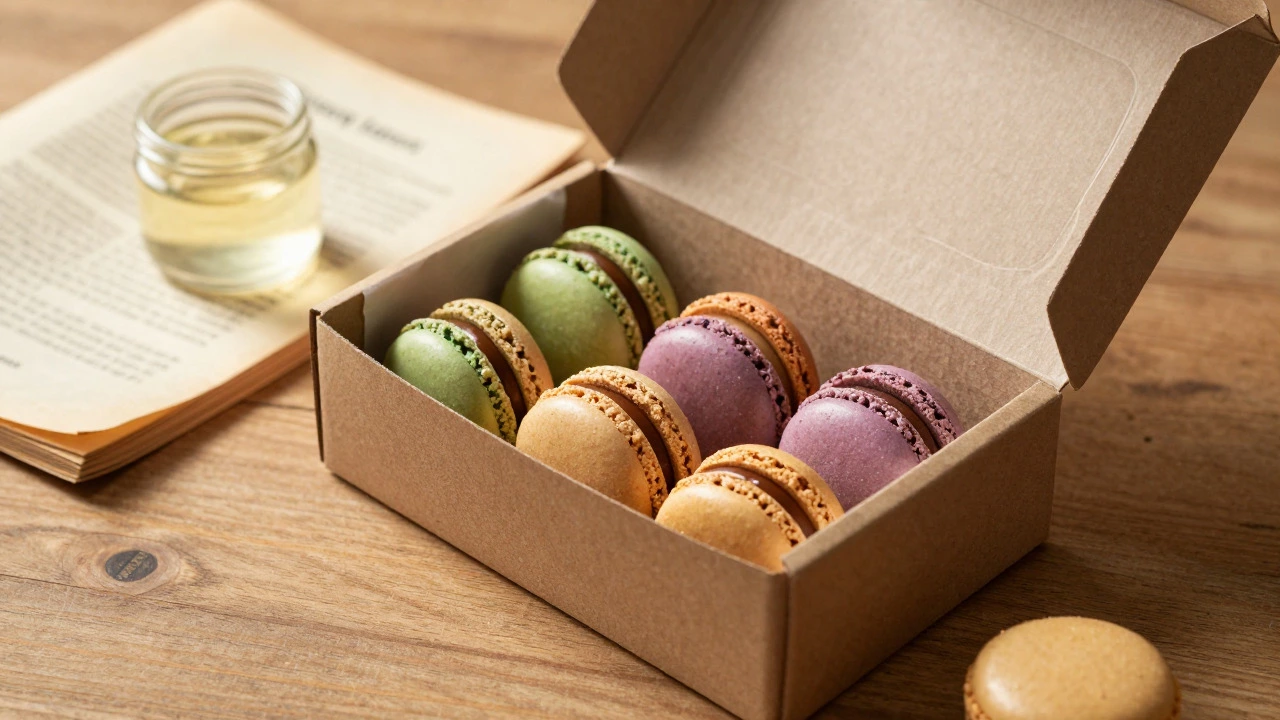
Transportation is another factor. Macarons are fragile. Stacking them too tightly crushes the delicate shells. Shipping them requires custom packaging that protects their shape without adding excessive weight or cost. If you order them online, you’re paying for insulated boxes, ice packs, and expedited shipping to ensure they arrive intact and cold.
Brand Positioning and Market Psychology
Finally, we have to talk about perception. Macarons originated in Paris and became a global luxury symbol thanks to houses like Ladurée and Pierre Hermé. They are marketed as haute couture confections. The price is partly strategic. If a macaron were priced like a regular cookie, consumers might assume it’s low-quality. The high price signals exclusivity, craftsmanship, and premium ingredients.
This creates a self-fulfilling prophecy. Customers expect to pay more, so bakeries can charge more. This allows them to invest in better equipment, hire more skilled staff, and maintain higher standards. However, it also means you’re paying for the brand equity, not just the calories.
| Factor | Macarons | Cupcakes/Cookies |
|---|---|---|
| Primary Flour | Almond Flour (High Cost) | Wheat Flour (Low Cost) |
| Labor Skill Level | Expert (Manual Precision) | Intermediate (Machine Assist) |
| Production Time | 48-72 Hours (Multi-day) | Same Day |
| Waste Rate | 10-30% (Cosmetic/Structural) | <5% |
| Filling Complexity | Custom Ganauche/Coulis | Standard Frosting/Icing |
| Shelf Life | 3-5 Days (Refrigerated) | 1-2 Weeks (Room Temp) |
Can You Save Money?
If the price hurts your wallet, there are ways to enjoy macarons without breaking the bank. First, consider buying from local artisanal bakers rather than famous luxury brands. They often use similar techniques but lack the overhead of prime retail locations and heavy marketing budgets.
Second, try making them yourself. While the learning curve is steep, the cost per unit drops dramatically once you master the technique. You’ll still waste some batches, but even accounting for failure, homemade macarons are cheaper than store-bought ones. Start with simple flavors like vanilla or chocolate before attempting complex citrus or floral profiles.
Lastly, check for 'imperfect' sales. Some bakeries offer discounted boxes of slightly cracked or misshapen macarons. Taste-wise, they are identical to the perfect ones. It’s a smart way to support local businesses while saving money.
Are macarons worth the high price?
It depends on your expectations. If you view them as a luxury experience involving precise craftsmanship and premium ingredients, yes. If you just want a sweet treat, they may feel overpriced compared to cookies or brownies. The value lies in the skill required to make them consistently well.
Why are macarons more expensive than cupcakes?
Cupcakes use cheap wheat flour and can be produced quickly with machines. Macarons require expensive almond flour, multiple days of labor, and manual assembly. Additionally, macarons have a much higher waste rate due to their sensitivity to humidity and temperature.
Do homemade macarons cost less?
Yes, significantly. Even with initial failures, the cost of ingredients for homemade macarons is a fraction of the retail price. However, you must factor in your own time and the learning curve involved in mastering the technique.
What makes macarons difficult to make?
Macarons are sensitive to humidity, temperature, and mixing techniques. The 'macaronage' step requires precise folding to achieve the right batter consistency. Small errors result in cracked shells, missing feet, or hollow centers, leading to high waste rates.
How long do macarons last?
Properly stored in an airtight container in the refrigerator, macarons last 3 to 5 days. They actually improve in flavor after resting for 24-48 hours. Freezing can extend their life up to a month, but texture may change slightly upon thawing.