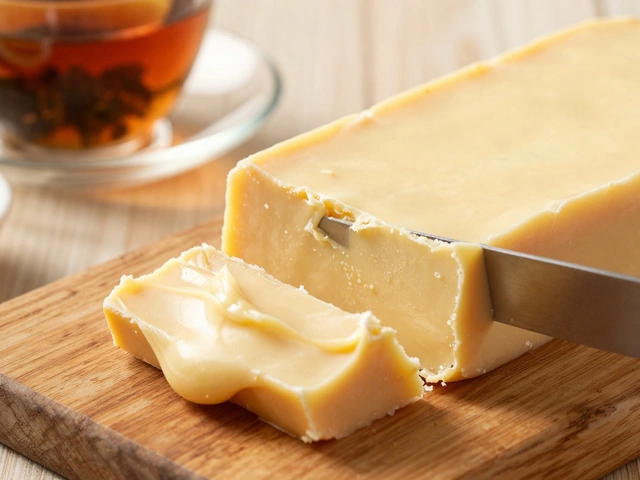
Ever made fudge with condensed milk and ended up with something that’s too sticky, grainy, or just doesn’t set right? You’re not alone. Many people turn to sweetened condensed milk because it seems like a shortcut - one can, no measuring, no cooking the sugar syrup. But here’s the truth: condensed milk is not advisable for real fudge. Not because it’s bad, but because it fundamentally changes what fudge is supposed to be.
Fudge Isn’t Just Chocolate Candy - It’s a Science
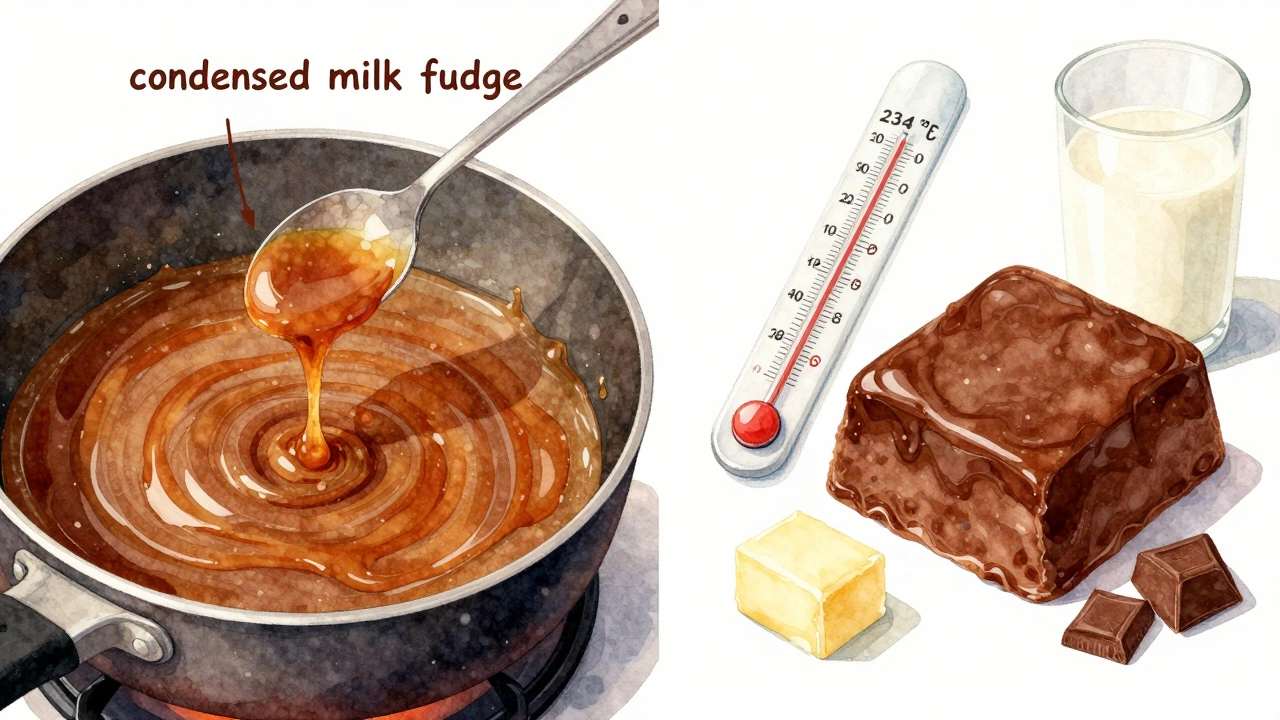
True fudge is a crystalline candy. That means it’s made by carefully controlling how sugar crystals form as the mixture cools. When done right, you get a smooth, creamy, melt-in-your-mouth texture. When it’s off, you get a gritty, hard, or rubbery mess. The key is controlling sugar crystallization. That’s why traditional fudge recipes call for granulated sugar, butter, cream, and sometimes chocolate - all cooked together to a precise temperature, usually around 234-238°F (112-114°C), the soft-ball stage.Condensed milk, on the other hand, is already a pre-cooked, thickened mixture of milk and sugar, with about 60% sugar by weight. It’s been boiled down, concentrated, and stabilized with additives. When you add it to chocolate and heat it, you’re not building the fudge from scratch - you’re just melting ingredients together. The result? A dense, overly sweet, chewy candy that lacks the delicate crumb and melt of real fudge. It’s closer to a chocolate fudge bar you’d buy at a gas station than the kind your grandma made on the stove.
What Happens When You Use Condensed Milk
Let’s break down what goes wrong:- Too much sugar, too fast: Condensed milk adds nearly 1.5 cups of sugar per can. That’s more than most traditional recipes call for. The excess sugar overwhelms the system, leading to large, coarse crystals that feel gritty.
- No temperature control: Real fudge requires you to heat the mixture slowly and monitor the temperature. With condensed milk, you’re just stirring until it melts. You can’t gauge doneness. Overheat it by 5 degrees, and you’ll get a hard, brittle fudge. Underheat it, and it stays gooey forever.
- Water content is off: Condensed milk is about 25% water. That’s fine for pies or sauces, but in fudge, water interferes with sugar crystallization. Too much water means the fudge won’t set properly, even after chilling.
- Flavor gets muddy: The caramelized, cooked flavor of condensed milk clashes with the clean, rich taste of high-quality chocolate. You end up with a cloying, artificial sweetness that masks the cocoa.
A friend in Halifax tried making condensed milk fudge for a holiday gift last year. She followed a viral TikTok recipe. The fudge didn’t set. She cut it into squares anyway and wrapped them in foil. By the time she delivered them, the edges were sticky, the centers were runny, and the whole box smelled like burnt sugar. She called it "chocolate pudding in a fancy box."
Real Fudge Needs Real Ingredients - Here’s Why
Traditional fudge uses:- Granulated sugar: Pure sucrose that dissolves cleanly and crystallizes predictably.
- Heavy cream or evaporated milk: These add fat and moisture without the extra sugar or pre-cooked flavor. Evaporated milk is unsweetened - that’s key.
- Butter: Adds richness and helps prevent over-crystallization.
- Chocolate: High-quality chocolate chips or chopped bars, not candy melts.
When you cook these together to the soft-ball stage, you’re creating a syrup that’s just saturated enough to form tiny, uniform crystals as it cools. That’s what gives fudge its velvety texture. Condensed milk skips the entire process. It’s like trying to bake a cake with pre-mixed pancake batter - you’ll get something sweet, but it won’t be what you signed up for.
What to Use Instead of Condensed Milk
If you want easy fudge, here’s a better shortcut:- Use evaporated milk instead of condensed milk. It’s unsweetened, so you control the sugar.
- Use a simple 3-ingredient recipe: 2 cups chocolate chips, 1 can (12 oz) evaporated milk, 1/4 cup butter.
- Heat on medium-low until the chocolate melts and the mixture is smooth. No thermometer needed - just stir until it looks glossy.
- Pour into a lined pan, chill for 2 hours, and cut.
This version sets perfectly, has a clean chocolate flavor, and doesn’t taste like candy syrup. It’s what professional bakers use when they need consistent results without the fuss of a candy thermometer.
Another option? Use white sugar and heavy cream in a 2:1 ratio with chocolate. It takes 15 minutes on the stove, and the difference in texture is night and day. You’ll taste the cocoa, not the caramel.
When Condensed Milk Might Work (And When It Doesn’t)
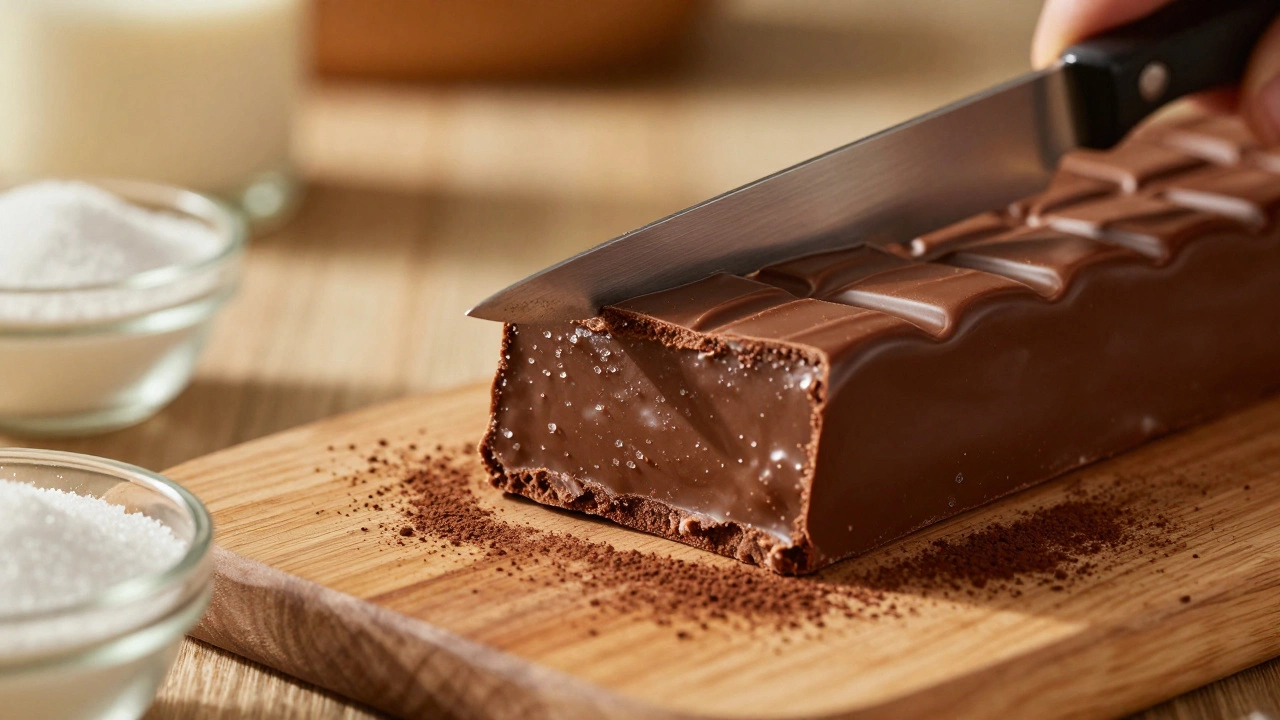
There are a few cases where condensed milk makes sense:- Chocolate fudge bars: If you’re making a no-bake, refrigerator-style bar that’s meant to be chewy and dense - like a Snickers bar - condensed milk works fine.
- Layered desserts: In a trifle or no-bake cheesecake, it adds sweetness and body.
- Quick treats for kids: If you’re making a snack for a school bake sale and don’t care about texture, go ahead.
But if your goal is authentic, melt-in-your-mouth fudge - the kind you’d find in a small-town candy shop or at a holiday market - skip the condensed milk. It’s not worth the disappointment.
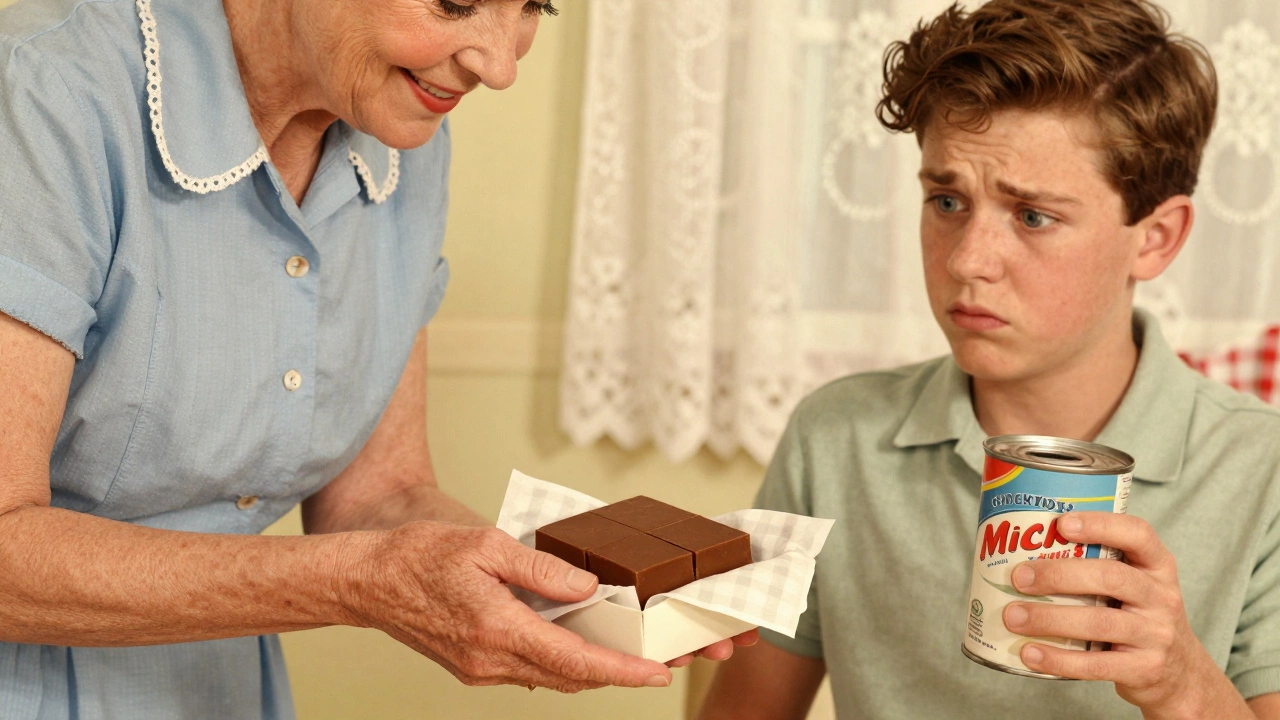
Pro Tip: Test Your Fudge Before Chilling
If you’re making fudge the traditional way, drop a small spoonful into a glass of ice water after it reaches 234°F. If it forms a soft, pliable ball that holds its shape but flattens when you bite it - you’re golden. If it’s too runny, keep cooking. If it’s hard as a rock, you’ve gone too far. This trick has been used for over 100 years. Condensed milk recipes don’t need it because they don’t rely on sugar control. That’s why they fail.Final Thought: Convenience Isn’t Always Better
There’s a reason people still make fudge the old-fashioned way. It’s not just tradition - it’s science. The slow melt, the careful stirring, the smell of chocolate and butter as it comes together - that’s the heart of fudge. Condensed milk might save you five minutes, but it costs you the soul of the candy.Next time you’re tempted by a one-can fudge recipe, ask yourself: Do I want something sweet, or do I want fudge? The answer will tell you whether to reach for the can or the sugar bowl.
Can you use condensed milk to make fudge if you add more chocolate?
Adding more chocolate won’t fix the problem. Condensed milk has too much sugar and water, and it doesn’t crystallize properly. Even with extra chocolate, the texture will still be sticky, chewy, or grainy. You’re not improving the recipe - you’re just making a sweeter version of the same flawed result.
Why does fudge made with condensed milk never set?
It often doesn’t set because condensed milk contains too much water and pre-dissolved sugar. Real fudge sets because sugar crystallizes in a controlled way as it cools. Condensed milk skips that process. The sugar is already in a syrupy state, so it stays soft even after chilling. Refrigeration helps it firm up a little, but it’ll never become firm like real fudge.
Is evaporated milk the same as condensed milk?
No. Evaporated milk is unsweetened - it’s just milk with about 60% of the water removed. Condensed milk is milk with sugar added and then boiled down. They’re not interchangeable. Using condensed milk in place of evaporated milk will make your fudge way too sweet and sticky.
Can you fix fudge that turned out grainy from condensed milk?
Once it’s grainy, you can’t fix it. Graininess comes from large sugar crystals forming, and that’s irreversible. Your best bet is to repurpose it: melt it into a sauce for ice cream, stir it into oatmeal, or use it as a filling for thumbprint cookies. But don’t try to reheat and re-cool it - it won’t turn smooth.
What’s the best chocolate to use for real fudge?
Use high-quality chocolate bars with at least 60% cocoa, chopped by hand. Chocolate chips often contain stabilizers that prevent smooth melting. Brands like Ghirardelli, Lindt, or Callebaut work best. Avoid candy melts or baking chocolate labeled "for melting" - they’re designed for dipping, not fudge.
Next Steps: Try This Simple Fudge Recipe
Here’s a foolproof version that doesn’t need a thermometer:- 2 cups (340g) high-quality chocolate chips
- 1 can (12 oz / 354ml) evaporated milk
- 1/4 cup (57g) unsalted butter
Combine all ingredients in a saucepan over low heat. Stir constantly until fully melted and smooth - about 8-10 minutes. Pour into an 8x8-inch pan lined with parchment. Chill for 2 hours. Cut into squares. Store in an airtight container at room temperature for up to 2 weeks.
This is real fudge. No shortcuts. No regrets.