Tiramisu Biscuit Absorption Calculator
How long are your biscuits?
Italian tradition says never break the biscuits for authentic tiramisu.
Longer pieces absorb coffee properly and maintain texture.
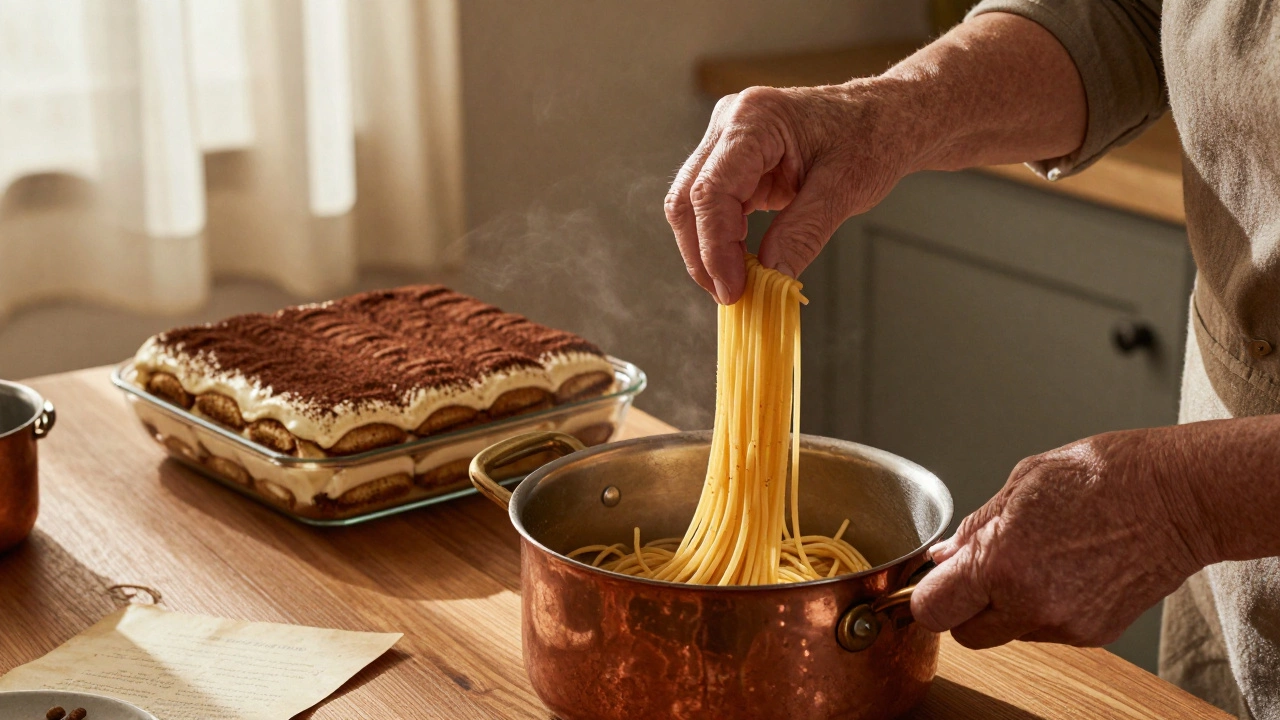
Walk into any Italian home during dinner time, and you’ll see it: a pot of boiling water, a handful of spaghetti, and never, ever a broken noodle. It’s not about aesthetics. It’s not about tradition for tradition’s sake. It’s about respect-for the food, the technique, and centuries of culinary wisdom. And yes, this rule even applies to the pasta you use in tiramisu.
People often assume tiramisu is just coffee-soaked ladyfingers and mascarpone cream. But the truth is, the dish’s origins are tangled with pasta culture in northern Italy, especially in Veneto and Treviso. The original tiramisu recipes from the 1960s didn’t use ladyfingers at all. Some early versions used savoiardi-yes, the same sponge cookies we know today-but others used short, broken pasta-like biscuits called zuccherini or even thin, baked pasta strips. These weren’t meant to be eaten like noodles. They were dried, sweetened, and soaked in coffee like a crust. And if you broke them? You broke the ritual.
So why can’t you break pasta in Italy? Because pasta isn’t just food. It’s a symbol of wholeness. In Italian households, the length of the noodle represents continuity-family, connection, life. Breaking spaghetti or bucatini before cooking is seen as rude, almost sacrilegious. It’s not about the sauce clinging better. It’s about honoring the craft. Italian grandmothers don’t teach their grandchildren to break pasta because they’re stubborn. They teach it because they learned from their grandmothers, who learned from theirs.
There’s a practical reason too. Pasta is designed to be cooked whole. When you break it, you change how it absorbs water. A whole strand cooks evenly from surface to core. A broken piece? The ends overcook while the middle stays chewy. That’s why Italians use tongs or long forks to twirl-not because they’re fancy, but because it’s the only way to get the perfect bite. And if you’re making tiramisu with a pasta-based biscuit? Breaking it ruins the texture. You don’t want soggy crumbs. You want layers that hold their shape, that let the espresso sink in slowly, that don’t turn into mush.
Let’s be clear: this isn’t about rules written in stone. In modern kitchens, people break pasta all the time-especially when they’re cooking for kids or making baked pasta dishes. But in Italy, where food is tied to identity, breaking pasta still raises eyebrows. And if you’re trying to make authentic tiramisu? You need to understand the context. The dish wasn’t invented in a restaurant. It was born in homes, in kitchens where every ingredient had meaning.
Here’s what you’ll find in a real Italian tiramisu recipe from the 1970s: coffee, mascarpone, eggs, sugar, cocoa powder, and biscuits that are long, dry, and unbroken. The biscuits aren’t ladyfingers as we know them today. They’re more like thin, crisp sheets-almost like pasta dough that was baked instead of boiled. When soaked, they don’t dissolve. They soften. They become tender. But if you cut them into pieces? You lose that slow, layered absorption. The espresso hits too fast. The cream sinks too deep. The texture becomes uneven. The dish loses its soul.
And here’s the kicker: you don’t need to break pasta to make tiramisu work. You just need to know how to layer it. If you’re using store-bought ladyfingers, you can still follow the spirit of the tradition. Don’t chop them. Don’t crush them. Just dip them gently, one at a time, and lay them flat. Let them rest. Let the coffee seep in slowly. That’s how you get the contrast-the crisp edge, the creamy middle, the faint bitterness of cocoa on top. That’s how you make tiramisu that tastes like Italy.
Some say the rule is outdated. Maybe. But culture doesn’t die because it’s inconvenient. It dies because people stop asking why. Why do Italians serve pasta with a fork and no spoon? Why do they never put cheese on seafood pasta? Why do they never put bread on the table before the meal? These aren’t quirks. They’re echoes of history. And when you make tiramisu, you’re not just mixing ingredients. You’re stepping into a story.
So next time you reach for the scissors to cut your pasta before boiling it-or your knife to chop the ladyfingers for tiramisu-pause. Think about the hands that made this dish before you. Think about the pot of boiling water, the twirling fork, the quiet pride in a perfectly cooked strand. You don’t have to follow every rule. But if you want to taste the real thing? Don’t break it. Let it be whole.
And if you’re wondering whether you can use broken pasta in other dishes? Sure. In baked casseroles? Yes. In soups? Absolutely. But tiramisu? That’s different. It’s not a dessert you make because it’s easy. It’s one you make because you care enough to do it right.