Cannoli Authenticity Checker
Is Your Cannoli Authentic?
Check all characteristics present in your cannoli to determine if it's authentic Sicilian style.
Authenticity Results
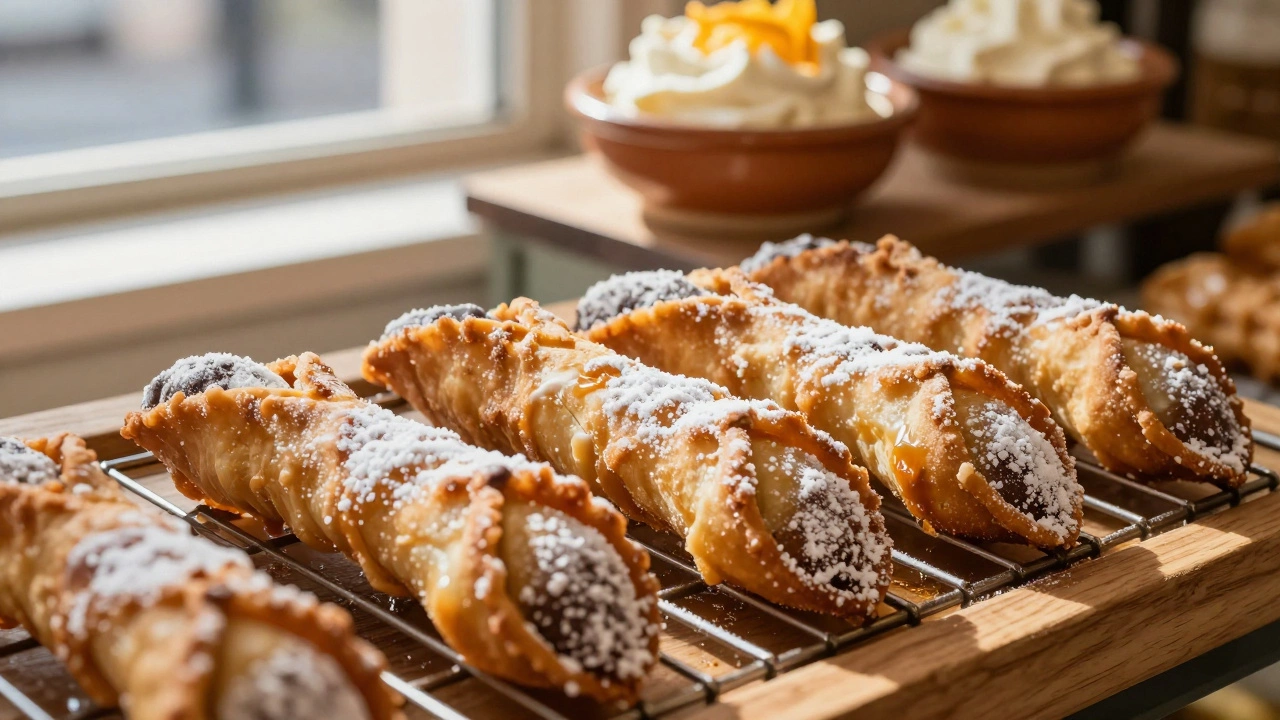
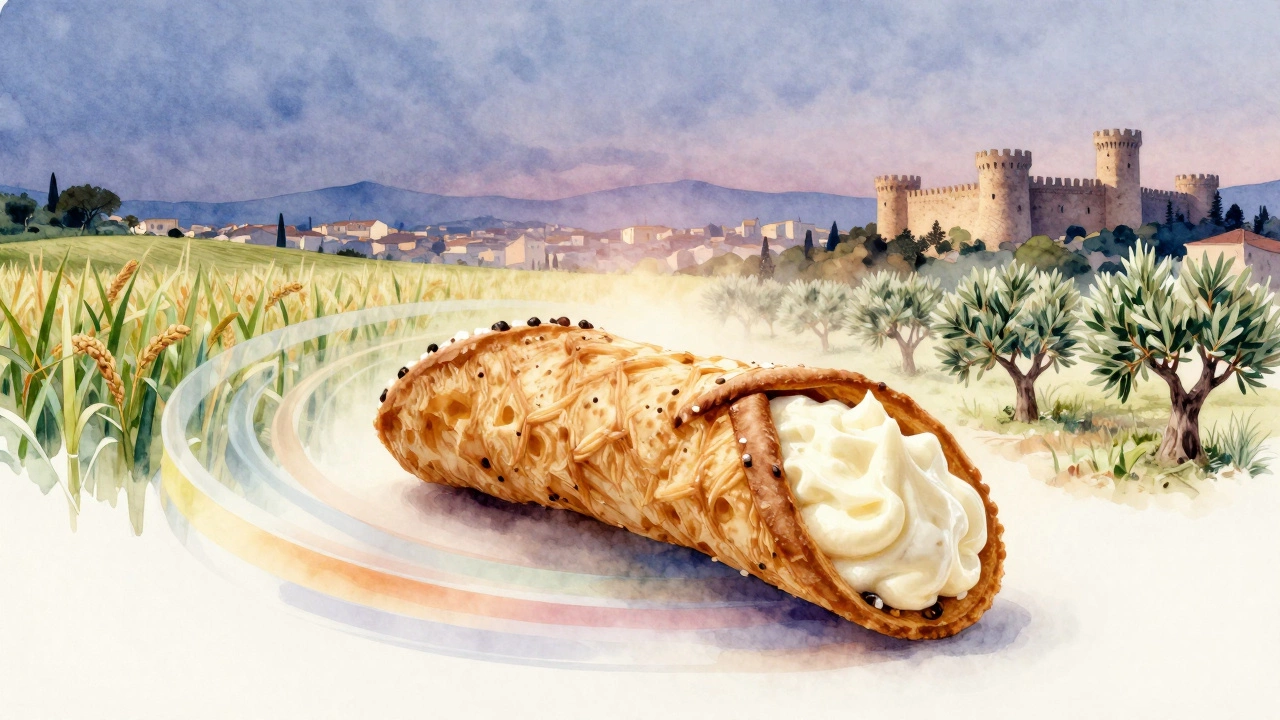
When you hear the word cannoli, you might picture a crispy tube of fried dough stuffed with sweet cream. But what does cannoli actually mean? It’s not just a dessert name - it’s a window into centuries of Sicilian history, culture, and craftsmanship. The word itself comes from the Italian canna, meaning "reeds" or "tube," and the suffix -oli makes it plural. So literally, cannoli means "little tubes." And that’s exactly what they are: hollow, crunchy shells filled with creamy ricotta, often dusted with powdered sugar and studded with chocolate chips or candied fruit.
Many people assume cannoli are just like tiramisu - fancy Italian treats that came out of nowhere. But that’s not true. Tiramisu is a modern creation, popularized in the 1970s. Cannoli? They’ve been around since at least the 9th century, when Arab rulers controlled Sicily and introduced sugarcane, citrus, and nut-based sweets. Over time, local bakers adapted those ingredients into something uniquely Sicilian. By the 1800s, cannoli were already a staple at festivals in Palermo and Catania. Today, they’re still made the same way in family-run pasticcerias across southern Italy.
How Cannoli Are Made - The Real Way
Most store-bought cannoli are disappointing. The shells are soggy, the filling is too sweet, and the chocolate chips taste like plastic. That’s because real cannoli aren’t assembled until the last minute. The shell is fried fresh, cooled, then filled just before serving. If you fill them too early, the moisture from the cream seeps into the crisp shell and turns it into a mushy tube.
Here’s how it’s done properly:
- The dough is made with flour, sugar, wine (not water), butter, and sometimes cocoa powder - giving it a slightly nutty, aromatic base.
- It’s rolled thin, wrapped around metal tubes, and fried in lard or vegetable oil until golden brown.
- The filling is ricotta cheese, drained overnight to remove excess water, then mixed with powdered sugar, vanilla, and a pinch of cinnamon or orange zest.
- Chocolate chips, pistachios, or candied citron are added for texture - but never too much.
Authentic cannoli from Sicily use sheep’s milk ricotta, not cow’s milk. It’s richer, tangier, and has a grainier texture that holds up better. You won’t find this in most U.S. bakeries. If you’ve had a bland, grainy cannoli, it’s probably because they used low-quality ricotta or didn’t drain it long enough.
Why Cannoli Are Different From Tiramisu
People often group cannoli and tiramisu together as "Italian desserts," but they’re worlds apart. Tiramisu is layered, soft, and creamy - more like a cake. Cannoli is all about contrast: crunchy outside, smooth inside. One is a dessert you eat with a fork. The other is a handheld snack.
Tiramisu relies on coffee, mascarpone, and ladyfingers soaked in liquor. Cannoli? No coffee. No alcohol. Just ricotta, sugar, and spice. Tiramisu was invented in Treviso, northern Italy. Cannoli? Born in the south, shaped by Arab, Greek, and Norman influences. Their origins are completely different.
And here’s something most people don’t know: cannoli were originally eaten during Carnival season. They were a treat before Lent, when people gave up rich foods. That’s why they’re so indulgent - fried dough, sweet cream, chocolate. Tiramisu, on the other hand, was created as a pick-me-up dessert for workers. It has caffeine. Cannoli? Just sugar and fat. Pure joy.
The Filling Debate: Ricotta vs. Cream Cheese
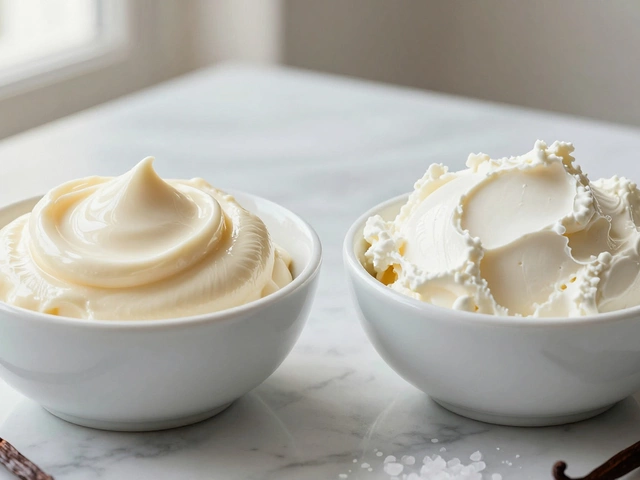
If you’ve had a cannoli in North America, chances are the filling was made with cream cheese. That’s not traditional. In Sicily, ricotta is king. But not just any ricotta - it has to be fresh, drained, and slightly grainy. Cream cheese is smoother, tangier, and cheaper. It’s easier to use in mass production. But it changes the whole experience.
Real ricotta has a subtle sweetness and a slightly grainy texture that melts in your mouth. Cream cheese? It’s dense and uniform. It doesn’t let the shell shine. You can’t taste the crunch anymore.
Some modern bakers blend the two - 70% ricotta, 30% cream cheese - to get stability without losing flavor. That’s fine if you’re making them at home and want them to hold up longer. But if you want authenticity? Stick to ricotta. Drain it in a cheesecloth for 12 hours. Use a fine-mesh strainer. Don’t rush it.
Where to Find the Best Cannoli - And How to Spot a Fake
Not every Italian bakery makes real cannoli. Here’s how to tell if you’re getting the real deal:
- The shell should be crisp. If it bends when you pick it up, it’s been sitting too long.
- The filling should be slightly lumpy. Perfect ricotta isn’t smooth like yogurt. It has tiny curds.
- There should be no syrup. Some places drown cannoli in syrup to make them look shiny. That’s a sign of poor technique.
- Chocolate chips should be small. Big chunks overpower the flavor. Look for mini chips or shaved chocolate.
- They should be filled on-site. If they’re pre-filled and sitting under a glass dome, walk away.
In Halifax, there are a few spots that get it right. One bakery in the North End uses imported Sicilian ricotta and fries the shells daily. Another in Dartmouth uses candied orange peel instead of chocolate - which is actually more traditional. If you ask for "cannoli al naturale," they’ll skip the chocolate entirely and just dust it with sugar and a hint of cinnamon.
How to Make Cannoli at Home - Without the Fuss
You don’t need a fancy fryer or imported ricotta to make great cannoli. Here’s a simple version that works:
- Make the dough: Mix 2 cups flour, 1/4 cup sugar, 1/2 tsp cinnamon, 1/4 cup butter, 1/4 cup Marsala wine (or dry white wine), and 1 egg. Knead until smooth. Let rest for 1 hour.
- Roll it thin - about 1/16 inch thick. Cut into 3x5 inch rectangles.
- Wrap each piece around a cannoli tube (or a clean metal rod) and fry in 350°F oil for 2 minutes per side. Drain on paper towels.
- For the filling: Drain 16 oz of whole-milk ricotta in a cheesecloth overnight. Mix with 1/2 cup powdered sugar, 1 tsp vanilla, and a pinch of salt. Fold in 1/4 cup mini chocolate chips.
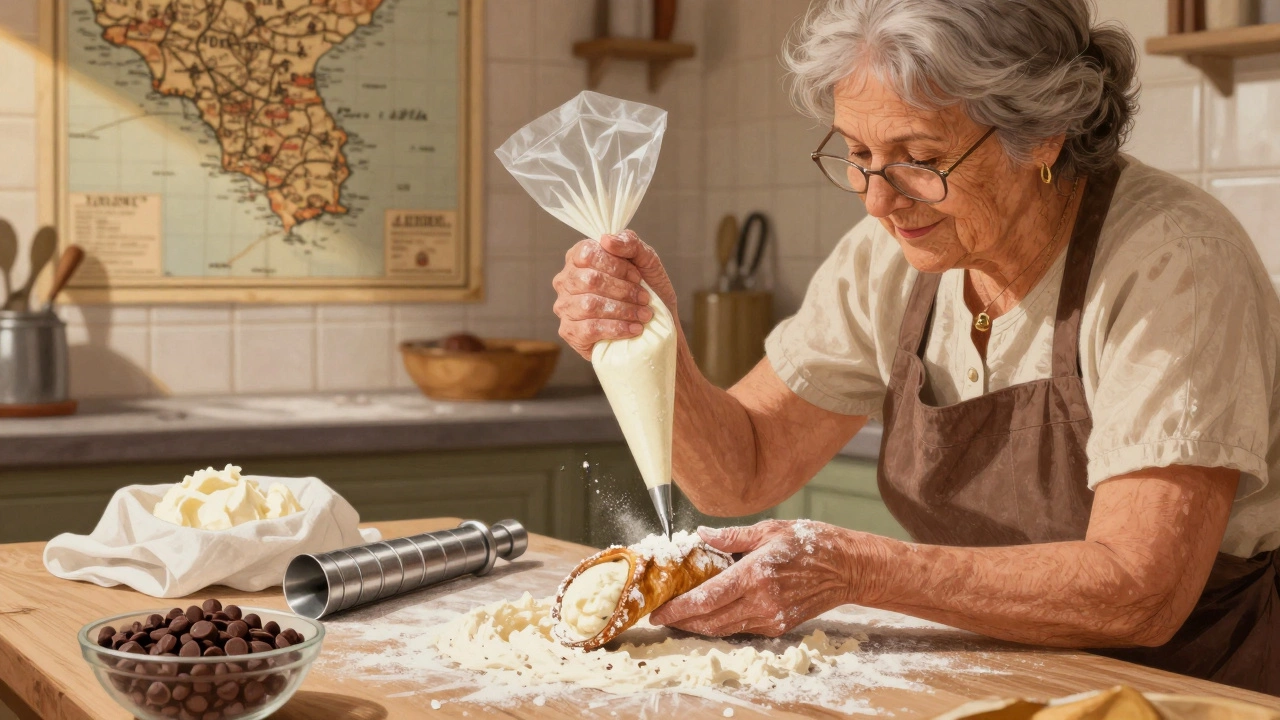
- Fill the cooled shells with a piping bag just before serving.
Store unfilled shells in an airtight container for up to 3 days. Fill them fresh. That’s the rule.
Why Cannoli Still Matter Today
In a world of gluten-free, vegan, sugar-free desserts, cannoli seems old-fashioned. But that’s why they endure. They’re not trying to be healthy. They’re not trying to be trendy. They’re just delicious. A perfect bite of crisp shell and creamy ricotta is a moment of pure comfort.
They remind us that some traditions survive because they work. No additives. No preservatives. Just flour, fat, sugar, and time. And maybe that’s the real meaning behind the word cannoli - not "little tubes," but "little moments of joy."