English Fudge Ingredient Calculator & Guide
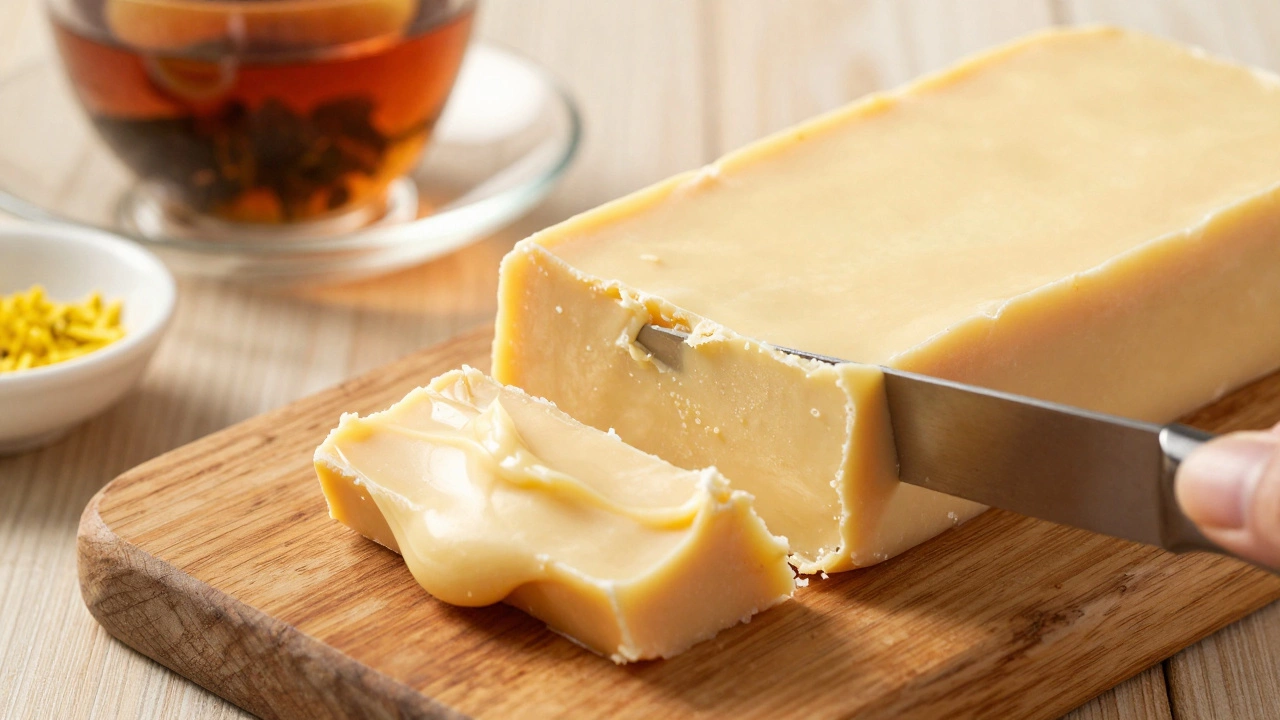
Most people assume fudge is just melted chocolate and sugar. If you’ve ever bought a tin of that dense, crumbly stuff from a tourist shop, you know exactly what I mean. But real English fudge is something entirely different. It’s creamy, almost like butter or shortbread, and it lacks the heavy cocoa content found in American varieties. So, what actually goes into making this classic British treat?
The answer lies in a surprisingly simple list of ingredients: sugar, milk (or cream), butter, and flavorings. There are no eggs, no flour, and usually no chocolate. The magic isn’t in complexity; it’s in chemistry. Making fudge is less about baking and more about controlling heat and crystal formation. If you get the ratio wrong, you end up with hard candy or runny syrup. Get it right, and you have a melt-in-your-mouth delicacy that has been a staple of British tea tables for over a century.
The Core Ingredients: Simplicity is Key
To understand what English fudge is made of, we need to look at the four pillars of the recipe. These aren't just random pantry items; each plays a specific structural role in the final texture.
- Granulated Sugar is the primary sweetener and structure builder in fudge. Unlike brown sugar, which adds molasses flavor and moisture, white granulated sugar provides the clean sweetness and crystalline lattice needed for that signature crumbly-yet-creamy bite. You typically use about two cups of sugar for every cup of liquid.
- Milk or Cream is the liquid base that dissolves the sugar and adds fat. Traditional recipes often call for whole milk, while richer versions use double cream. The water content evaporates during cooking, leaving behind the concentrated sugars and proteins that bind the fudge together.
- Butter is added after cooking to enrich the flavor and soften the texture. Unsalted butter is preferred so you can control the sodium level. It prevents the sugar crystals from becoming too large, ensuring the fudge stays smooth rather than gritty.
- Flavorings are aromatic agents added at the end of the process. Vanilla extract is the gold standard, but lemon juice, almond extract, or even a pinch of salt can transform the profile. Chocolate chips or nuts are optional additions, not core ingredients.
You might notice gelatin is missing from this list. While some modern shortcuts use gelatin to stabilize the mixture, traditional English fudge relies solely on mechanical agitation and temperature control. This makes it naturally gluten-free and suitable for many dietary restrictions, provided you stick to pure ingredients.
The Science Behind the Creaminess
Why does boiling sugar and milk turn into a solid block? It’s all about supersaturation and crystallization. When you heat the mixture, the water evaporates, and the concentration of sugar increases dramatically. At room temperature, water can only hold a certain amount of dissolved sugar. By removing the water, you create a solution that holds far more sugar than it should-this is called a supersaturated solution.
As the mixture cools, the sugar wants to precipitate out of the liquid and form crystals. If you let it cool slowly without interference, large crystals will form, resulting in rock-hard candy. To make fudge, you need millions of tiny crystals. This is where the "beating" step comes in.
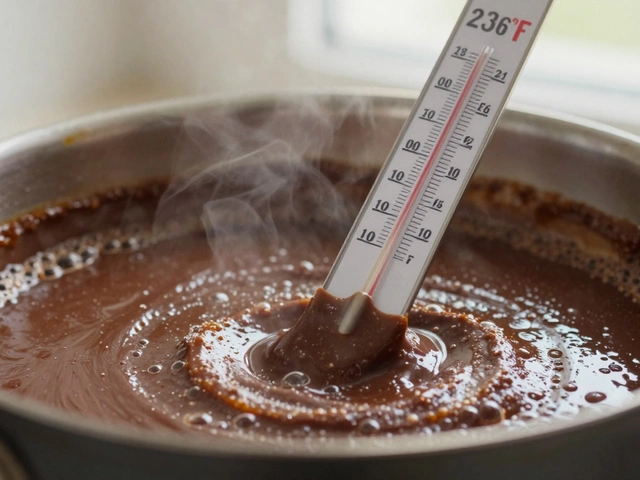
When the hot syrup reaches the correct temperature (usually around 112°C to 116°C, known as the soft-ball stage), you remove it from heat and beat it vigorously. This agitation introduces air bubbles and encourages the formation of countless microscopic sugar crystals. These tiny crystals trap the remaining liquid and fat, creating that distinctively soft, spreadable texture. If you stop beating too early, the fudge will be grainy. Beat it too long, and it becomes dry and crumbly like sand.
Temperature Matters: The Soft-Ball Stage
If you don’t have a candy thermometer, you’re guessing. And in fudge-making, guessing is dangerous. The difference between perfect fudge and failed syrup is just a few degrees. Here is how to identify the critical stages:
| Stage Name | Temperature (°C) | Temperature (°F) | Result if Used for Fudge |
|---|---|---|---|
| Thread Stage | 100 - 110°C | 212 - 230°F | Too soft; will remain liquid or sticky |
| Soft-Ball Stage | 112 - 116°C | 235 - 240°F | Perfect for fudge; forms a soft ball in cold water |
| Hard-Ball Stage | 121 - 130°C | 250 - 266°F | Too hard; results in brittle, crackly candy |
The "soft-ball" test is a handy trick if your thermometer breaks. Drop a small amount of syrup into a bowl of ice water. If it forms a flexible ball that flattens when you press it, you’re ready. If it runs like water, keep cooking. If it snaps like glass, you’ve gone too far.
Variations: Beyond Plain Vanilla
While plain vanilla is the baseline, English fudge is incredibly versatile. The base recipe acts as a canvas for various flavors and textures. Here are the most common variations you’ll find in British homes and shops:
- Lemon Fudge is made by adding lemon zest and juice to the base mixture. The acidity cuts through the sweetness, creating a bright, tangy dessert that pairs well with strong black tea.
- Chocolate Fudge is created by folding in melted dark chocolate or cocoa powder. Note that this is still lighter and creamier than American chocolate fudge due to the higher milk-to-chocolate ratio.
- Nut Fudge is enhanced with chopped walnuts, pecans, or almonds. Nuts are added after the initial beating to prevent them from burning during the high-heat cooking phase.
- Coffee Fudge is flavored with instant espresso powder or strong brewed coffee. This variation mimics the taste of tiramisu and is popular in afternoon tea settings.
Some regional recipes even include honey or maple syrup to replace a portion of the granulated sugar, which alters the crystallization process slightly and results in a chewier texture. However, these are deviations from the strict traditional definition.
Common Mistakes to Avoid
Even with the right ingredients, fudge can fail. Here are the most frequent pitfalls:
- Graininess: This happens when large sugar crystals form. Ensure your pan is clean before starting, and stir the mixture gently until it boils, then stop stirring completely until the end. Stirring during boiling encourages large crystal growth.
- Runny Texture: The mixture wasn’t cooked long enough. It didn’t reach the soft-ball stage, so there was too much water left in the syrup. Always trust your thermometer.
- Dry/Crumbly Texture: Over-beating. Once the fudge starts to thicken and lose its glossy sheen, stop immediately. Overworking it drives out too much moisture and creates a dry product.
- Sticking: Not lining the pan properly. Use parchment paper or grease the mold thoroughly. Fudge sticks tenaciously to bare metal.
Frequently Asked Questions
Is English fudge the same as American fudge?
No, they are quite different. American fudge typically contains chocolate and has a denser, firmer texture. English fudge is usually chocolate-free (unless specified), lighter, creamier, and closer to a soft buttercream in consistency. The ingredient ratios also differ, with English fudge using more milk relative to sugar.
Can I make fudge without a candy thermometer?
Yes, but it requires practice. You can use the "cold water test." Drop a teaspoon of syrup into ice water. If it forms a soft, pliable ball that flattens when pressed between your fingers, you have reached the soft-ball stage (112-116°C). If it remains liquid, cook longer. If it forms a hard ball that doesn't flatten, you've gone too far.
Why is my fudge grainy?
Graininess is caused by large sugar crystals forming. This usually happens if you stir the mixture while it is boiling, which encourages crystal growth. Only stir gently until the sugar dissolves and the mixture begins to boil, then leave it alone until the temperature is reached. Also, ensure your pot is spotless before starting, as any stray sugar grains can seed large crystals.
How long does homemade fudge last?
Homemade fudge keeps well at room temperature for up to three weeks if stored in an airtight container. Place wax paper or parchment between layers to prevent sticking. For longer storage, you can freeze fudge for up to three months. Thaw it in the refrigerator to maintain texture.
Can I substitute cream for milk in fudge?
Yes, substituting cream for milk will result in a richer, softer fudge with a higher fat content. However, because cream has less water than milk, the cooking time may be slightly shorter. Monitor the temperature closely to avoid overcooking. This variation is often used in "luxury" fudge recipes.