Brownie Texture Checker
Based on the article, good brownies should be dense and fudgy with a slight crack on top, not cakey or crispy.
Have you ever bitten into a fudgy brownie and wondered why it’s called that? It’s not because they’re brown - that’s just the color. The name has a story, and it’s not what you think. Brownies weren’t named after their shade. They were named after a mistake, a woman, and a very hungry crowd in Chicago in the late 1800s.
The First Brownie Was an Accident
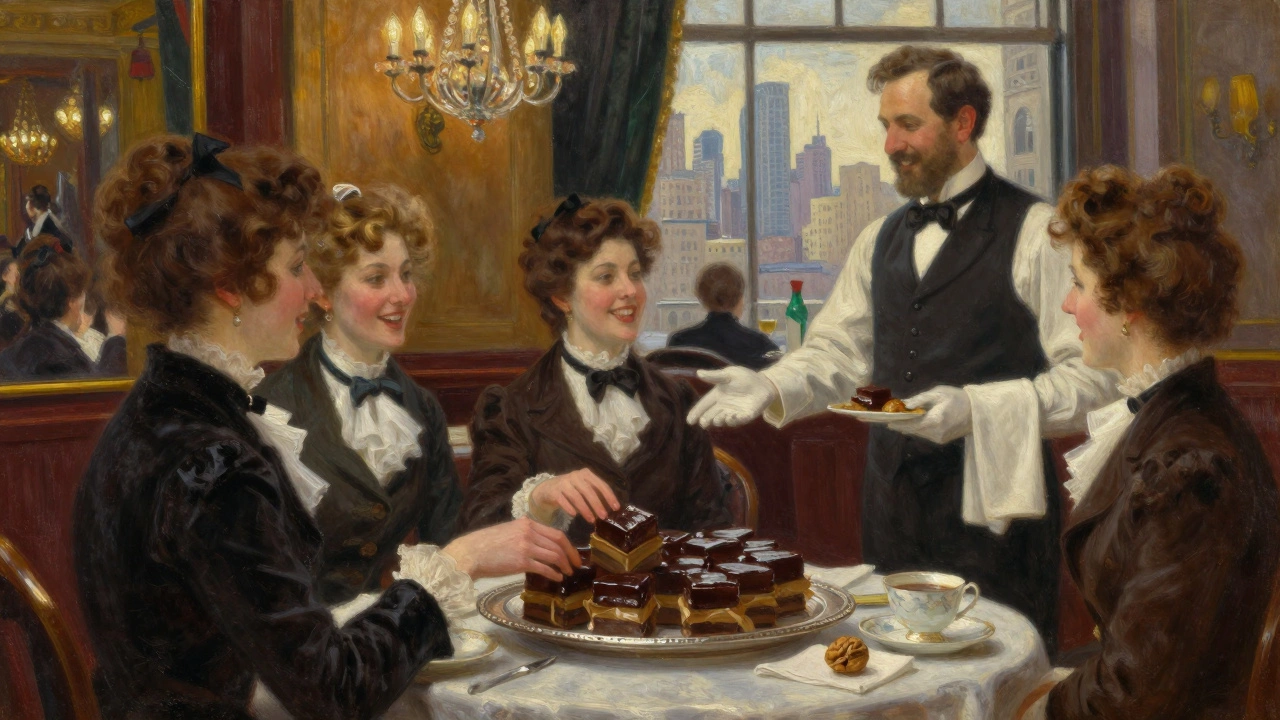
In 1893, a woman named Bertha Palmer hosted a ladies’ tea at the Palmer House Hotel in Chicago. She wanted something sweet for her guests, but not too big or messy. Cakes were too fancy, cookies too crumbly. She asked the hotel’s pastry chef to create a dessert that could be eaten with one hand, fit neatly in a box, and still feel indulgent.
The chef, possibly named Alice R. Armstrong or just an unnamed baker under pressure, tried making a cake. But something went wrong. The batter was overmixed, the oven temperature was off, or maybe he just ran out of time. Whatever happened, the result wasn’t a cake. It was a dense, fudgy square with a crackly top and a chewy center. He cut it into small rectangles, wrapped them in paper, and sent them out.
The guests loved them. They were rich, easy to eat, and didn’t need forks. The hotel’s head waiter started calling them "brownies" - not because of the color, but because they looked like little brown squares. The name stuck.
Why Not "Brown Squares" or "Fudge Cakes"?
At the time, "brownie" was already a common word in American slang. It referred to a small, dark, mischievous creature from folklore - a household spirit that helped clean and tidy up at night. These little brownies were thought to be helpful, quiet, and a bit mysterious. The hotel staff, probably amused by how neatly the dessert solved the problem, started calling the squares "brownies" as a playful nod to the folklore.
It wasn’t about the color. It was about the vibe. These treats were small, helpful, and just a little magical. They didn’t ask for attention. They just showed up and made everyone happy.
The First Printed Recipe
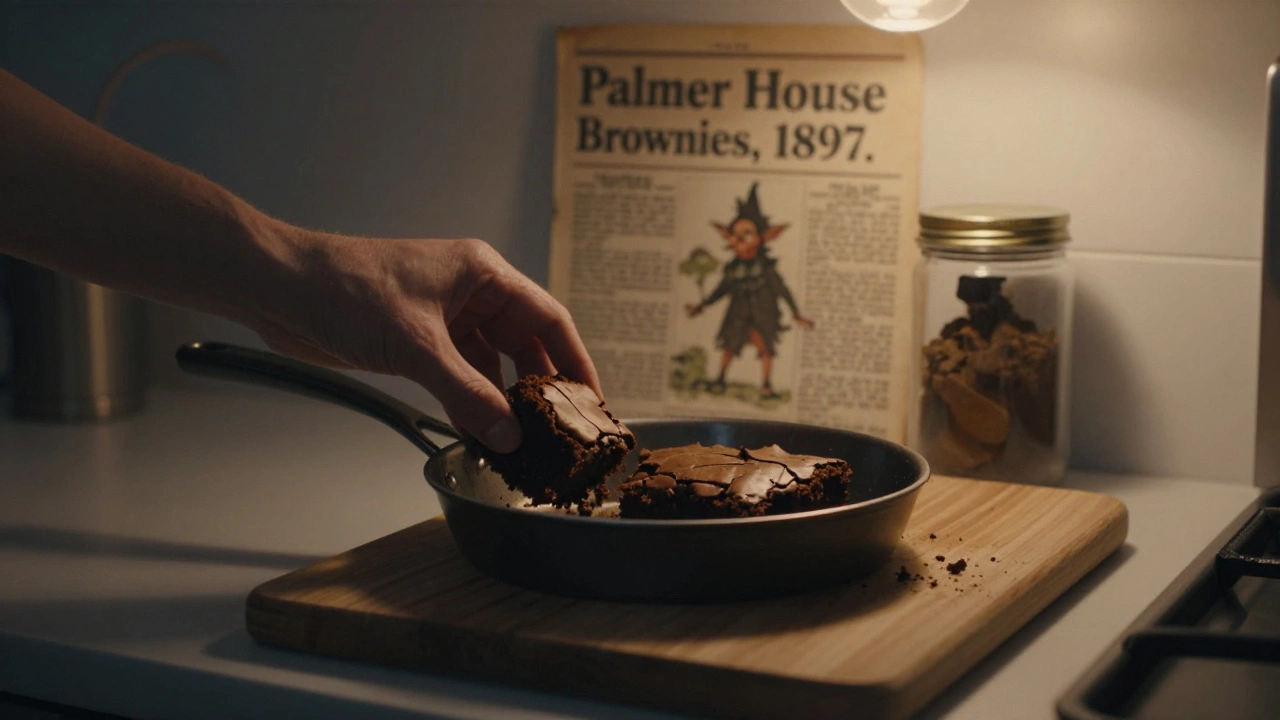
The recipe didn’t go public right away. It stayed at the Palmer House until 1897, when it appeared in the Chicago Daily Tribune as a promotional piece for the hotel. The recipe called for chopped nuts, a touch of cinnamon, and a thick, fudgy texture. It didn’t call it a cake. It didn’t call it a cookie. It called it a "brownie."
By 1906, the name had spread. A recipe titled "Brownies" appeared in the Boston Cooking-School Cook Book by Fannie Farmer. She described them as "small, square, rich cakes," and the name was now official. No one called them anything else. The word had become the thing.
What Made Brownies Different From Other Desserts?
Before brownies, desserts were either cakes (light, airy, layered) or cookies (thin, crisp, buttery). Brownies were neither. They were a hybrid. More dense than cake, less crisp than a cookie. They had the richness of fudge but held their shape. They were portable. They didn’t need frosting or decoration. You could eat them cold, warm, or at room temperature.
They were also cheap to make. In the early 1900s, sugar and cocoa were becoming more affordable. Brownies used what people already had: flour, butter, sugar, eggs, and a little cocoa powder. No fancy ingredients. No special equipment. Just a baking pan and a bit of patience.
By the 1920s, brownies were a staple in American school bake sales, church potlucks, and home kitchens. They were the dessert you brought when you didn’t want to be the center of attention - but still wanted to be remembered.
Why the Name Lasted When Other Names Didn’t
There were other names floating around. Some called them "chocolate squares." Others said "fudge brownies." A few even tried "palmer house bars." But none of them stuck.
"Brownie" was short. It was friendly. It had personality. It didn’t sound like a dessert you had to be fancy about. You didn’t serve brownies at a white-tablecloth dinner. You handed them to a friend on a paper napkin after a long day. The name matched the feeling.
Even today, when you say "brownie," people don’t think of a cake or a cookie. They think of that one square - slightly burnt on the edges, gooey in the middle, with a hint of vanilla and a crunch from walnuts. The name carries the whole experience.
Modern Brownies Still Follow the Original Spirit
Today’s brownies come in all kinds: gluten-free, vegan, protein-packed, keto, stuffed with peanut butter, swirled with caramel. But the core hasn’t changed. They’re still dense. Still fudgy. Still meant to be eaten with your hands.
They’re still the dessert you make when you don’t have time to bake a cake but still want to make someone feel special. The name hasn’t changed because the purpose hasn’t changed. Brownies are quiet helpers. They show up when you need them. They don’t ask for much. They just make things better.
Fun Fact: The Original Recipe Had No Chocolate Chips
The first brownies didn’t have chocolate chips. They didn’t even have chocolate bars. They used cocoa powder - the kind that came in tins and was mixed with boiling water. Chocolate chips weren’t invented until 1937, by Ruth Wakefield at the Toll House Inn. That’s why early brownies had a deeper, more complex chocolate flavor. No sweet, melty chips. Just pure, dark, melted cocoa.
Modern recipes often use melted chocolate now, which gives a richer mouthfeel. But if you want to taste the original, try making a brownie with just cocoa powder, butter, sugar, and eggs. Skip the chips. Skip the frosting. Just bake it. You’ll taste history.
What Makes a Brownie a Brownie?
It’s not the ingredients. It’s the texture. A good brownie should:
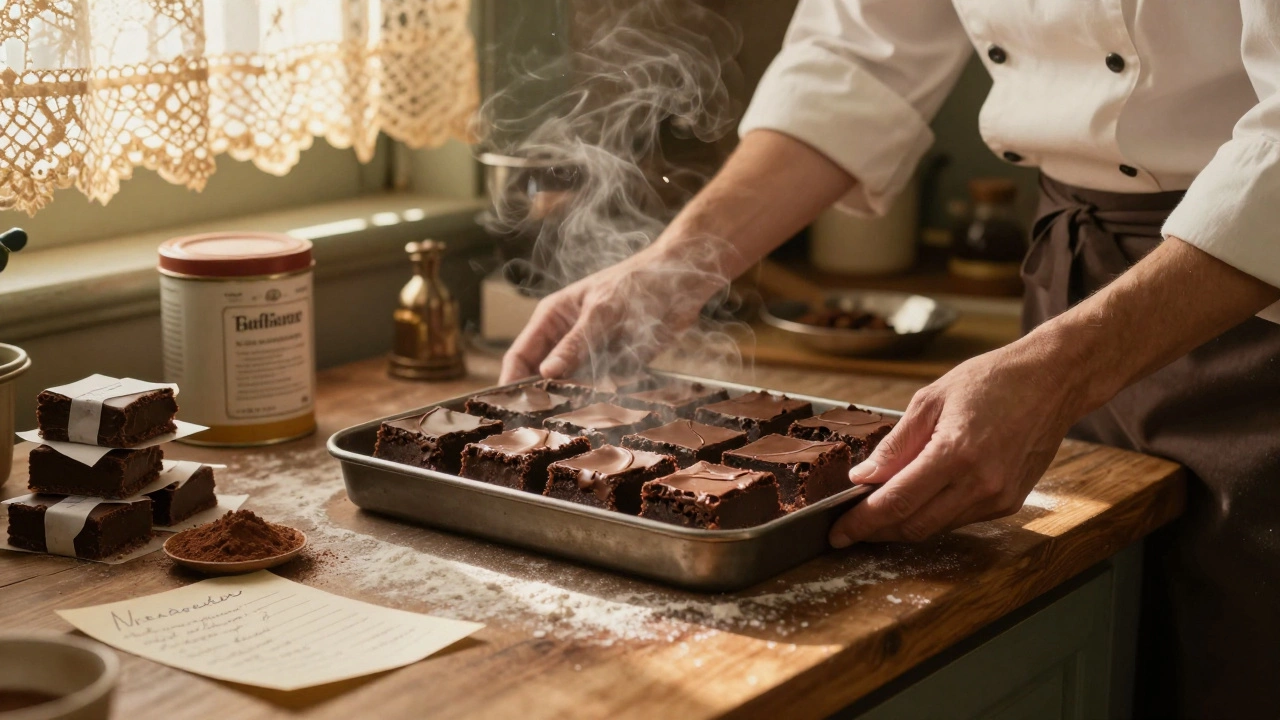
- Have a thin, slightly cracked top
- Be dense enough to hold its shape when cut
- Feel fudgy, not cakey, in the center
- Have a slight chew at the edges
- Taste like chocolate, not sugar
If it’s fluffy like a cake, it’s not a brownie. If it’s crispy like a cookie, it’s not a brownie. If it melts in your mouth like fudge, it’s probably too far gone. The magic is in the balance.
Why This Matters Today
Understanding why brownies are called brownies isn’t just about history. It’s about how food gets its soul. A dessert isn’t just a recipe. It’s a story. It’s a moment. It’s a mistake turned into tradition.
When you make brownies now, you’re not just baking. You’re continuing a 130-year-old tradition that started with a woman who wanted a simple treat, a chef who made something unexpected, and a group of people who loved it so much they gave it a name that stuck.
Next time you pull a pan of brownies out of the oven, remember: you’re not making a dessert. You’re making a little piece of history. And it’s still helping.
Are brownies a cake or a cookie?
Brownies are neither. They’re their own category - dense, fudgy, and meant to be eaten by hand. They have the richness of cake but the texture of fudge. If it’s airy like a cake, it’s not a brownie. If it’s crispy like a cookie, it’s not a brownie either.
Did brownies always have chocolate?
The first brownies used cocoa powder, not chocolate bars or chips. Chocolate chips didn’t exist until 1937. Early recipes called for unsweetened cocoa mixed with boiling water to create a deep, bitter chocolate flavor. Today’s recipes often use melted chocolate for a smoother texture, but the original was all about cocoa.
Why do some brownies have nuts and others don’t?
The original 1897 recipe from the Palmer House Hotel included chopped walnuts. Nuts added crunch and richness. But they were never required. Today, whether to add nuts is personal preference. Some people love the texture. Others think it distracts from the fudgy center. Neither is wrong - it’s just tradition vs. taste.
Can you make brownies without eggs?
Yes. Many modern vegan brownies use flaxseed meal, applesauce, or mashed banana as egg substitutes. They won’t be exactly the same - eggs help with structure and richness - but they can still be fudgy and delicious. The name "brownie" doesn’t depend on eggs. It depends on texture.
Why are brownies so popular in the U.S.?
They’re simple, cheap, and reliable. They don’t need fancy tools or ingredients. They travel well. They feed a crowd. They don’t require frosting or decoration. And they taste like comfort. During the Great Depression, brownies were a luxury people could afford. That’s why they stuck around - they were never just dessert. They were a little bit of joy you could make at home.
What to Try Next
If you’ve only ever made boxed brownies, try the original recipe. Use unsweetened cocoa powder, real butter, and a pinch of salt. Skip the chips. Bake it just until the center is still soft. Let it cool completely. Cut it into squares. Eat one with your hands. Taste the history.
And next time someone asks why they’re called brownies, you’ll know. It’s not about the color. It’s about the quiet magic of a simple thing that just works.