Macaron Tower Wedding Budget Calculator
Use this tool to estimate your total spending on a macaron tower. Prices vary by region and baker, but this calculator uses industry averages to give you a realistic range.
You are standing in a bakery or scrolling through Instagram, staring at a towering pyramid of pastel-colored cookies. It looks like the centerpiece of your dreams. But then reality hits: what is this going to cost? If you have ever tried to get a quote for a macaron tower, you know the answer is rarely a simple number. Prices swing wildly based on who makes them, where you live, and how many mouths you need to feed.
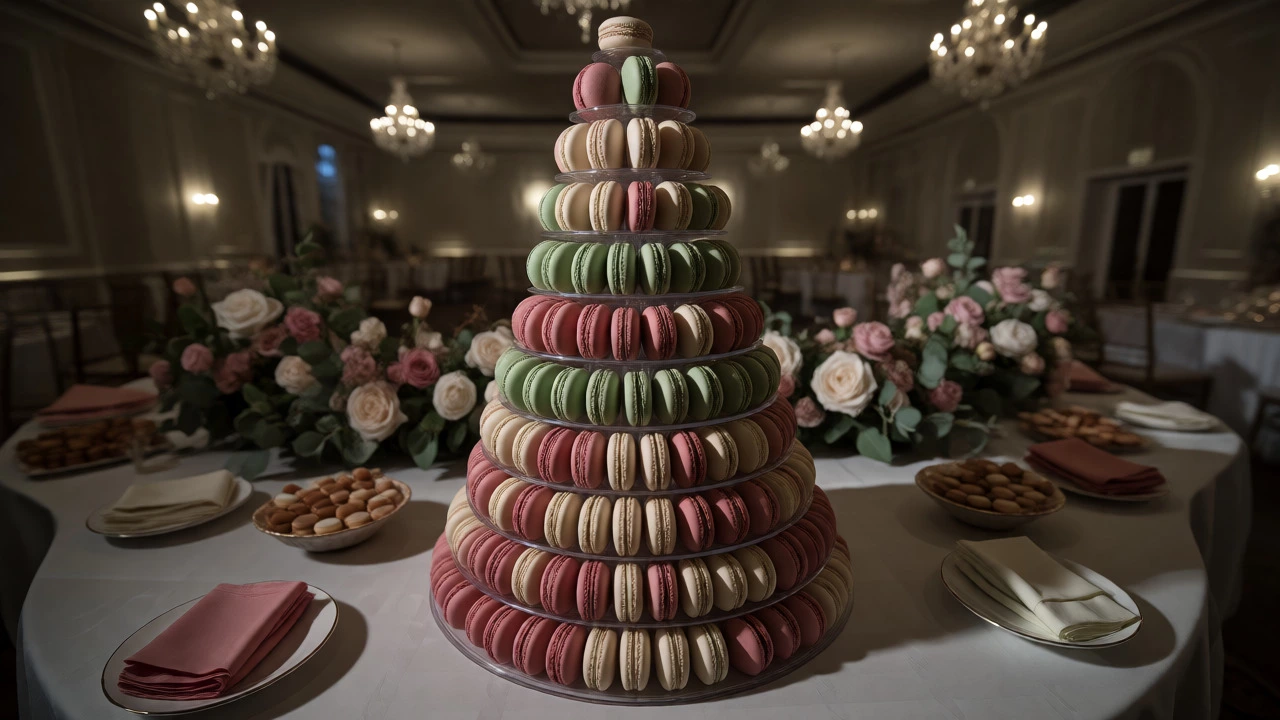
The short answer? A professional-grade macaron tower usually costs between $5 and $8 per macaron. For a standard wedding serving 100 guests, that translates to roughly $500 to $800 just for the cookies, before you factor in display rentals or delivery fees. This article breaks down exactly why those numbers look the way they do, so you can budget without getting sticker shock.
Why Macaron Towers Are Not Just Cookies
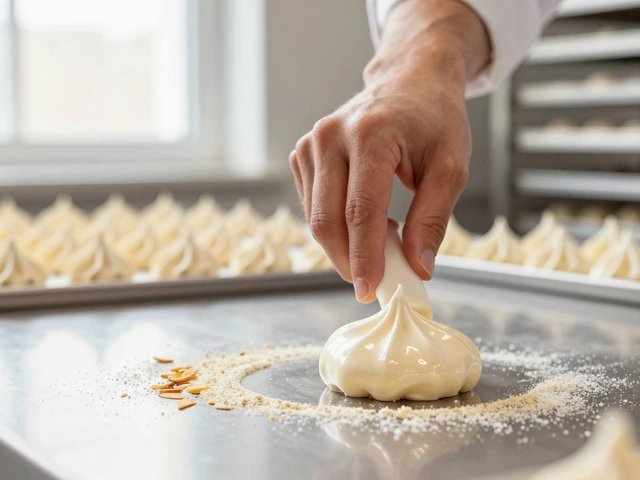
To understand the price tag, you have to respect the product. A macaron is not a cookie in the traditional sense; it is a delicate meringue-based confection. Making one requires precise temperature control, aged egg whites, and almond flour that has been sifted multiple times. One degree off in the oven, and the feet (the ruffled edge) disappear. Two minutes too long, and they crack.
Almond flour is a primary driver of cost here. Unlike wheat flour, which is cheap and abundant, almond flour is expensive and prone to spoilage if not stored correctly. When you buy a macaron, you are paying for high-quality nuts, sugar, and eggs, but mostly you are paying for the labor hours required to ensure consistency across hundreds of units.
Consider the failure rate. Even experienced pastry chefs face batch failures. A home baker might throw out three batches before getting one perfect run. Professional kitchens minimize this waste, but it is baked into the overhead. When you see a price of $6 per piece, you are subsidizing the ones that didn't make the cut.
Breaking Down the Per-Piece Pricing Model
Bakers rarely sell towers by the "tower." They sell by the unit. This is crucial for your budgeting math. The industry standard for custom orders ranges from $4 to $9 per macaron. Why such a spread?
- $4 - $5: Basic flavors (vanilla, chocolate), standard colors, local bakeries with lower overhead.
- $6 - $7: Premium ingredients (real fruit purees, high-end chocolate), complex color matching, established brands.
- $8+: Luxury boutiques, gold leaf accents, intricate piping designs, or major metropolitan areas like New York City or Los Angeles.
If you need 100 macarons for a small event, expect to pay between $400 and $900. If you are planning a large wedding with 200 guests, you are looking at $800 to $1,800. Does that sound steep? Compare it to a tiered cake. A custom three-tier wedding cake often costs $500 to $1,000+. While the cake feeds more people per dollar, the macaron tower offers a unique interactive element-guests take their own dessert, reducing service staff needs.
Sizing Your Tower: How Many Do You Actually Need?
This is where most couples overspend. They assume every guest will eat two macarons. In reality, dessert consumption varies. At a dinner party where guests are full, one macaron per person is sufficient. At a cocktail hour where food is light, two per person is safer.
A common rule of thumb used by event planners is 1.5 macarons per guest. This accounts for picky eaters who don't like sweets and enthusiastic fans who want seconds. Let's look at typical tower sizes:
| Guest Count | Recommended Macarons | Tower Height Estimate | Estimated Cost Range ($5/piece) |
|---|---|---|---|
| 50 Guests | 75 - 100 | Small (3-4 tiers) | $375 - $500 |
| 100 Guests | 150 - 200 | Medium (5-6 tiers) | $750 - $1,000 |
| 150 Guests | 225 - 300 | Large (7-8 tiers) | $1,125 - $1,500 |
| 200+ Guests | 300+ | Extra Large (9+ tiers) | $1,500+ |
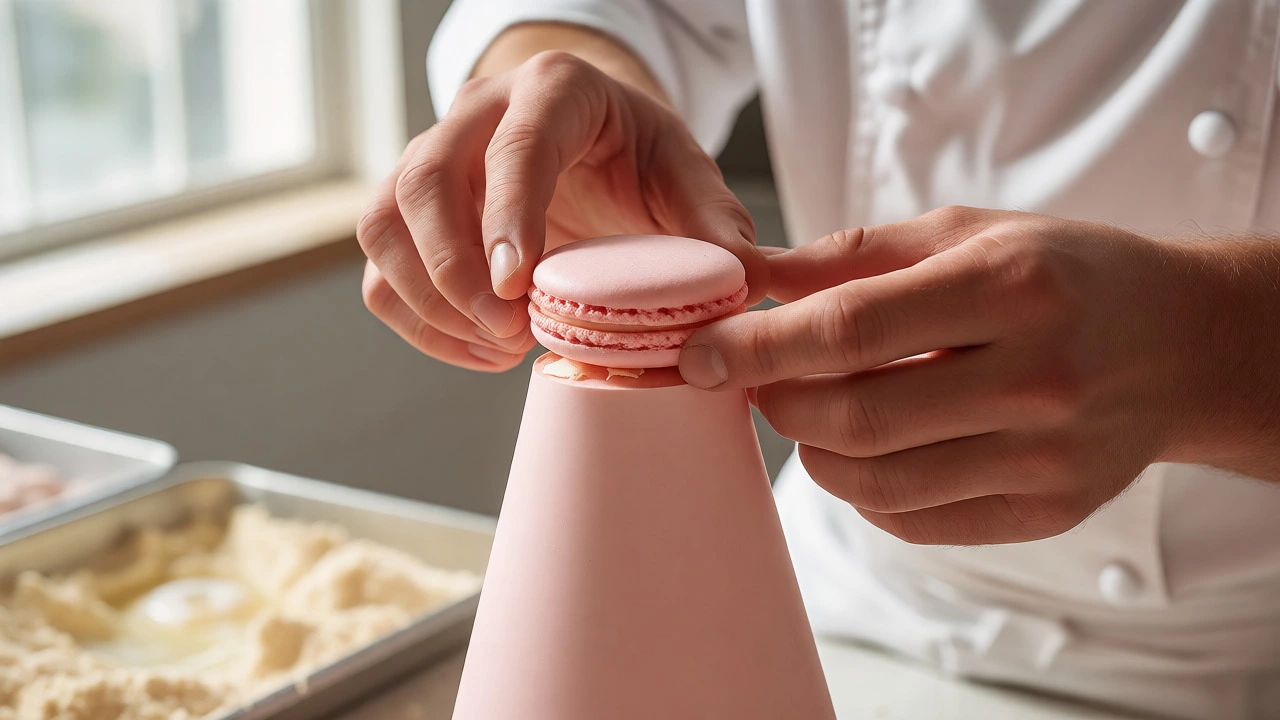
Notice the jump in cost as the size increases. Larger towers require structural integrity. A baker cannot just stack 300 cookies randomly. They need internal supports, acrylic stands, or careful arrangement to prevent collapse. This adds time to assembly and packaging.
Hidden Costs That Sneak Into Your Quote
The per-piece price is only part of the story. Ask about these line items before signing a contract:
Delivery and Setup: Transporting a fragile tower is risky. Many bakers charge a flat fee ($50-$150) plus mileage. Some refuse to deliver assembled towers, requiring you to assemble them yourself. This saves money but risks breakage. If they deliver pre-assembled, ask if they provide the stand. Rental fees for acrylic or metal stands can range from $20 to $100 depending on the design.
Customization Fees: Want a specific shade of dusty rose to match your bridesmaid dresses? Matching custom colors often incurs a surcharge because the baker must mix small batches of food coloring specifically for you. Similarly, custom logos piped onto each macaron add labor time, increasing the per-unit cost by $0.50 to $1.00.
Flavor Variety: Stick to 3-4 flavors to keep costs down. Offering 10 different flavors means the baker has to prepare ten separate batches of batter, filling, and shells. This complexity drives up labor hours. A limited menu ensures better quality control and lower prices.
DIY vs. Hiring a Professional
Can you save money by making them yourself? Technically, yes. Ingredient costs for 100 macarons might be around $40-$60. But let's talk about the hidden tax: time and stress.
Making 100 perfect macarons takes approximately 10-15 hours of active work. That includes separating eggs, whipping meringue, folding batter, piping, resting, baking, filling, and assembling. If you value your time at even $20 an hour, the DIY route costs $200-$300 in labor alone, plus the risk of failure. For a wedding, where you should be relaxing, hiring a pro is often worth the premium.
However, if you are hosting a casual birthday party and enjoy baking, DIY is a viable option. Buy a kit with pre-made shells if available, or focus on mastering one flavor first. Just remember: humidity kills macarons. Check the weather forecast. If it is raining, your shells may stick to the mat or fail to form feet.
How to Save Money Without Sacrificing Style
You do not need to spend thousands to get a stunning visual impact. Here are three strategies to reduce costs:
- Go Mini: Standard macarons are 1.5 inches wide. Mini macarons are 1 inch. They use less batter and bake faster. Bakers often charge 20-30% less for minis. Since guests eat fewer calories, you can offer two minis instead of one regular, which feels generous but costs less.
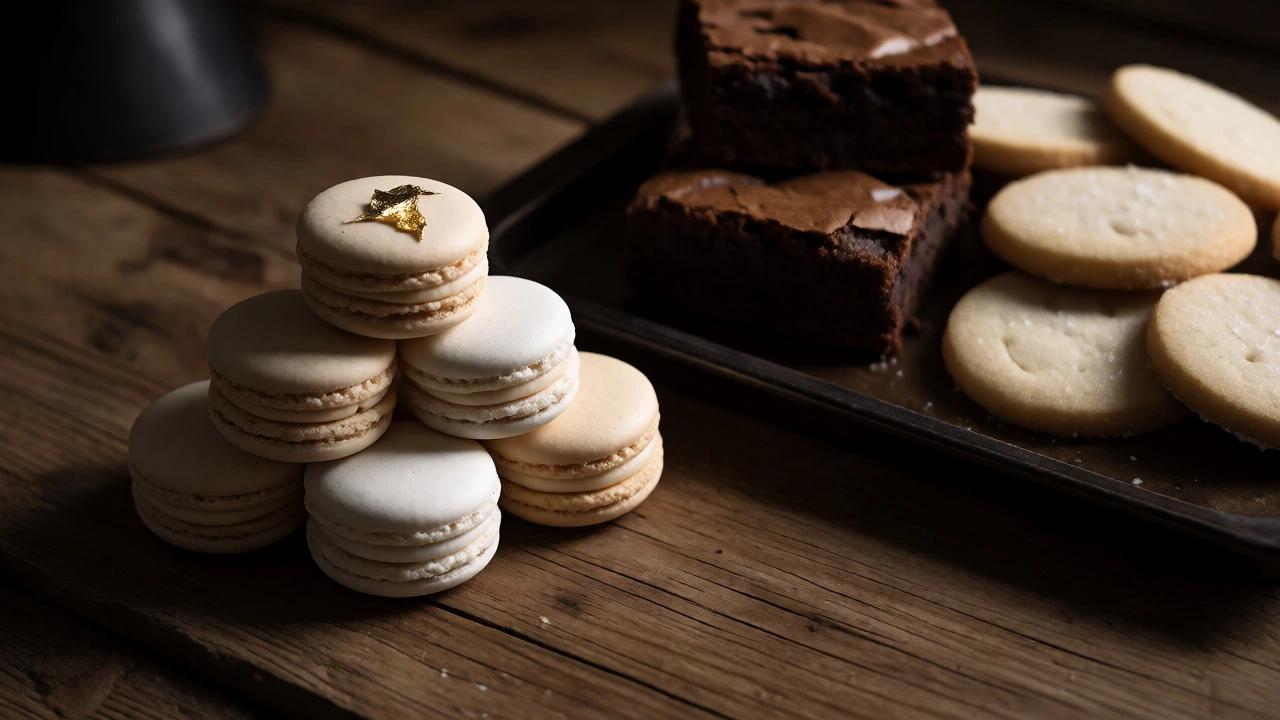
- Limit Colors: Stick to white, cream, and one accent color. Mixing custom pastels requires extra dye and testing. Neutral tones also pair well with any decor theme, giving you flexibility if your vision changes later.
- Hybrid Dessert Table: Use a smaller macaron tower as a focal point and supplement with cheaper desserts like brownies or cookies. A 50-macron tower looks impressive next to trays of fudge, costing half as much as a full-service macaron table.
Final Thoughts on Budgeting
When you ask for a quote, treat it like hiring a contractor. Get estimates from at least three local bakers. Ask for samples. Taste matters more than looks. A beautiful tower with stale or overly sweet macarons will disappoint guests. A modest tower with fresh, perfectly balanced cookies will be remembered fondly.
Remember, the macaron tower is an experience, not just a dessert. It encourages interaction, photo opportunities, and conversation. Factor that social value into your decision. If the cost fits within your overall dessert budget (usually 3-5% of total catering costs), go for it. If it strains the budget, scale back the size rather than compromising on quality.
How far in advance should I order a macaron tower?
For weddings or large events, book 4-8 weeks in advance. Popular bakers fill up quickly during peak seasons (spring and summer). For smaller parties, 2-3 weeks is usually sufficient, but always check the baker's current lead times.
Do macarons need to be refrigerated?
Yes, especially if they have ganache or fruit curd fillings. Keep them refrigerated until 1-2 hours before serving. This allows them to come to room temperature, which maximizes flavor and texture. Leaving them out for too long can cause condensation and soggy shells.
Are macarons gluten-free?
Generally, yes, because they are made with almond flour and egg whites. However, cross-contamination is a risk in facilities that also process wheat products. Always verify with the baker if you are serving guests with Celiac disease or severe gluten intolerance.
What is the shelf life of a macaron tower?
Fresh macarons last 3-5 days in the refrigerator. Freezing extends this to several months. Once assembled into a tower, they are best consumed within 24 hours to maintain structural stability and freshness. Humidity is the enemy; avoid leaving them out in humid environments for extended periods.
Can I customize the shape of the tower?
Most towers are cone-shaped (pyramid) for stability. Some bakers offer linear arrangements or circular wreaths, but these require more structural support and may cost more due to increased assembly time. Discuss your vision early to see what is structurally feasible.